



There is no greater illustration of corporate America's moral decay than Amazon. Amazon fired manager protesting Covid-19 infections in warehous.e
Adventures Underground : Volcanoes, Earthquakes, Mines, Quarries, Caves and Peat Beds
by David Falkayn (Editor)
(Paperback -- April )About Hawaii's Volcanoes
by L. R. McBride
Paperback: 48 pages
Petroglyph Pr Ltd; ISBN: 0912180439; Revised edition (June 1986)Encyclopedia of Earthquakes and Volcanoes
by David Ritchie, Alexander E., Phd Gates
From aa to Yellowstone, if it's got anything at all to do with earthquakes or volcanoes, you're likely to find within the pages of this updated encyclopedia from science journalist David Ritchie and Rutgers geology professor Alexander Gates.
The 1,000-plus alphabetical listings range from historical volcanoes and quakes (both famous and obscure) to entries on specific seismic phenomena (everything from parasitic cones to jökulhlaup) and general geological principles, including a few excellent in-depth discussions on topics like plate tectonics and seismic wave types. The encyclopedia also contains a lengthy bibliography, a list of Internet resources, a chronological listing of notable quakes and eruptions, and a handful of unforgettable eyewitness accounts (after the eruption of Vesuvius in A.D. 79, apparently Pliny the Elder's party went out "having pillows tied upon their heads with napkins; and this was their whole defense against the storm of stones that fell around them").With its clear, newspaper-style entries, the Encyclopedia of Earthquakes and Volcanoes will be navigable even to geo-newbies, but its a-to-z organization makes it more useful as a reference than as a stand-alone text. (Then again, given its liberal cross-referencing, you can easily find yourself led to a long, enjoyable read.) --Paul Hughes - Amazon.com
Hardcover from Facts on File, Inc.
Fire in the Sea: The Santorini Volcano: Natural History and the Legend of Atlantis
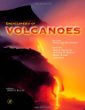
Encyclopedia of Volcanoes
by Haraldur Sigurdsson, Bruce Houghton, Hazel Rymer, John Stix, Steve McNutt
Book Description: Volcanoes are unquestionably one of the most spectacular and awe-inspiring features of the physical world. Our paradoxical fascination with them stems from their majestic beauty and powerful, if sometimes deadly, destructiveness. Notwithstanding the tremendous advances in volcanology since ancient times, some of the mystery surrounding volcanic eruptions remains today. The Encyclopedia of Volcanoes summarizes our present knowledge of volcanoes. Through its thematic organization around the melting of the earth, it provides a comprehensive source of information on the multidisciplinary influences of volcanic eruptions--both the destructive as well as the beneficial aspects. The majority of the chapters focus on the geoscience-related aspects of volcanism (radioactive heat source, melting rock, ascent of magma, surface phenomena associated with exiting magma, extraterrestrial volcanism, etc.). In addition, complementary chapters discuss the multidisciplinary aspects of volcanism; these include the history of volcanology, geothermal energy resources, interaction with the oceans and atmosphere, health aspects of volcanism, mitigation of volcanic disasters, post-eruption ecology, and the impact of eruptions on organismal biodiversity.In addition to its appeal to educators, students, and professional and amateur scientists, the Encyclopedia of Volcanoes functions as an important information resource for administrators and officials responsible for developing and implementing volcanic hazard mitigation around the world.
Hardcover from Academic Press
by Walter L. Friedrich, Alexander R. McBirney
Hardcover: Cambridge Univ Pr (Trd); ISBN: 0521652901;Fire Mountains of the West: The Cascade and Mono Lake Volcanoes
by Stephen L. HarrisFire on the Mountain : The Nature of Volcanoes
by Dorian Weisel (Editor), et al
Paperback: 132 pages
Chronicle Books; ISBN: 0811804933;Hawaii Volcano Watch : A Pictorial History, 1779-1991
by Thomas L. Wright, et al
(Paperback -- November 1992)Krakatoa : The Day the World Exploded: August 27, 1883
by Simon Winchester
It may seem a stretch to connect a volcanic eruption with civil and religious unrest in Indonesia today, but Simon Winchester makes a compelling case. Krakatoa tells the frightening tale of the biggest volcanic eruption in history using a blend of gentle geology and narrative history. Krakatoa erupted at a time when technologies like the telegraph were becoming commonplace and Asian trade routes were being expanded by northern European companies. This bustling colonial backdrop provides an effective canvas for the suspense leading up to August 27th, 1883, when the nearby island of Krakatoa would violently vaporize. Winchester describes the eruption through the eyes of its survivors, and readers will be as horrified and mesmerized as eyewitnesses were as the death toll reached nearly 40,000 (almost all of whom died from tsunamis generated by the unimaginably strong shock waves of the eruption). Ships were thrown miles inshore, endless rains of hot ash engulfed those towns not drowned by 100 foot waves, and vast rafts of pumice clogged the hot sea. The explosion was heard thousands of miles away, and the eruption's shock wave traveled around the world seven times. But the book's biggest surprise is not the riveting catalog of the volcano's effects; rather, it is Winchester's contention that the Dutch abandonment of their Indonesian colonies after the disaster left local survivors to seek comfort in radical Islam, setting the stage for a volatile future for the region. --Therese Littleton - Amazon.com
Hardcover: 432 pages ; Dimensions (in inches): 1.20 x 9.30 x 6.32
Publisher: HarperCollins; (April 1, )
ISBN: 0066212855Krakatoa (World Disasters Series)
by Don Nardo, Brian McGovern
from Lucent BooksSurviving Galeras
by Stanley Williams, Fen Montaigne
On January 14, 1993, Stanley Williams led a party of fellow geologists up Galeras, a Colombian volcano that, though historically active, had been lying quiet long enough that they suspected it was due for an episode--and thus an opportunity for the volcanologists to practice their predicting skills. As they reached the lip of its great crater, Galeras obliged them with a vengeance: it erupted in a burst of fire and toxic gas, killing several members of the party and leaving Williams scorched and broken, "sprawled on my side, caked in ash and blood, wet from the rain, bones protruding from my burned clothes, my jaw hanging slackly." Rescued by two colleagues, Marta Velasco and Patty Mothes, Williams faced several challenges in the years to come--not only healing his body and exorcising the ghosts of Galeras, but also contending with other colleagues' whispered charges that he should have known the mountain was about to blow. But death, Williams and collaborator Fen Montaigne (Reeling in Russia) write, comes with the territory. Whenever a volcano has erupted in recent years, it seems, a volcanologist is among its victims, for, Williams notes, "the best way to understand a volcano is still, in my opinion, to climb it," and to climb it in all of its moods. And those moods, Williams and Montaigne add, are not easy to forecast, even if earth scientists have developed ever more accurate ways to predict events such as earthquakes and tsunamis. At once a study in mountains, the history of geology, and the will to endure, Surviving Galeras is often terrifying, and altogether memorable. --Gregory McNamee - Amazon.com
(Hardcover -- April 17, )No Apparent Danger: The True Story of Volcanic Disaster at Galeras and Nevado del Ruiz
by Victoria Bruce
(Hardcover -- March 20, )
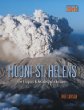
Mount St Helens : The Eruption and Recovery of a Volcano
by Rob Carson, Geff Hinds (Photographer)
(Paperback -- May )FROM MAGMA TO TEPHRA
by A. Freundt, M. Rosi
(Paperback -- February 1, )
Special OrderRaging Planet: Earthquakes, Volcanoes, and the Tectonic Threat to Life on Earth
by Bill McGuire
Book Description: Volcanoes, earthquakes, and giant killer tidal waves called tsunamis . . . We think of these events as disasters, but for Earth they are merely business as usual. This dramatically illustrated book describes some of the more than 3,000 active volcanoes scattered around the planet, and chronicles many of history's most devastating volcanic eruptions, earthquakes, and tidal waves. The author explains that volcanoes and earthquakes both result from movement of the Earth's vast tectonic plates, and are most likely to occur at or near places where two or more plates come together. Such movement has been going on since the Earth's origins, creating mountain ranges and dividing the landmass into separate continents. Described in these pages are volcanic blasts from the past: Vesuvius, Italy in 79 A.D. ... Laki, Iceland in 1783 ... Tambora, Indonesia in 1815 ... Krakatoa, Indonesia in 1883 ... Mount St. Helens, Washington State in 1980 ... Pinatubo, the Philippines in 1991, and others. Also chronicled are earthquakes that have struck large population centers, producing disasters in Lisbon, Portugal, in 1755, San Francisco in 1906, Tokyo-Yokohama, Japan, in 1923, and Kobe, Japan, in 1995. The Earth's major trouble spots and likely targets for future earthquakes are described. Urban areas in greatest danger continue to be those along the Pacific Rim, which encompasses North America's West Coast and most of Japan's cities. Here is an intensely readable summary of natural disasters that have struck the earth, along with informed speculation on how and when similar events will recur in the future. More than 200 color illustrations.
Paperback from Barrons Educational Series
Volcanoes, El Ninos, and the Bellybutton of the Universe
by D.A. Walker
Paperback: 100 pages
Xlibris Corporation; ISBN: 0738837229; 1 edition (January 2, )
Volcanology
by Jacques-Marie Bardintzeff, Alexander R. McBirney
(Paperback -- March )
The Last Days of St. Pierre: The Volcanic Disaster that Claimed 30,000 Lives
by Ernest Zebrowski
(Hardcover -- February 1, )
Volcanoes (WLL)
by Peter Clarkson, David Houston
(Paperback -- December )The Physics of Explosive Volcanic Eruptions (Geological Society Special Publication Series, 145)
by J. S. Gilbert (Editor), R. S. J. Sparks (Editor)
(Hardcover -- October )
Special OrderVolcano Cowboys: The Rocky Evolution of a Dangerous Science
by Dick Thompson
Vulcanology is not the sexiest of sciences, despite Hollywood movies in which clenched-jawed heroes tame ferocious floods of lava that are busily swallowing up some crowded metropolis or another, racing against the clock to save humankind from the elements. It turns out that those movies aren't really so far-fetched, though, and in the pages of Volcano Cowboys the world's small corps of magma hunters acquire well-deserved élan. The study of volcanoes, Time magazine writer Dick Thompson notes, is largely an observational and not theoretical science; where the vital memory of a molecular biologist "generally drops off after a decade," a vulcanologist will carry reams of data about the behavior of the earth gleaned from reports stretching back to the time of Plato and Pliny the Elder, those amateur volcano-watchers of antiquity. They've had plenty more to do in recent years, though, than to quote the ancients. Thompson's vigorous narrative begins with the eruption of Mount St. Helens on May 18, 1980, an event that U.S. Geological Survey scientists had been able to predict with some accuracy. They lacked, however, a coordinated means to effect an evacuation of the area, and 57 people died. Battling institutional inertia and struggling for funding, teams of these scientists, the "volcano cowboys" of Thompson's title, set about trying to develop methods to predict more accurately dangerous volcanic events and to trim the body count when such events took place. His story recounts their eventual victory when, in 1991, the Philippine volcano Pinatubo exploded--but, thanks to the work of these dedicated field scientists, "less than one quarter of one percent of those at risk had died during the eruption." Tens of millions of people around the world live within the reach of volcanoes. Thompson's narrative reveals that the "volcano cowboys" have made their lives safer--and it's much better than the movies. --Gregory McNamee - Amazon.com
Hardcover: 336 pages
St. Martin's Press; ISBN: 0312208812;Volcano Deformation : New Geodetic Monitoring Techniques
by Daniel Dzurisin
(Hardcover -- April )Volcanology and Geothermal Energy (Los Alamos Series in Basic and Applied Sciences, No 12)
by Kenneth Wohletz, Grant Heiken
(Hardcover -- April 1992)Summit Guide to the Cascade Volcanoes
by Jeff Smoot
(Paperback -- January )
Special OrderSantorini Volcano (Geological Society Special Memoir, 19)
by T. H. Druitt, et al
(Hardcover -- October )
Special OrderVolcanoes of Europe
by Alwyn Scarth, Jean-Claude Tanguy
(Paperback -- May )Volcanoes in America's National Parks
by Robert Decker, Barbara Decker
(Paperback -- August 1, )Volcanoes in Human History: The Far-Reaching Effects of Major Eruptions.
by Jelle Zeilinga De Boer, Donald Theodore Sanders
In 1815, Napoleon's armies fell to defeat at Waterloo, a clash that would change the course of world events. Far more Europeans died that year, though, as a result of a volcanic explosion in Indonesia--one cataclysmic eruption among the many that figure in this sidelong view of the Earth's history. The explosion of Tambora in April 1815, geologists de Boer and Sanders write, sent a plume of volcanic ash high into the planet's atmosphere, bringing on a "nuclear winter" that devastated crops in the northern hemisphere, yielding famine and plague. Moreover, they add, the explosion cast a hazy pall over much of Europe, a gloom that inspired Mary Shelley to write her famed novel, Frankenstein. Another explosion, more than 3,000 years earlier, pulverized the Mediterranean island of Thera, giving rise to the legend of Atlantis and causing whole civilizations to collapse. Still another eruption on the island of Tristan da Cunha, in 1961, "brought [the 20th century] to this most isolated of the earth's inhabited places." The authors' overview of nature's ability to thwart human intentions makes for fascinating reading, sure to appeal to fans of Perils of a Restless Planet, Surviving Galeras, and other chronicles of the trembling earth. --Gregory McNamee - Amazon.com
(Hardcover -- January 1, )Volcanoes : Fire from the Earth (Discoveries)
by Maurice Krafft, Paul Bahn (Translator)
(Paperback -- April 1993)Fires of the Earth : The Laki Eruption 1783-1784
by Jon Steingrimsson, Keneva Kunz (Translator)
(Hardcover -- December )
Out of Print - Try Used Books
Browse Volcanoes
Search This Site
Volcanoes on DVD