



There is no greater illustration of corporate America's moral decay than Amazon. Amazon fired manager protesting Covid-19 infections in warehous.e
Science History & Philosophy
- History of Science
- History of Technology
- Scientific Research
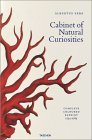
Albertus Seba Cabinet of Natural Curiosities
by Irmgard Musch
Albertus Seba's "Cabinet of Curiosities" is one of the 18th century's greatest natural history achievements and remains one of the most prized natural history books of all time. Though it was common for men of his profession to collect natural specimens for research purposes, Amsterdam-based pharmacist Albertus Seba (1665-1736) had a passion that led him far beyond the call of duty. His amazing, unprecedented collection of animals, plants and insects from all around the world gained international fame during his lifetime. In 1731, after decades of collecting, Seba commissioned illustrations of each and every specimen and arranged the publication of a four-volume catalog detailing his entire collection-from strange and exotic plants to snakes, frogs, crocodiles, shellfish, corals, insects, butterflies and more, as well as fantastic beasts, such as a hydra and a dragon. Seba's scenic illustrations, often mixing plants and animals in a single plate, were unusual even for the time. Many of the stranger and more peculiar creatures from Seba's collection, some of which are now extinct, were as curious to those in Seba's day as they are to us now. The Publisher
Hardcover:
TASCHEN America Llc; ISBN: 3822816000; (November )The Next Fifty Years : Science in the First Half of the Twenty-First Century
Disturbing the Universe
by Freeman J. Dyson
Book Description: The classic intellectual autobiography of a great theoretical physicist Spanning the years from World War II, when he was a civilian statistician in the operations research section of the Royal Air Force Bomber Command, through his studies with Hans Bethe at Cornell University, his early friendship with Richard Feynman, and his postgraduate work with J. Robert Oppenheimer, Freeman Dyson has composed an autobiography unlike any other. Dyson evocatively conveys the thrill of a deep engagement with the world-be it as scientist, citizen, student, or parent. Detailing a unique career not limited to his groundbreaking work in physics, Dyson discusses his interest in minimizing loss of life in war, in disarmament, and even in thought experiments on the expansion of our frontiers into the galaxies.
Paperback from HarperCollins
by John Brockman (Editor)
(Paperback)Tuxedo Park : A Wall Street Tycoon and the Secret Palace of Science That Changed the Course of World War II
by Jennet Conant
This must have been an extremely difficult book to write. Its subject, Alfred Loomis, never gave interviews during his lifetime and destroyed all his papers before his death. "Few men of Loomis' prominence and achievement have gone to greater lengths to foil history," writes author Jennet Conant. Had he not done these things, his name would be better known--and this probably wouldn't be the first biography about him. So who was Alfred Loomis? "He was too complex to categorize--financier, philanthropist, society figure, physicist, inventor, amateur, dilettante--a contradiction in terms," writes Conant. Loomis established a private laboratory in New York and hired scientists whose work in the 1930s wound up making possible both radar and the atomic bomb. These developments were essential to Allied victory in the Second World War. Conant is perhaps the only person who could have pierced Loomis's obsessive secrecy and written this book; she grew up with Loomis's children and other members of his family. Her grandfather, Harvard president James Bryant Conant, was one of Loomis's scientists. Tuxedo Park is an important book about the development of military technology in the United States; admirers of The Making of the Atomic Bomb by Richard Rhodes and similar titles won't want to miss it. --John Miller - Amazon.com
Hardcover: 330 pages
Simon & Schuster; ISBN: 0684872870;It Must Be Beautiful: Great Equations of Modern Science
by Graham Farmelo (Editor)
(Hardcover)Science and Technology in World History : An Introduction
by James E. McClellan, Harold Dorn
Paperback: 424 pages
Johns Hopkins Univ Pr; ISBN: 0801858690; (April )Einstein, History, and Other Passions: The Rebellion Against Science at the End of the Twentieth Century
by Gerald Holton
Listed under Albert EinstienThe Foundations of Modern Science in the Middle Ages: Their Religious, Institutional, and Intellectual Contexts (Cambridge History of Science)
by Edward Grant
Book Description: Contrary to prevailing opinion, the roots of modern science were planted in the ancient and medieval worlds long before the Scientific Revolution of the seventeenth century. Indeed, that revolution would have been inconceivable without the cumulative antecedent efforts of three great civilizations: Greek, Islamic, and Latin. With the scientific riches it derived by translation from Greco-Islamic sources in the twelfth and thirteenth centuries, the Christian Latin civilization of Western Europe began the last leg of the intellectual journey that culminated in a scientific revolution that transformed the world. The factors that produced this unique achievement are found in the way Christianity developed in the West, and in the invention of the university in 1200. A reference for historians of science or those interested in medieval history, this volume illustrates the developments and discoveries that culminated in the Scientific Revolution.
Paperback: 263 pages ; Dimensions (in inches): 0.64 x 8.84 x 5.91
Publisher: Cambridge Univ Pr (Pap Txt); (November )
ISBN: 0521567629
Mauve: How One Man Invented a Color That Changed the World
by Simon Garfield
In 1856, while trying to synthesize artificial quinine, 18-year-old chemistry student William Perkin instead produced a murky residue. Fifty years later, he described the event: he "was about to throw a certain residue away when I thought it might be interesting. The solution of it resulted in a strangely beautiful color." Perkin had stumbled across the world's first aniline dye, a color that became known as mauve."So what?" you might say. "A teenager invented a new color." As Simon Garfield admirably points out in Mauve, the color really did change the world. Before Perkin's discovery all the dyes and paints were colored by roots, leaves, insects, or, in the case of purple, mollusks. As a result, colors were inconsistent and unpredictably strong, often fading or washing out. Perkin found a dye that would always produce a uniform shade--and he pointed the way to other synthetic colors, thus revolutionizing the world of both dyemaking and fashion. Mauve became all the rage. Queen Victoria wore it to her daughter's wedding in 1858, and the highly influential Empress Eugénie decided the color matched her eyes. Soon, the streets of London erupted in what one wag called the "mauve measles."
Mauve had a much wider impact as well. By finding a commercial use for his discovery--much to the dismay of his teacher, the great August Hofmann, who believed there needed to be a separation between "pure" and "applied" science--Perkin inspired others to follow in his footsteps: "Ten years after Perkin's discovery of mauve, organic chemistry was perceived as being exciting, profitable, and of great practical use." The influx of bright young men all hoping to earn their fortunes through industrial applications of chemistry later brought significant advances in the fields of medicine, perfume, photography, and even explosives. Through it all, Garfield tells his story in clever, witty prose, turning this odd little tale into a very entertaining read. --Sunny Delaney - Amazon.com
Paperback: 242 pages ; Dimensions (in inches): 0.60 x 8.20 x 5.48
Publisher: W.W. Norton & Company;
ISBN: 0393323137The Measure of All Things: The Seven-Year Odyssey and Hidden Error That Transformed the World
by Ken AlderThe Mismeasure of Man
by Stephen Jay Gould
How smart are you? If that question doesn't spark a dozen more questions in your mind (like "What do you mean by 'smart,'" "How do I measure it," and "Who's asking?"), then The Mismeasure of Man, Stephen Jay Gould's masterful demolition of the IQ industry, should be required reading. Gould's brilliant, funny, engaging prose dissects the motivations behind those who would judge intelligence, and hence worth, by cranial size, convolutions, or score on extremely narrow tests. How did scientists decide that intelligence was unipolar and quantifiable, and why did the standard keep changing over time? Gould's answer is clear and simple: power maintains itself. European men of the 19th century, even before Darwin, saw themselves as the pinnacle of creation and sought to prove this assertion through hard measurement. When one measure was found to place members of some "inferior" group such as women or Southeast Asians over the supposedly rightful champions, it would be discarded and replaced with a new, more comfortable measure. The 20th-century obsession with numbers led to the institutionalization of IQ testing and subsequent assignment to work (and rewards) commensurate with the score, shown by Gould to be not simply misguided--for surely intelligence is multifactorial--but also regressive, creating a feedback loop rewarding the rich and powerful. The revised edition includes a scathing critique of Herrnstein and Murray's The Bell Curve, taking them to task for rehashing old arguments to exploit a new political wave of uncaring and belt tightening. It might not make you any smarter, but The Mismeasure of Man will certainly make you think. --Rob Lightner - Amazon.com
Paperback: ; Dimensions (in inches): 0.89 x 8.20 x 5.48
Publisher: W.W. Norton & Company;
ISBN: 0393314251Science and Technology in World History: An Introduction
by James E. McClellan, Harold DornScience Teaching: The Role of History and Philosophy of Science (Philosophy of Education Research Library)
by Michael R. Matthews
Listed under Science EducationTime's Arrow/Time's Cycle: Myth and Metaphor in the Discovery of Geological Time (Jerusalem-Harvard Lectures)
by Stephen Jay GouldMaking Natural Knowledge: Constructivism and the History of Science (Cambridge History of Science Series)
by Jan Golinski
Publisher: Cambridge University Press;
Out of Print - Try Used Books
Search This Site
History of Science on DVD