



There is no greater illustration of corporate America's moral decay than Amazon. Amazon fired manager protesting Covid-19 infections in warehous.e
Earth Sciences
Zeitoun
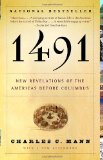
1491 (Second Edition): New Revelations of the Americas Before Columbus
by Charles C. Mann
Paperback from Vintage
Media Published: 2006-
ISBN: 1400032059
In this groundbreaking work of science, history, and archaeology, Charles C. Mann radically alters our understanding of the Americas before the arrival of Columbus in 1492.
Contrary to what so many Americans learn in school, the pre-Columbian Indians were not sparsely settled in a pristine wilderness; rather, there were huge numbers of Indians who actively molded and influenced the land around them. The astonishing Aztec capital of Tenochtitlan had running water and immaculately clean streets, and was larger than any contemporary European city. Mexican cultures created corn in a specialized breeding process that it has been called man's first feat of genetic engineering. Indeed, Indians were not living lightly on the land but were landscaping and manipulating their world in ways that we are only now beginning to understand. Challenging and surprising, this a transformative new look at a rich and fascinating world we only thought we knew.
1491 is not so much the story of a year, as of what that year stands for: the long-debated (and often-dismissed) question of what human civilization in the Americas was like before the Europeans crashed the party. The history books most Americans were (and still are) raised on describe the continents before Columbus as a vast, underused territory, sparsely populated by primitives whose cultures would inevitably bow before the advanced technologies of the Europeans. For decades, though, among the archaeologists, anthropologists, paleolinguists, and others whose discoveries Charles C. Mann brings together in 1491, different stories have been emerging. Among the revelations: the first Americans may not have come over the Bering land bridge around 12,000 B.C. but by boat along the Pacific coast 10 or even 20 thousand years earlier; the Americas were a far more urban, more populated, and more technologically advanced region than generally assumed; and the Indians, rather than living in static harmony with nature, radically engineered the landscape across the continents, to the point that even "timeless" natural features like the Amazon rainforest can be seen as products of human intervention.
Mann is well aware that much of the history he relates is necessarily speculative, the product of pot-shard interpretation and precise scientific measurements that often end up being radically revised in later decades. But the most compelling of his eye-opening revisionist stories are among the best-founded: the stories of early American-European contact. To many of those who were there, the earliest encounters felt more like a meeting of equals than one of natural domination. And those who came later and found an emptied landscape that seemed ripe for the taking, Mann argues convincingly, encountered not the natural and unchanging state of the native American, but the evidence of a sudden calamity: the ravages of what was likely the greatest epidemic in human history, the smallpox and other diseases introduced inadvertently by Europeans to a population without immunity, which swept through the Americas faster than the explorers who brought it, and left behind for their discovery a land that held only a shadow of the thriving cultures that it had sustained for centuries before. --Tom Nissley
A 1491 Timeline
Europe and Asia Dates The Americas 25000-35000 B.C. Time of paleo-Indian migration to Americas from Siberia, according to genetic evidence. Groups likely traveled across the Pacific in boats. Wheat and barley grown from wild ancestors in Sumer. 6000 5000 In what many scientists regard as humankind's first and greatest feat of genetic engineering, Indians in southern Mexico systematically breed maize (corn) from dissimilar ancestor species. First cities established in Sumer. 4000 3000 The Americas' first urban complex, in coastal Peru, of at least 30 closely packed cities, each centered around large pyramid-like structures Great Pyramid at Giza 2650 32 First clear evidence of Olmec use of zero--an invention, widely described as the most important mathematical discovery ever made, which did not occur in Eurasia until about 600 A.D., in India (zero was not introduced to Europe until the 1200s and not widely used until the 1700s) 800-840 A.D. Sudden collapse of most central Maya cities in the face of severe drought and lengthy war Vikings briefly establish first European settlements in North America. 1000 Abrupt rise of Cahokia, near modern St. Louis, the largest city north of the Rio Grande. Population estimates vary from at least 15,000 to 100,000.
Reconstruction of Cahokia, c. 1250 A.D.* Black Death devastates Europe. 1347-1351 1398 Birth of Tlacaélel, the brilliant Mexican strategist behind the Triple Alliance (also known as the Aztec empire), which within decades controls central Mexico, then the most densely settled place on Earth. The Encounter: Columbus sails from Europe to the Caribbean. 1492 The Encounter: Columbus sails from Europe to the Caribbean. Syphilis apparently brought to Europe by Columbus's returning crew. 1493 Ferdinand Magellan departs from Spain on around-the-world voyage. 1519 Cortes driven from Tenochtitlán, capital of the Triple Alliance, and then gains victory as smallpox, a European disease never before seen in the Americas, kills at least one of three in the empire.
Sixteenth-century Mexica drawing of the effects of smallpox** 1525-1533 The smallpox epidemic sweeps into Peru, killing as much as half the population of the Inka empire and opening the door to conquest by Spanish forces led by Pizarro. 1617 Huge areas of New England nearly depopulated by epidemic brought by shipwrecked French sailors. English Pilgrims arrive at Patuxet, an Indian village emptied by disease, and survive on stored Indian food, renaming the village Plymouth. 1620
*Courtesy Cahokia Mounds State Historic Site, Collinsville, Ill., painting by Michael Hampshire. **Courtesy Museum of Indian Arts and Culture, Santa Fe, N.M. (Bernardino de Sahagún, Historia General de las Cosas de Nueva España, 1547-77).
by Dave Eggers
The true story of one family, caught between America's two biggest policy disasters: the war on terror and the response to Hurricane Katrina.
Listed under Hurricanes
A Walk in the Woods (Charnwood Library)
by Bill Bryson
Hardcover from Charnwood (Large Print)
ISBN: 070899038XGeographic Information Systems and Science
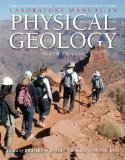
Laboratory Manual in Physical Geology (9th Edition)
by AGI M. American Geological Institute, Richard M. National Association of Geoscience Teachers, Richard M. Busch
Spiral-bound from Prentice Hall
ISBN: 0321689577
This user-friendly, best-selling lab manual examines the basic processes of geology and their applications to everyday life. Featuring contributions from over 170 highly regarded geologists and geoscience educators, along with an exceptional illustration program by Dennis Tasa, Laboratory Manual in Physical Geology, Ninth Edition offers a new activities-based approach that gives you a more complete learning experience in the lab.
by Paul A. Longley, et al
(Paperback)Basin and Range
by John McPhee
Listed under GeologyBibliography of the Earth Sciences for the Horn of Africa : Ethiopia, Eritrea, Somalia and Djibouti, 1620-1993
by Jon E. Kalb
Book Description Thirty years in the making, this bibliography contains 10,250 titles on the earth sciences of the Horn of Africa: Ethiopia, Eritrea, Somalia, and Djibouti for the period 1620 to 1993. A full range of geological topics is provided, e.g., petroleum geology, precious metals, sedimentology, stratigraphy, paleontology, tectonics, volcanology, and geophysics. Also provided are such subjects as the early explorations of the Horn, paleoanthropology, paleoenvironments, archeology, limnology, climatology, hydrology, pedology, and topographic maps. An historical summary of earth science explorations of the Horn is included as well as a CD-ROM to be used to search topics in depth. The authors all have intimate knowledge of the Horn and the published (the American Geological Institute) is the premiere publisher of geological bibliographies in the United States.
Publisher: American Geological Institute; 1st edition (September 29, )Blue Planet
by Andrew Byatt, et al
Hardcover: 384 pages
DK Publishing; ISBN: 0789482657; 1st Us edition (January 1, )Atmospheric Chemistry and Physics : Air Pollution to Climate
by John H. Seinfeld, Spyros Pandis (Contributor)
(Paperback)East Asia and Western Pacific Meteorology and Climate: Selected Papers of the 4th Conference Held in Hangzhou, China October 26 - 28, 1999
by C-P. Chang (Editor), et al
(Hardcover)Mapping Our World: GIS Lessons for Educators
by Anita M. Palmer, et al
(Paperback)Gemstones of the World, Revised Edition
by Walter Schumann
Listed under GemstonesIt's Raining Frogs and Fishes : Four Seasons of Natural Phenomena and Oddities of the Sky
by Jerry Dennis, Glenn Wolff (Illustrator)
It's Raining Frogs and Fishes, a lighthearted look at the world's weather, collects oddments and tidbits on climatological matters. Among the book's many high points are Jerry Dennis's natural history of mirages (there are many more than the usual desert variety) and his examination of the age-old question about whether the aurora borealis roars. At other points he looks into ancient Roman beliefs about lightning, the adaptive strategies of the Galapagos penguin, and the origins of dew. Amazon.comKrakatoa : The Day the World Exploded: August 27, 1883
by Simon Winchester
Listed under VolcanoesPrinciples of Geographical Information Systems (Spatial Information Systems and Geostatistics. (Paper))
by Peter A. Burrough, et al
(Paperback)Meteorology Today : An Introduction to Weather, Climate, and the Environment/With Infotrak
by C. Donald Ahrens
(Hardcover)Voices of the Rocks : A Scientist Looks at Catastrophes and Ancient Civilizations
by Robert M. Schoch Ph.D
(Hardcover)Geography: Realms, Regions and Concepts, 10th Edition
by Harm J. De Blij, et al
(Hardcover)Environmental Applications of Geochemical Modeling
by Chen Zhu, Greg Anderson
(Paperback)Earth: An Introduction to Physical Geology (7th Edition)
by Edward J. Tarbuck, et al
(Paperback)Barron's Regents Exams and Answers : Earth Science
by David Berey (Editor)
(Paperback - December 1985)Grand Canyon Geology
by Stanley S. Beus (Editor), Michael Morales (Editor)
Contributing authors are acknowledged experts in the fields of stratigraphy, paleontology, structural geology, geomorphology, vulcanism, and seismology.
Listed under Grand CanyonThe Map That Changed the World: William Smith and the Birth of Modern Geology
by Simon Winchester
Listed under Geology
Search This Site