



There is no greater illustration of corporate America's moral decay than Amazon. Amazon fired manager protesting Covid-19 infections in warehous.e
Accretion of Extraterrestrial Matter Throughout Earth's History
by Bernhard Peucker-Ehrenbrink
Publisher: Plenum Pub Corp; (October 30, )Active Tectonics
by Edward Keller, Nicholas PinterActive Tectonics and Alluvial Rivers
by Jean F. Dumont
Publisher: Cambridge University Press; 1st edition (April 15, )Advanced Mineralogy 3: Mineral Matter in Space, Mantle, Ocean Floor, Biosphere, Environmental Management, and Jewelry
by Arnold Sergeevich Marfunin
Publisher: Springer Verlag; (June 15, )All About Rocks & Minerals
by Jack Challoner
Reading level: Ages 9-12America's National Parks: The Spectacular Forces That Shaped Our Treasured Lands
by Paul D. Schullery
(Hardcover -- September 1, )Applied Sedimentology, Second Edition
by Richard C. Selley
(Hardcover -- May 15, )Applied Subsurface Geological Mapping with Structural Methods
by Daniel J. TearpockAtlas of Geology and Landforms (Watts Reference)
by Cally OldershawAtlas of Igneous Rocks and Their Textures
by W. S. MacKenzie
Publisher: John Wiley & Sons; (December 1982)Atlas of Rock-Forming Minerals in Thin Section
by W. S. MacKenzie
Publisher: John Wiley & Sons; (July 1980)Basic Methods of Structural Geology: Part I, Elementary Techniques, Part II, Special Topics
by Stephen MarshakBasin and Range
by John McPhee
One of the most valuable tools for the advancement of geological science has in fact been the humble road cut. United States Interstate 80 crosses the entire North American continent, in the process exposing hundreds of millions of years of geological history. In Basin and Range, McPhee, accompanied at times by Princeton geologist Kenneth S. Dreyfuss, demonstrates how the contorted and tilted rocks seen in these road cuts reveal how islands of the earth's crust have floated across the earth's surface, crashing and folding to form basin and range. This is a masterful and sometimes even poetic volume of popular writing about plate tectonics, communicating the profound satisfaction of using scientific research as a tool for understanding the world around us. This is the first of four books on North American geology by McPhee, collectively entitled Annals of the Former World. The other volumes are In Suspect Terrain, Rising from the Plains, and Assembling California. - Amazon.comCalifornia Geology
by Deborah R. Harden
Organized to introduce basic principles and work toward a unifying picture of California geology. With California plate tectonics as a central theme, this book is intended to acquaint non- geologists with California geology. Contains examples of catastrophic natural disasters, excerpts from California history, illustrations of mining methods, and discussions of the societal impacts of geologic processes. A book for practicing geologists in California or any region where fault lines are present and plate tectonics affect the immediate geography.
Listed under California GeologyCanyon Country Geology
by F. A. BarnesCanyonlands Country: Geology of Canyonlands and Arches National Park
by Donald L. BaarsCarbonate Reservoirs
by C. H. MooreCarbonate Sedimentology
by Maurice E. TuckerCaribbean Basins (Sedimentary Basins of the World)
by Paul MannCatastrophic Landslides: Effects, Occurrence, and Mechanisms (Reviews in Engineering Geology, Vol. 15)
by Stephen G. EvansClay Cements in Sandstones
by Sadoon MoradClay Mineralogy
by M. J. Wilson
Out of Print - Try Used BooksCliffs Quick Review Physical Geology
by Mark J. CrawfordCoal Geology
by Larry Thomas
Book Description: The solar system is not akin to a well-oiled machine whose parts move smartly along prescribed paths. It has always been--and continues to be--a messy place in which gravity wreaks havoc. Moons form, asteroids and comets crash into planets, ice ages commence, and dinosaurs disappear. By describing the dramatic consequences of such disturbances, this fascinating book reveals the fundamental interconnectedness of the solar system--and what it means for life on its most interesting planet.A Color Atlas of Carbonate Sediments and Rocks Under the Microscope
by W. S. MacKenzie (Author), A. E. Adams (Author)
Publisher: Halsted Press; (April 23, )A Color Atlas of Rocks and Minerals in Thin Section
by W. S. MacKenzie (Author), A. E. Adams (Author)
Publisher: Halsted Press; 1 edition (March 8, )The Colorado Plateau: A Geologic History
by Donald L. Baars
Publisher: University of New Mexico Press; Revised and Updated editionThe Cordilleran Miogeosyncline in North America: Geologic Evolution and Tectonic Nature
by Henry V. LyatskyCrystals and Crystal Growing
by Alan Holden
Listed under CrystallographyThe Culture of English Geology, 1815-1851
by Simon J. KnellCurrent Perspectives in Geology
by Michael McKinneyThe Dynamic Earth: An Introduction to Physical Geology
by Brian J. Skinner
Publisher: John Wiley & Sons; 4th editionDynamic Earth: Plates, Plumes and Mantle Convection
by Geoffrey F. DaviesDynamics of Rockslides and Rockfalls
by Theodor H. ErismannEarth: An Introduction to Physical Geology (7th Edition)
by Edward J. Tarbuck, et al
(Paperback)Earth Almanac: An Annual Geophysical Review of the State of the Planet (January )
by Natalie GoldsteinEarth Almanac: An Annual Geophysical Review of the State of the Planet (August )
by Natalie GoldsteinEarth Science: Geology, the Environment and the Universe
by Glencoe/MacMillan McGraw HillElectron Microprobe Analysis and Scanning Electron Microscopy in Geology
by S. J. B. ReedEssentials of Geology
by Stanley ChernicoffEssentials of Geology (8th edition)
by Frederick K. LutgensEssentials of Geology and GEODe II CD-ROM Package
by Frederick K. LutgensEssentials of Geology, Learning System Edition
by Frederick K. LutgensEssentials of Geology (with Samson's Earth Systems CD-ROM)
by Reed WicanderEssentials of Geology, Media Edition (with Earth Systems Today CD-ROM)
by Reed WicanderEvolving Earth: Plate Tectonics
by EOA Scientific Systems Inc.Exambusters: Earth Science/Geology Study Cards
by Elizabeth R. BurchardExercises in Physical Geology
by W. Kenneth HamblinExercises in Resource Geology
by Craig-RimstidtField Guide to the Geology of Eastern North America
by David C RobertsA Field Manual for the Amateur Geologist: Tools and Activities for Exploring Our Planet
by Alan M. CvancaraGemstones of the World, Revised Edition
by Walter Schumann
Listed under GemstonesThe Highland Geology Trail
by John L. Roberts
Scotland
Paperback: 120 pages ; Dimensions (in inches): 0.46 x 8.29 x 5.36
Publisher: Luath Press Ltd.;
ISBN: 0946487367Hiking Arizona's Geology
by Ivo LucchittaHiking Colorado's Geology
by Ralph Lee HopkinsHiking Oregon's Geology
by Ellen Morris BishopHiking the Southwest's Geology: Four Corners Region
by Ralph Lee HopkinsHiking Washington's Geology
by Scott BabcockHistorical Geology
by Reed WicanderIntroduction to the Physics of the Earth's Interior
by Jean Paul PoirierAn Introduction to the Rock-Forming Minerals
by W. A. DeerIntroduction to Environmental Geology
by H. ColleyIntroduction to Environmental Geology
by Edward A. KellerIsostasy and Flexure of the Lithosphere
by Anthony Brian WattsGrand Canyon Geology
by Stanley S. Beus et al.
Listed under Grand Canyon
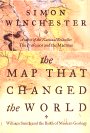
The Map That Changed the World: William Smith and the Birth of Modern Geology
by Simon Winchester
Once upon a time there lived a man who discovered the secrets of the earth. He traveled far and wide, learning about the world below the surface. After years of toil, he created a great map of the underworld and expected to live happily ever after. But did he? Simon Winchester (The Professor and the Madman) tells the fossil-friendly fairy tale life of William Smith in The Map That Changed the World.Born to humble parents, Smith was also a child of the Industrial Revolution (the year of his birth, 1769, also saw Josiah Wedgwood open his great factory, Etruria, Richard Arkwright create his first water-powered cotton-spinning frame, and James Watt receive the patent for the first condensing steam engine). While working as surveyor in a coal mine, Smith noticed the abrupt changes in the layers of rock as he was lowered into the depths. He came to understand that the different layers--in part as revealed by the fossils they contained--always appeared in the same order, no matter where they were found. He also realized that geology required a three-dimensional approach. Smith spent the next 20 some years traveling throughout Britain, observing the land, gathering data, and chattering away about his theories to those he met along the way, thus acquiring the nickname "Strata Smith." In 1815 he published his masterpiece: an 8.5- by 6-foot, hand-tinted map revealing "A Delineation of the Strata of England and Wales." Despite this triumph, Smith's road remained more rocky than smooth. Snubbed by the gentlemanly Geological Society, Smith complained that "the theory of geology is in the possession of one class of men, the practice in another." Indeed, some members of the society went further than mere ostracism--they stole Smith's work. These cartographic plagiarists produced their own map, remarkably similar to Smith's, in 1819. Meanwhile the chronically cash-strapped Smith had been forced to sell his prized fossil collection and was eventually consigned to debtor's prison. In the end, the villains are foiled, our hero restored, and science triumphs. Winchester clearly relishes his happy ending, and his honey-tinged prose ("that most attractively lovable lobsterlike Paleozoic arthropod known as the trilobite") injects a lot of life into what seems, on the surface, a rather dry tale. Like Smith, however, Winchester delves into the strata beneath the surface and reveals a remarkable world. --Sunny Delaney - Amazon.com
Hardcover: 352 pages
HarperCollins; ISBN: 0060193611; (August 7, )
The World According To Pimm: A Scientist Audits the Earth
by Stuart L. Pimm
(Hardcover -- July 20, )Fluvial Processes in Geomorphology
by M. Gordon Wolman (Contributor), et al
Paperback: 522 pages
Dover Pubns; ISBN: 0486685888;
Origins: The Evolution of Continents, Oceans and Life
Applied Chemical Hydrogeology
by Alan E. Kehew
(Paperback -- July 28, )
by Ron Redfern
Hardcover: 360 pages
Univ of Oklahoma Pr (Trd); ISBN: 0806133597; (November )The Path of the Pole
by Charles H. Hapgood
Book Description: Hapgood's tour de force is back in print! This riveting account of how Earth's poles have flipped positions many times is the culmination of Hapgood's extensive research of Antarctica, ancient maps and the geological record. This amazing book discusses the various pole shifts in Earth's history-occurring when Earth's crust slips in the inner core-and gives evidence for each one. Packed with illustrations, this book is the reference other books on the subject cite over and over again.
(Paperback -- October )
Resources of the Earth: Origin, Use, and Environmental Impact (3rd Edition)
by James R. Craig, David J. Vaughan, Brian J. Skinner, David Vaughan
Hardcover from Prentice Hall
Principles of Sedimentology and Stratigraphy (3rd Edition)
by Sam Boggs
Hardcover from Prentice Hall
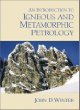
Introduction to Igneous and Metamorphic Petrology, An
by John D. Winter
Hardcover from Prentice Hall
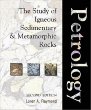
Petrology: The Study of Igneous, Sedimentary and Metamorphic Rocks
by Loren A. Raymond
Hardcover from McGraw-Hill Science/Engineering/Math
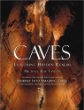
Caves : Exploring Hidden Realms
by Michael Ray Taylor, Ronal C. Kerbo
Hardcover from National Geographic
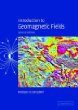
Introduction to Geomagnetic Fields
by Wallace H. Campbell
Paperback from Cambridge University PressDictionary of Geological Terms
Earth: An Introduction to Physical Geology (With CD-ROM)
by Edward J. Tarbuck, et al (Paperback -- January 15, )
by Robert L. Bates, Julia A. Jackson (Editor)
(Paperback -- April 1984)Earth Divination Earth Magic: A Practical Guide to Geomancy
by John Michael Greer
Listed under DowsingField Geology Illustrated
by Terry S. Maley
Paperback from Mineral Land Pubns
Geology in the Field
by Robert R. Compton
Hardcover from Wiley Text Books
1985
Reading the Earth - Landforms in the Making
Economic Risk in Hydrocarbon Exploration
by James A. MacKay, et al (Hardcover -- January 15, )
by Jerome Wyckoff
(Paperback -- October 25, )Roadside Geology of Wyoming (Roadside Geology Series)
by Darwin R. Spearing, David R. Lageson
Listed under Roadside Geology
Applied Hydrogeology (4th Edition)
by C. W. Fetter
(Hardcover -- November 16, )Turquoise Unearthed: An Illustrated Guide
by Joe Dan Lowry
Listed under Gemstones
Rockhounding Colorado (FalconGuide)
Plate Tectonics: An Insider's History of the Modern Theory of the Earth
by Naomi Oreskes (Editor), Homer Le Grand (Contributor)
(Hardcover -- January 15, )
by William A. Kappele (Paperback -- May )
T. Rex and the Crater of Doom
by Walter Alvarez (Paperback -- August )
Water: A Natural History
by Alice Outwater (Paperback -- October )
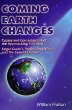
Coming Earth Changes: The Latest Evidence
by William Hutton (Paperback -- December )
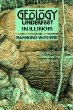
Geology Underfoot in Illinois
by Ray Wiggers, Raymond Wiggers (Paperback -- November )
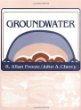
Groundwater
by R. Allan Freeze, John A. Cherry
(Hardcover -- May 8, 1979)Principles of Sedimentology and Stratigraphy (3rd Edition)
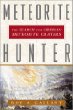
Meteorite Hunter: The Search for Siberian Meteorite Craters
by Roy A. Gallant
(Hardcover -- January 23, )
by Sam, Jr. Boggs
(Hardcover -- December 15, )Sedimentary Rocks in the Field (Geological Field Guide Series)
by Maurice E. Tucker
(Paperback -- April )Voices of the Rocks : A Scientist Looks at Catastrophes and Ancient Civilizations
by Robert M. Schoch Ph.D
(Hardcover)Roadside Geology of Washington (Roadside Geology Series)
by David Alt, Donald W. Hyndman (Contributor)
Listed under Roadside GeologySimon and Schuster's Guide to Gems and Precious Stones
by C. Ciprianai, et al
Listed under GemstonesWindows into the Earth: The Geologic Story of Yellowstone and Grand Teton National Parks
by Robert B. Smith, Lee J. Siegel
Book Description: Millions of years ago, the North American continent was dragged over the world's largest continental hotspot, a huge column of hot and molten rock rising from the Earth's interior that traced a 50-mile wide, 500-mile-long path northeastward across Idaho. Generating cataclysmic volcanic eruptions and large earthquakes, the hotspot helped lift the Yellowstone Plateau to more than 7,000 feet and pushed the northern Rockies to new heights, creating the jewel of the U.S. national park system: Yellowstone. Meanwhile, forces stretching apart the western U.S. created the mountainous glory of Grand Teton National Park. Smith and Siegel offer expert guidance through this awe-inspiring terrain, bringing to life the grandeur of these geologic phenomena as they reveal the forces that have shapedand continue to shapethe greater Yellowstone-Teton region. Over seventy illustrations, including fifty-two in full color, illuminate the beauty of the landscape, while two final chapters provide driving tours of the parks to help visitors enjoy and understand the region's wonders.
Paperback: 242 pages ; Dimensions (in inches): 0.68 x 9.94 x 7.94
Publisher: Oxford University Press;
ISBN: 0195105974
Browse GeologyBrowse Rocks & Minerals
Search This Site
Geology on DVD