Lunar Declinational Tides

Aviation


Main Menu
Gallery Index Morning Glory
Morning Glory
Home Burketown Historical Images Aerology Airstrips Articles Burketown Cane Toads Carpentaria Downs Century Mine C Mac Data Donald Thomson Escott History Escott Lodge First Glory Floraville Gorsky Images Morning Glory 1934 Morning Glory 1989 Morning Glory 1990 Morning Glory 1994 Morning Glory 1995 Morning Glory 1995 Billo Morning Glory 1997 Morning Glory 1997 Dr Death Morning Glory 1998 Morning Glory 1999 Morning Glory 2000 Morning Glory 2001 Morning Glory Pilots Lawn Hill & Adels Grove Northern Australia Pilot Notes Riversliegh Roll Clouds Satellite Pictures Sitemap UFOs Webrings Resources
Galleries
Morning Glory Gallery Morning Glory Clouds Burketown 2009


Richard Holle of  Aerology.com writes:
 
1998-09-12 10:37:00 
From looking at the dates listed on your site <http://www.dropbears.com/brough/index.html> it appears to me that you have found standing waves of the Lunar Declinational tides in the atmosphere, that peak in occurance around the time when the moon crosses the Equator in it's 27.32 day declinational cycles in the Southern spring. A more detailed study of  how the past periods/days of peak production fit into the patterns of Lunar declinational movements might give you a better method for forecasting the size, type, and direction of the wave propagation patterns. I have used this method to forecast mesoscale weather patterns for the USA that repeats 70% better than climatology. 

Web site http://www.aerology.com explains most of this pattern on the index page with ....  links to rest of my theory on lunar declinational tidal forces acting on the weather, in the atmosphere. ..... The moon crosses from South to north on the 4/5th of October in 1998 equivalent to the16/17th of October of 1997. This year should produce waves about the same on the 4th, 5th, and 6th of October if there is anything to the lunar tidal idea. 
Good Sailing, 
Richard Holle 

Richard was right!

Several sailplanes flew on good waves on the 4th,5th, and 6th of October 1998.
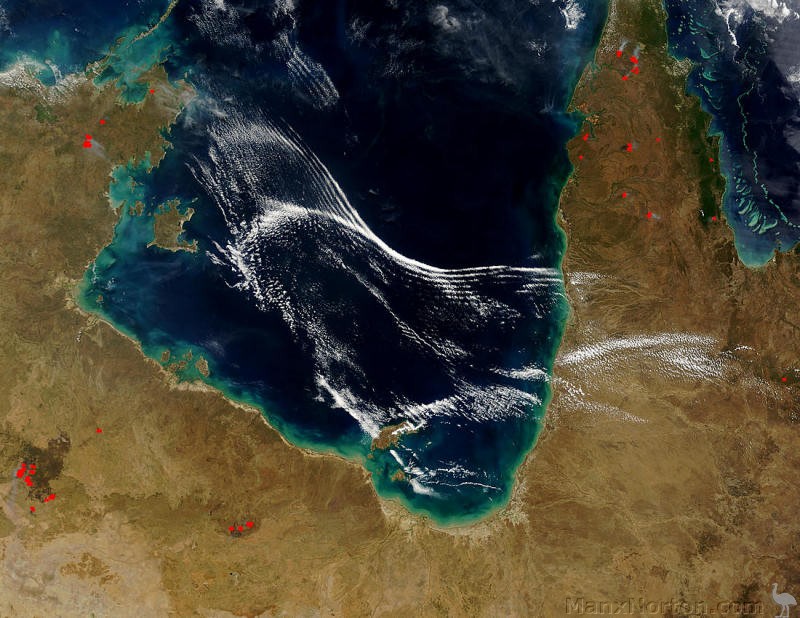
One of these waves took a widely scattered group of four gliders up to halfway across the Gulf, soaring the stuff of which dreams are made. Imagine singing silly songs as you chandelle up from sea-level on a thing of joy and beauty. Zooming flat-stick for hundred's of k's in endless torrents of lift. Soaring on a full-moonlit night towards the morning which will explode across across your sky, revealing a huge arc of the amazing wave gesturing towards Gove on the north-western tip of Australia.
 

On his website, Richard published the following prior to the 1999 season:

There might be a slight chance for weak Morning Glory wave production on September 19th, or 20th. 1999, then again a little better chance on the 22nd, or 23rd. of September. The first real good chance for soaring, should be a three or four day run from around the 2nd. of October (2), thru the 5th. or 6th. Then again a one or two day long chance as the moon crosses the Equator headed South, on the 9th, 10th. a two day gap and then a last chance for some MG production on the 12th, or 13th.

Right again, or near as damnit - we had wave days on 21st, 22nd and 24th Sept (tho the latter was a dry one, which we missed by mere minutes).
Waves came thru in early October before first light, I don't yet have the exact dates. A very good one was soared on 12th October.

Morning Glory data - waves and dates from 1989 to the present.

Ken Ring's Predicting Weather by the Moon
http://www.gothicimage.co.uk/books/weathermoon1.html

Ray Tomes' Cycles in the Universe
(was at http://www.kcbbs.gen.nz/users/rtomes/rt-home.htm which now gives a 404)

2) Originally this read November - a typo.

Unjustified 
 
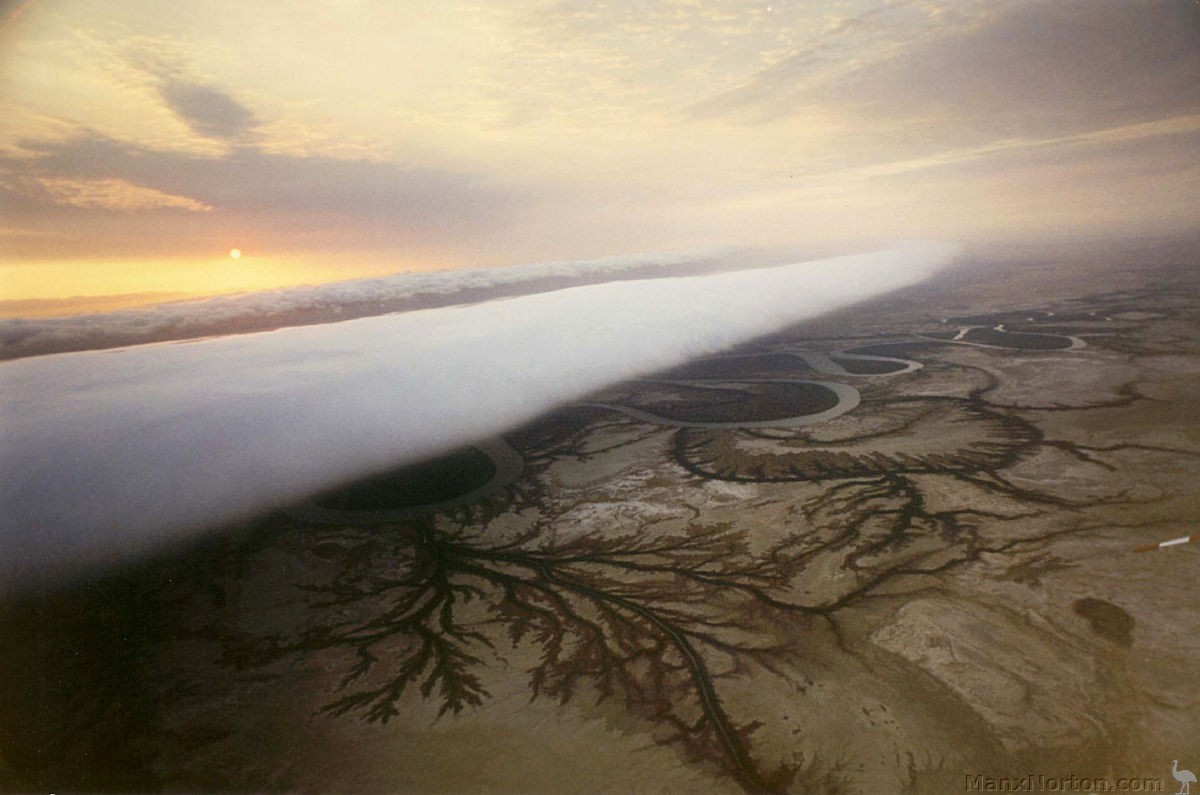
Huge Morning Glory Cloud at Point Parker, 1994 Morning Glory Cloud approaching Kangaroo Point, 1993