



There is no greater illustration of corporate America's moral decay than Amazon. Amazon fired manager protesting Covid-19 infections in warehous.e
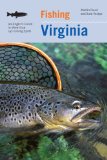
Fishing Virginia: An Angler's Guide to More than 140 Fishing Spots
by Martin Freed, Ruta Vaskys
Paperback from Lyons Press
ISBN: 1599211394
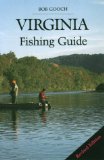
Virginia Fishing Guide, revised edition
by Bob Gooch
Paperback from University of Virginia Press
ISBN: 0813913837
'Virginia Fishing Guide' is the road map to both the obscure and the best-known places to fish in the Old Dominion.
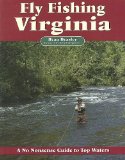
Fly Fishing Virginia: A No Nonsense Guide to Top Waters
by Beau Beasley
Paperback from No Nonsense Fly Fishing Guidebooks
ISBN: 1892469162
From small creeks to the expansive Jackson River, Beau Beasley shows you where to fly fish in Virginia. Detailed maps, photographs, and Beasley's wisdom guide you through the many waters in the Old Dominion. Use this book to plan your next trip and then take it along with you!
The Best in Tent Camping: Virginia: A Guide for Car Campers Who Hate RVs, Concrete Slabs, and Loud Portable Stereos
by Randy Porter, Marie Javins
Paperback from Menasha Ridge Press
ISBN: 089732563X
From the storied coastline to the mountains of Shenandoah, camping in the Old Dominion has never been better. The Best in Tent Camping: Virginia is a guidebook for tent campers who like quiet, scenic, and serene campsites. It's the perfect resource if you blanch at the thought of pitching a tent on a concrete slab, trying to sleep through the blare of another camper's boombox, or waking up to find your tent surrounded by a convoy of RVs. Each campground profile gives unbiased and thorough evaluations, taking the guesswork out of finding the perfect site.
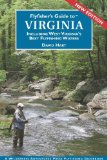
Flyfisher's Guide to Virginia: Including West Virginia's Best Fly Fishing Waters (Flyfishers Guide) (Revised April, 2010)
by David Hart
Paperback from Wilderness Adventures Press
ISBN: 1932098399
The Flyfisher's Guide to Virginia is the most comprehensive book ever written on flyfishing in Virginia and West Virginia. David Hart, a native of Virginia, covers both states, breaking them up into six regions. He covers rivers, streams, and lakes and the great fishing opportunities for rainbow trout, smallmouth bass, largemouth bass, brook trout, brown trout, pickerel, muskie, and pan fish. The Shenandoah National Park streams are covered, including the Rapidan, Robinson, Cedar Run, White Oak Canyon Run, Rose, Hogback Branch, Staunton, Big Run and many others. All of the great rivers are covered including the James, Potomac, Rappahannock, Rapidan, South & North Fork of the Holston, North Anna, Chickahominy, Laurel Fork, Mossy, Beaver, Clinch, the New and other great smallmouth bass and trout waters. David describes in detail each water with tips on how to fish the waters, recommended flies, hatch charts, and stream facts. He also covers some of the little known but great flyfishing gems in each state. There are over 110 detailed fishing maps showing river miles, rapids, boat launches, access points, public lands, roads, and campgrounds. David also gives you all of the important travel information you need to plan a successful trip, including a listing of fly shops, sporting good stores, motels, guides, lodges, restaurants, car and boat rentals, and more.
Bounty of the Chesapeake: Fishing in Colonial Virginia
by James Wharton
Paperback from Univ of Virginia Pr
ISBN: 0813901375Excerpt: The voyage to America in 1607 was like a journey to a star. Veteran rovers though the English were, none of them had any clear idea of what to expect in the new land of Virginia. Only one thing was certain: they would have nothing there but what they took with them or wrought from the raw materials of the country. What raw materials? They had reliable information that the climate was mild. Therefore, crops could be raised. They learned of inexhaustible timber: so ships and dwellings and industrial works could be built. They hoped for gold and dreamed of access to uncharted lands of adventure. But putting first things first, how would they eat in the meantime? When Sir Walter Raleigh established the first English colony in "Virginia"--on what is now Roanoke island, North Carolina--two good reporters, one a writer, the other an illustrator, were commissioned to describe what they saw. This was twenty-two years before Jamestown and naturally all the material consisted of Indian life and customs. Thomas Hariot wrote: For four months of the year, February, March, April and May, there are plenty of sturgeon; and also in the same months of herrings, some of the ordinary bigness as ours in England, but the most part far greater, of eighteen, twenty inches, and some two feet in length and better; both these kinds of fish in these months are most plentiful and in best season which we found to be most delicate and pleasant meat. There are also trouts, porpoises, rays, oldwives, mullets, plaice, and very many other sorts of excellent good fish, which we have taken and eaten, whose names I know not but in the country language we have of twelve sorts more the pictures as they were drawn in the country with their names. The inhabitants use to take them two manner of ways, the one is by a kind of weir made of reeds which in that country are very strong. The other way which is more strange, is with poles made sharp at one end, by shooting them into the fish after the manner as Irishmen cast darts; either as they are rowing in their boats or else as they are wading in the shallows for the purpose.
Virginia Blue-Ribbon Fly Fishing Guide (Blue-Ribbon Fly Fishing Guides)
by Harry Murray
Paperback from Frank Amato Publications
ISBN: 157188159X
Fishing Virginia's Highlands: An Angler's Guide (Angler's Guides)
by M. W. Smith
Paperback from University of Virginia Press
ISBN: 0813926572
Rich in angling lore, the secluded lakes and rivers of Virginia's Highlands offer some of the best trout and smallmouth bass fishing found anywhere in the state. From the Alleghany Highlands in the north (which encompass Alleghany, Bath, and Rockbridge counties) to the Blue Ridge/Grayson Highlands in the southwest (which include Grayson, Smythe, and Washington counties), these portions of the commonwealth offer many high-yield rivers, lakes, and streams including Lake Moomaw, the Maury River, South Holston Lake, and the North Fork of the Holston River. In his new guide, Fishing Virginia's Highlands, M. W. Smith extends his ongoing tour of the state's greatest fishing spots to these two remote regions, offering readers excellent advice on where, when, and how to catch more fish in Virginia's Highlands.
Renowned for its mineral springs, the Alleghany Highlands is home to world-famous spas, including the Homestead in Bath County, making it a popular destination for many outdoor enthusiasts. The Blue Ridge/Grayson Highlands, which is surrounded by such cities as Abingdon, Bristol, Winston-Salem/Greensboro, and Charlotte, is also a common weekend getaway spot. By considering these two areas in one volume, Smith provides valuable information for anglers and other visitors, giving readers the information they need to enjoy the natural beauty of the waters and to catch more fish from them. Complete with a comprehensive map of the regions' streams, notes on specific fishing locations keyed to maps in DeLorme's Virginia Atlas and Gazetteer, and an appendix that lists local guide services, tackle shops, camping sites, and parks, Smith's guidebook is a compact and informative resource.
Whether you are a visitor or a longtime resident, novice angler or pro, Fishing Virginia's Highlands will prove an indispensable guide to every fishing adventure you undertake in highland waters.
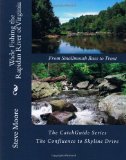
Wade Fishing the Rapidan River of Virginia: From Smallmouth Bass to Trout
by Steve Moore
Paperback from Calibrated Consulting, Inc
ISBN: 0982396295
The Rapidan River is an angler's dream that can be fished year round since the watershed includes tough, cranky smallmouth bass as well as aggressive mountain brook trout. Following the precedent set in his other CatchGuide books, Steve starts the coverage at the mouth of the Rapidan where it slams into the Rappahannock at the smallmouth bass fishing heaven known simply as "the Confluence" and ends above the old presidential retreat at Camp Hoover high in the Blue Ridge Mountains.
There are 18 different access points between those two locations that open up over 34 miles of water. Even though the book runs over 50,500 words, that is not enough to describe the fabulous fishing on this premier river.
248 pictures, coupled with 21 maps, tell the rest of the story. Use them to put your experienced angler's eye on the water and make your own judgment before you drive to any particular location. In the Internet age, pictures and words are not enough. The book includes 162 GPS coordinates to obtain customized directions via the Internet or put the coordinates directly into a GPS receiver to guide your day on the water.
Beyond wade fishing, Steve discusses each access point in terms of its compatibility to launch a canoe or a kayak. Once in the water, floating anglers will be well served to use this guide to move quickly to the good spots and not waste time floating over unproductive water. In particular, they will find the detailed coverage that covers every foot of the river from Elys Ford all the way to the Confluence exceptionally focused and useful.
Fishing the Roanoke Valley: An Angler's Guide
Wade Fishing the Rappahannock River of Virginia: Smallmouth Bass and Shad
by Steve Moore
Paperback from Calibrated Consulting, Incorporated
ISBN: 0982396260
The Rappahannock River is home to some of the biggest, meanest smallmouth bass in Virginia. These cantankerous beasts cruise silently in the quiet pools and fast runs below old trench lines marking the remains of violent Civil War battles or in remote, oddly named places like Snake Castle Rock. Steve Moore shares his years of experience fishing this premier river to guide you to the best water between the fall line in Fredericksburg and Chester Gap high in the Blue Ridge. Using 252 pictures and 23 maps to round out the descriptions, the book covers 24 access points that open up over 42 miles of water to wade fishing. Even though the book is oriented at anglers who fish on their feet, kayakers and canoeists will find it equally useful to identify the productive water to target as they float downriver.
Given we are in the internet age, Steve includes 279 GPS coordinates usable for customized directions via the Internet or loadable into a GPS receiver to guide your day on the water. Finally, any discussion of the Rappahannock must mention the superb fishing available during the spring shad run. Steve dedicates a chapter to where to go and how to catch the fish called the "poor man's tarpon."
The first few paragraphs of Steve's introduction provide perspective:
"In the Algonquian Indian language, Rappahannock means "rapidly rising and falling waters" and, every Spring, the river demonstrates why the name is appropriate. During that stormy season, flood waters charge downriver with fantastic velocity and violence causing the huge spikes in turbulence that are an inescapable lure to legions of kayakers. But the name is inadequate to describe the quality and variety of the fishery that exists under its roiling surface. Although the name is unlikely to change to whatever the Algonquian translation of "angler's heaven" is, in addition to smallmouth bass, you are likely to scream a panicked "FISH ON" as massive redbreast sunfish, carp or even yellow perch and channel catfish pull hard against your smoking drag once the season drifts from frantic Spring into calm Summer.
Granted, I do not cover all 184 miles of the Rappahannock from its dim origin at Chester Gap in the Blue Ridge to the tidal flats lining the Chesapeake Bay, but I do cover the 59 (42+ wadable) miles that represent the interesting core of the river for smallmouth bass fishing enthusiasts. Besides, below the bridge, the river runs wide, slow and sandy; becoming the domain of largemouth bass pursued by hard-eyed anglers leveraging every ounce of technology packed into supercharged bass boats.
Above the fall line, the high-powered bawl of a 200 hp Mercury engine is replaced by the quiet dip of paddles or the hushed slosh of ragged sneakers moving through the shallows. While the book is useful for kayakers and canoeists since the good places are good regardless of how you reach them, my focus is on those who fish on their feet - the sweaty grunt, the fishing infantry. The book includes the well-known angler's playgrounds at Snake Castle Rock and the Confluence - usually the restricted domains of kayakers and canoeists who reach these honey holes via a long downstream float. As I describe later, a short hike, coupled with a bit of perspiration, gives you the opportunity to fish normally inaccessible locations."
by M. W. Smith
Paperback from University of Virginia Press
Maine Lobsterboats: Builders and Lobstermen Speak of Their Craft
by Virginia L. Thorndike
Paperback from Down East Books
Special OrderFlyfisher's Guide to the Virginias: Including West Virginia's Best Fly Waters
by David Hart, R. D. Dye
Paperback from Wilderness Adventures Press
Trout Streams of Virginia: An Angler's Guide to the Blue Ridge Watershed (Trout Streams of Virginia, 3rd Ed)
by Harry Slone, Slone Harry Virginia Trout Streams
Paperback from Countryman Pr
Virginia Fishing Guide
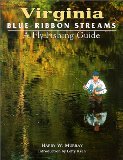
Virginia Blue-Ribbon Streams: A Fly-Fishing Guide
by Harry Murray
Paperback from Frank Amato Pubns
by Bob Gooch
Paperback from University of Virginia Press
The James River Guide
by Bruce Ingram
Paperback from Ecopress
Fishing the New River Valley: An Angler's Guide
by M. W. Smith
Paperback from University of Virginia Press
Freshwater Fishing in Virginia
by Gerald Almy
Paperback from Casco Communications, LLC
Catch and Release in Marine Recreational Fisheries: Proceedings of the Symposium, National Symposium on Catch and Release in Marine Recreational Fisheries, Held at Virginia Beach, Virginia, Usa, 5-8 (American Fisheries Society Symposium, 30)
by National Symposium on Catch and Release in Marine Recreational Fisheri, J. A. Lucy, Anne L. Studholme, American Fisheries Society
Hardcover from American Fisheries Society
Special Order
Search This Site