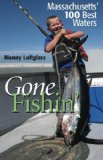
Gone
Fishin': Massachusetts' 100 Best Waters
by Manny Luftglass
Paperback from UPNE
ISBN: 1584656867
From catching rainbows, browns, and brookies in the streams and rivers
of the Berkshires to hauling in cod, haddock, and tuna in the salt waters
of Stellwagen Bank, this book is your ultimate guide to fishing in Massachusetts.
Manny Luftglass, a veteran fisherman and journalist, has written a definitive
and entertaining guide to fishing the salt, fresh, and brackish waters
of the Bay State. Providing easy-to-follow directions, boat launch information,
and detailed advice on live and dead baits, artificial lures, fishing methods,
equipment, depths, weather, best times of the day and the year, and even
specific areas to fish at most locations, this is truly the only fishing
guide to Massachusetts you'll ever need. For ease of use, the book has
been organized according to the areas recognized by the Massachusetts Department
of Fisheries and Wildlife, with an accompanying map for each section. Good-humored
and packed to the gills with useful information, it's like having the author
as your personal fishing guide. |
| |
Fishing
the Massachusetts Coast
by John Gibb
Paperback from Burford Books
ISBN: 1580801196
A thorough, detailed guide to fishing these storied waters, with insider
tips on where to fish, how to get there, plus techniques and strategies. |
| |
Trout
Streams of Southern New England: An Angler's Guide to the Watersheds of
Massachusetts, Connecticut, and Rhode Island (Trout Streams)
by Tom Fuller
Paperback from Countryman Press
ISBN: 088150470X
A complete new guide--the first of its kind--to the best fly-fishing
in the streams, lakes, and ponds of southern New England.
Within the confines of southern New England there are more trout streams,
rivers, lakes, and ponds than any one angler can fully appreciate in a
lifetime. The variety of waters in itself is quite astonishing, as is their
fertility and ability to sustain trout year-round. This variety and fertility
belies the conventional wisdom--namely, that southern New England contains
only marginal trout waters, and that they are overcrowded and overfished.
It is, in fact, a fly-fisher's delight, with well-protected watersheds,
stocked rivers, and stretches of pristine, wild streams. No matter where
you stand in southern New England, Tom Fuller can guarantee that you are
within 15 miles of one of the exceptional trout waters described in his
new book. He guides anglers to every recommended trout water--over 130
streams and rivers in Massachusetts, Connecticut, and Rhode Island--making
this the most comprehensive guide available. In addition, you'll find thorough,
expertly researched access directions and up-to-date information on regulations
and stream conditions. Nineteen maps detail the major rivers; and Fuller
also gives advice on patterns to match the hatches and a chart showing
insect emergence dates. The only trout-fishing guide to this region, it
covers 19 major watersheds with over 130 waters described. |
| |
Fly
Fishing Boston: A Complete Saltwater Guide from Rhode Island to Maine (Backcountry
Guides)
by Terry Tessein
Paperback from Countryman Press
ISBN: 088150517X
Where and how to fly fish within two or three hours of downtown Boston.
Terry Tessein, a veteran of a lifetime of fishing the New England coastline,
shares those years of experience in the first detailed guidebook to the
multitude of fly fishing possibilities within easy reach of downtown Boston.
From the shores of Rhode Island to the coastline of southern Maine, Tessein
will guide the reader on where to go, when to go to find particular species,
and what flies and tactics to use at each venue.
Fly Fishing Boston covers both well known areas like the Joppa
Flats of Newburyport, as well as the relatively unknown and underfished
areas along this stretch. In addition, Tessein explains such important
coastal fishing information as tides and how they affect the movement of
fish. Finally, Fly Fishing Boston is detailed enough to provide
even regional fly patterns unique to specific zones. It will be a book
to both read in the off-season and to pack in the tackle bag when heading
out for a day of fishing. 30 black-and-white photographs, 6 maps, index |
| |
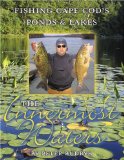
The
Innermost Waters: Fishing Cape Cod's Ponds & Lakes
by Peter Budryk
Paperback from On Cape Publications
ISBN: 0975850237
Delivery sometimes delayed
Including the most successful techniques
for catching trophy fish on Cape Cod, this book is a must-have reference
to the Cape's best waters.
|
| |
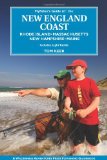
Flyfisher's
Guide to New England Coast: Rhode Island, Massachusetts, New Hampshire,
and Maine (Flyfishers Guide) (Flyfisher's Guides)
by Tom Keer
Paperback from Wilderness Adventures Press
ISBN: 1932098755
The Flyfisher's Guide to the New England Coast: Rhode Island, Massachusetts,
New Hampshire, and Maine is the most comprehensive guide ever written on
the innumerable fishing opportunities in this beautiful area of the country.
Nationally known writer and angler Tom Keer guides the reader along the
entire coastline, including all bays, coves, jetties, tributaries, peninsulas,
and islands. Every nook and cranny is covered. Keer covers the seasons,
fish species, light tackle, flies, boats, tactics, forage fish, and includes
a smattering of the history. Few know the ins and outs of this water better,
and even fewer can put it on paper as eloquently as Keer. Dozens of maps
detail every access point, boat launch, water feature and depth, giving
rookie and veteran anglers alike all the information required to have the
times of their lives hammering the big fish available in these waters.
From stripers to sharks and everything in between, this is the must-read
guide for fishing the coast, from Rhode Island to Main. |
| |
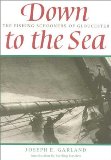
Down
to the Sea: The Fishing Schooners of Gloucester
by Joseph E. Garland
Paperback from David R Godine
ISBN: 1567921418
No vessel in American history paid off more handsomely or at a more
terrible cost than the Gloucester fishing schooner. These were the fastest,
leanest, and most challenging working boats ever built. They carried enormous
canvas, were designed with the fine lines and long overhangs of racing
yachts, but were expected to race off to the Grand Banks and back, their
holds crammed with fish. The schooners were built for speed, not safety,
and if their payout was large, so was the loss of life: a staggering 668
schooners and 3,755 Gloucestermen went to the cruel depths in the 68 years
between 1830 and 1897 alone.
Down to the Sea is an illustrated chronicle of these everlastingly
romantic vessels and of the intrepid captains and crews who worked them
from the early eighteenth until well into the first quarter of this century.
It is the tale of men, a town, and an industry that swiftly became the
stuff of American legend.
Here, too, are previously unpublished masterpieces of marine photography,
many from the Cape Ann Historical Association s important collection, which
provide a visual record of both shocking hardship and sheer physical beauty.
Gloucester, her boats and her crews are much in the news these days. In
this glorious book we see that the legacy, legends, and tragedies that
have always been integral to this brave harbor are nothing new; only the
names have changed. |
| |
Dead
Men Tapping : The End of the Heather Lynne II
by Kate Yeomans
Hardcover from International Marine/Ragged Mountain Press
Lone
Voyager: The Extraordinary Adventures of Howard Blackburn, Hero Fisherman
of Gloucester
by Joseph E. Garland
Paperback from Touchstone Books
Fast
and Able
by Gordon Thomas
Paperback from Commonwealth Editions
Trout
Streams of Southern New England: An Angler's Guide to the Watersheds of
Massachusetts, Connecticut, and Rhode Island (Trout Streams of Southern
New England, 1st Ed)
by Tom Fuller, Patricia Fuller
Paperback from Countryman Pr
The
Wapshot Chronicle
by John Cheever
Paperback from Perennial
Down
to the Sea: The Fishing Schooners of Gloucester
by Joseph E. Garland, Sterling Hayden
Paperback from David R Godine
A
Doryman's Day
by R. Barry Fisher, Barry A. J. Fisher
Paperback from Tilbury House Publishers
Fly
Fishing Boston: A Complete Saltwater Guide from Rhode Island to Maine
by Terry C. Tessein
Paperback from Countryman Pr
Farmers
& Fishermen: Two Centuries of Work in Exxes County, Massachusetts,
1630-1850
by Daniel Vickers
Paperback from Univ of North Carolina Pr
1994
Housatonic
River: Fly Fishing Guide
by Jeff Passante
Paperback from Frank Amato Pubns