



There is no greater illustration of corporate America's moral decay than Amazon. Amazon fired manager protesting Covid-19 infections in warehous.e
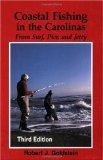
Coastal Fishing in the Carolinas: From Surf, Pier, and Jetty
by Robert J. Goldstein
Paperback from John F Blair Pub
ISBN: 0895871955
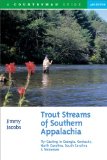
Trout Streams of Southern Appalachia: Fly-Casting in Georgia, Kentucky, North Carolina, South Carolina & Tennessee (Trout Streams Guides)
by Jimmy Jacobs
Paperback from Countryman Press
ISBN: 0881508586
This completely updated third edition of Trout Streams of Southern Appalachia covers Southeastern hatches in Georgia, Kentucky, the Carolinas, and Tennessee. Jacobs includes detailed maps and access information for each stream covered.
50 black & white
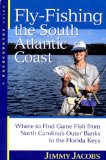
Fly-Fishing the South Atlantic Coast : Where to Find Game Fish from North Carolina's Outer Banks to the Florida Keys
by Jimmy Jacobs
Paperback from Backcountry Guides
ISBN: 0881504335
A guide to the best saltwater fly-fishing along the popular southeast coast, from North Carolina's Outer Banks to the Florida Keys. Saltwater angling is the fastest growing segment of the fly-fishing market and the southeastern Atlantic coast is a prime destination area for saltwater anglers. Many of the game species that feed along these southeast Atlantic waters are legendary--known for their craftiness, beauty, and ability to put up a rugged fight. Anglers seek out species such as the red drum, tarpon, and spotted seatrout with an almost religious zeal. Here is a guide that directs anglers to the precise locations where these game fish are found. An introductory chapter covers the species of fish commonly sought during different seasons, where they school, how they feed, and what gear to use to catch them. Other popular game species in the southeast include redfish, striped bass, and pompano. Further chapters give detailed advice on gear selection and saltwater flies; and explain how to fish the different types of inshore waters found along the southeast coast, from ocean inlets to tidal creeks to oystershell bars. The author has augmented his decades of experience as a saltwater angler by driving 15,000 miles, wading miles of flats, and spending countless hours aboard boats to bring a particular precision to this guide. He concentrates on areas where good fishing is virtually guaranteed, access is easy, and the area is particularly scenic or uncrowded. He has made a special effort to include places that are accessible to wading or shore-bound anglers. Detailed maps of each area make trip planning easy. 50 black and white photographs, 35 maps.
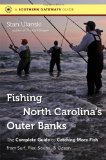
Fishing North Carolina's Outer Banks: The Complete Guide to Catching More Fish from Surf, Pier, Sound, and Ocean (Southern Gateways Guides)
by Stan Ulanski
Paperback from The University of North Carolina Press
Media Published: 2011-
ISBN: 0807872075
In this hands-on, how-to guide to fishing North Carolina's Outer Banks, expert fisherman Stan Ulanski combines his enthusiasm, his experience, and his scientific expertise to show anglers how to catch more fish.
Focusing on the essential but often misunderstood links between recreational fishing and the biology, geography, and natural history of the region, Fishing North Carolina's Outer Banks fosters an understanding of the aquatic environment of one of the nation's prime fishing destinations. Ulanski reveals the best approaches to the six main Outer Banks angling scenarios: surf, pier, sound, offshore, inshore, and reef, ledge, and shipwreck fishing. The book features illustrated fish profiles--each loaded with essential information, including identification, food value, and habitat pointers--and species-specific fishing tips for thirty-five of the Outer Banks' most common game fish. And, once you've made your catch, Ulanski provides important storing, cleaning, and cooking advice--including six of his favorite fresh fish recipes. This is a trusty tacklebox tool for planning fishing trips to the Outer Banks and for understanding the underwater setting of the fish you're out to catch.
Spotted seatrout: Natural history and fishing techniques in South Carolina (Educational report)
by Charles A Wenner from Marine Resources Research Institute, Marine Resources Division, South Carolina Department of Natural Resources
North Carolina's Ocean Fishing Piers: From Kitty Hawk to Sunset Beach
by Al Baird
Paperback from The History Press
ISBN: 1609491483
From the sweltering summer heat to the biting winter chill, thousands of dedicated anglers flock to North Carolina's piers to cast lines into the salty depths, hoping to reel in anything from whiting and shark to the highly prized sheepshead, red drum and even the elusive king mackerel. Fishing pier enthusiast Al Baird recounts the history of these wind-worn structures, from the incredible story of the oldest pier in North Carolina to the tales of the destructive hurricanes that ripped through the Outer Banks. Discover how seaside towns have grown and changed while their piers remain the same, as Baird recounts the memories and accomplishments of the men and women who have visited and loved these slowly disappearing landmarks.
Sunrise on the Santee: A Memoir of Waterfowling in South Carolina
by Julius M., Jr. Reynolds
Hardcover from University of South Carolina Press
ISBN: 1570034540
For more than half a century, J. M. Reynolds, Jr. has hunted waterfowl, and the Santee lakes of South Carolina have been his sporting paradise. Early mornings, cold duck blinds, and sunrises on the Santee compose some of his most prized memories. Reynolds has lived on both sides of the lakes and has roamed them from the Santee delta to the Pinopolis powerhouse. He has witnessed both the glory days and the decline of duck hunting in South Carolina. With this heartfelt memoir, Reynolds recalls his best hunting stories, shares his knowledge of waterfowling, and chronicles the dramatic changes in his beloved sport.Describing himself as a Sumter boy who "grew up chasing ducks in Pocotaliago Swamp and from one end of the lake to the other," Reynolds takes readers into the Santee's best duck hunting areas--from Cane Branch, Billup's Slough, and Line Island, all located around Jack's Creek, to McGirt's Lake, Otter Flat, Riser's Old River, Pine Island Creek, Broadwater, Indigo Flat, and Fuller's Earth Creek, Reynolds's favorite hunting spots in the Santee Swamp. He tells stories of memorable trips, colorful South Carolina sportsmen, favorite dogs, boats, shotguns, and the joy of life in the outdoors. He recalls a time when the Santee National Waterfowl Refuge wintered more than 100,000 ducks, and also records the heroic efforts of outdoorsmen who saved the Santee Swamp from timbermen's sawmills.
Reynolds touches on his personal milestones--shooting "a hundred straight" of skeet, participating in the national duck calling competition, and hunting in a luxury Arkansas blind--but he also looks to the future of waterfowling. Reynolds challenges the next generation of hunters to save our rapidly vanishing wetlands, for the health of the environment and in the hope that waterfowl migration might return to the Santee.
Early Records of Fishing Creek Presbyterian Church, Chester County, South Carolina, 1799-1859, with Appendices of the visitation list of Rev. John Simpson, 1774-1776 and the Cemetery roster, 1762-1979
by Brent H. Holcomb, Elmer O. Parker
Paperback from Heritage Books Inc.
ISBN: 1556135076
Fishing Creek Presbyterian Church was organized about 1770. Rev. John Simpson (1740-1808) was ordained and installed as pastor in 1774; he served the church until 1790 when he removed to Pendleton District, South Carolina. Rev. Simpson visited every famil
Fishing North Carolina
by Mike Marsh
Paperback from John F. Blair, Publisher
ISBN: 0895873966
Thanks to well-known fishing expert, Mike Marsh, North Carolinians finally have a definitive guide for the entire state in one handy volume. Fishing North Carolina is the only book that covers the multitude of fishing opportunities in all of the state's regions: mountains, Piedmont, and costal plain. Whatever type of fishing you prefer, Fishing North Carolina has something for beginning and advanced fishermen, longtime North Carolinians, newcomers, and tourists alike. This book will tell you where to go, how to get there, what fishing regulations are in effect, the best time to fish, the best way to fish (from boat, dock, or shore), key species at each locale, and the best lures to use. Detailed maps, descriptions of the fishing, and general information about the locations willl help you know whether or not to expect snagged lures or an enjoyable fishing experience for the whole family.Trout Streams of Southern Appalachia: Fly-Casting in Georgia, Kentucky, North Carolina, South Carolina, and Tennessee, Second Edition
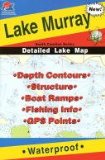
Lake Murray Fishing Map (South Carolina Series)
by Fishing Hot Spots
Map from Fishing Hot Spots
Lake Murray is an excellent producer of stripers, including trophies over 40 pounds. Largemouth bass over 10 pounds are also available. The map shows lake profile, fishery information, fishing tips and techniques, GPS information, 10 accesses with driving directions, 49 proven fishing areas marked.
by Jimmy Jacobs
Listed under Fishing TennesseeFishing the Roanoke Valley: An Angler's Guide
by M. W. Smith
Paperback from University of Virginia Press
Fly-Fishing the South Atlantic Coast : Where to Find Game Fish from North Carolina's Outer Banks to the Florida Keys
by Jimmy Jacobs
Paperback from Countryman Pr
Smoky Mountains Trout Fishing Guide
by Don Kirk
Paperback from Menasha Ridge Press
Porcher's Creek: Lives Between the Tides
by John Leland
Hardcover from University of South Carolina Press
Costal Fishing in the Carolinas: From Surf, Pier, and Jetty
by Robert J. Goldstein
Paperback from John F Blair Pub
Saltwater Angler's Guide to the Southeast: Flyfishing and Light Tackle in the Carolinas and Georgia (Saltwater Angler's Guide Series)
by Bob Newman
Paperback from Wilderness Adventures Press
Deep Enough for Ivorybills
by James Kilgo
Paperback from University of Georgia Press
Great Smoky Mountains National Park Angler's Companion
by Ian Rutter
Paperback from Frank Amato Publications, Inc.
Bass Fishing in North Carolina
by Buck Paysour
Paperback from Down Home Pr
The Secret Lives of Fishermen: More Outdoor Essays
by Jim Dean
Hardcover from Univ of North Carolina Pr
Sunrise on the Santee: A Memoir of Waterfowling in South Carolina
by M. Reynolds, Julius M., Jr. Reynolds
Hardcover from University of South Carolina Press
Search This Site