



There is no greater illustration of corporate America's moral decay than Amazon. Amazon fired manager protesting Covid-19 infections in warehous.e
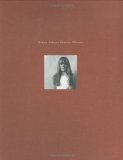
Diane Arbus: An Aperture Monograph: Fortieth-Anniversary Edition
Hardcover from Aperture
ISBN: 1597111740
Availability: Usually ships in 24 hours
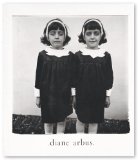
When Diane Arbus died in 1971 at the age of 48, she was already a significant influence--even something of a legend--for serious photographers, although only a relatively small number of her most important pictures were widely known at the time. The publication of Diane Arbus: An Aperture Monograph in 1972--along with a posthumous retrospective at The Museum of Modern Art--offered the general public its first encounter with the breadth and power of her achievements. The response was unprecedented. The monograph, composed of 80 photographs, was edited and designed by the painter Marvin Israel, Diane Arbus' friend and colleague, and by her daughter Doon Arbus. Their goal in producing the book was to remain as faithful as possible to the standards by which Arbus judged her own work and to the ways in which she hoped it would be seen. Universally acknowledged as a photobook classic, Diane Arbus: An Aperture Monograph is a timeless masterpiece with editions in five languages, and remains the foundation of her international reputation. Nearly half a century has done nothing to diminish the riveting impact of these pictures or the controversy they inspire. This is the first edition in which the image separations were created digitally; the files have been specially prepared by Robert J. Hennessy using prints by Neil Selkirk.Diane Arbus: An Aperture Monograph was originally published in 1972, one year after the artist's death, in conjunction with a retrospective of her work at the Museum of Modern Art. Edited and designed by Arbus's daughter, Doon, and her friend and colleague, painter Marvin Israel, the monograph contains eighty of her most masterful photos. The images in this newly published edition, marking the twenty-fifth anniversary of the collection's original publication, were printed from new three-hundred-line-screen duotone film, allowing for startlingly clear reproduction. The impact of the collection is heightened by the introduction, which contains excerpts of audio tapes in which Arbus discusses her experiences as a photographer and her feelings about the often bizarre nature of her subjects. Diane Arbus's work has indelibly impacted modern visual sensibilities, evidenced by the intensely personal moments captured in this powerful group of photographs.
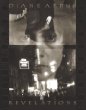
Diane Arbus Revelations
by Diane Arbus
Hardcover from Random House
Published: 2003-09-30
ISBN: 0375506209
Availability: Usually ships in 24 hours
Diane Arbus redefined the concerns and the range of the art she practiced. Her bold subject matter and photographic approach have established her preeminence in the world of the visual arts. Her gift for rendering strange those things we consider most familiar, and uncovering the familiar within the exotic, enlarges our understanding of ourselves.
Diane Arbus Revelations affords the first opportunity to explore the origins, scope, and aspirations of what is a wholly original force in photography. Arbus's frank treatment of her subjects and her faith in the intrinsic power of the medium have produced a body of work that is often shocking in its purity, in its steadfast celebration of things as they are. Presenting many of her lesser-known or previously unpublished photographs in the context of the iconic images reveals a subtle yet persistent view of the world.
The book reproduces two hundred full-page duotones of Diane Arbus photographs spanning her entire career, many of them never before seen. It also includes an essay, "The Question of Belief," by Sandra S. Phillips, senior curator of photography at the San Francisco Museum of Modern Art, and "In the Darkroom," a discussion of Arbus's printing techniques by Neil Selkirk, the only person authorized to print her photographs since her death. A 104-page Chronology by Elisabeth Sussman, guest curator of the San Francisco Museum of Modern Art show, and Doon Arbus, the artist's eldest daughter, illustrated by more than three hundred additional images and composed mainly of previously unpublished excerpts from the artist's letters, notebooks, and other writings, amounts to a kind of autobiography. An Afterword by Doon Arbus precedes biographical entries on the photographer's friends and colleagues by Jeff L. Rosenheim, associate curator of photographs at The Metropolitan Museum of Art. These texts help illuminate the meaning of Diane Arbus's controversial and astonishing vision.Muscle men, midgets, socialites, circus performers and asylum inmates: in the 1950s and '60s, photographer Diane Arbus (1923-1971) cast her strong eye on them all, capturing them as no one else could. Her documentary-style photos of society's margin-walkers were objective and reverential, while she often portrayed so-called normal people looking far more freakish than the freaks. Her powerful work was well-received in its day. Arbus received Guggenheim Fellowships in 1963 and 1966 and was included in a major show at MOMA in 1967. But her work entered the realm of near-myth after her 1971 suicide.
Posthumously cast as everything from patron saint of the underdog to a crass exploiter of the mentally challenged, Arbus has curiously never had a large retrospective until the show Revelations was organized by Arbus' family and SF MOMA. The accompanying catalogue is an oversized, sumptuous, beautifully printed tome. It includes all of the artist's iconic photographs as well as many that have never been publicly exhibited, including many pages of contact sheets, journal entries, and family snapshots. This work is so strong, it's mind-blowing. The giant in his apartment with his parents looks absolutely regal, his parents sad and confused. Are those crazy people always so happy? And what to make of this moment of extreme tenderness between a dominatrix and her client? This is a book worth hours of your time. --Mike McGonigal
Diane Arbus: A Biography
by Patricia Bosworth
Paperback from W. W. Norton & Company
ISBN: 0393326616
Availability: Usually ships in 24 hoursDiane Arbus--now the subject of a national retrospective and a forthcoming movie--was the archetypal artist living on the edge.
Diane Arbus's unsettling photographs of dwarves and twins, transvestites and giants, both polarized and inspired, and her work had already become legendary when she committed suicide in 1971. This groundbreaking biography examines the private life behind Arbus's controversial art. The book deals with Arbus's pampered Manhattan childhood, her passionate marriage to Allan Arbus, their work together as fashion photographers, the emotional upheaval surrounding the end of their marriage, and the radical, liberating, and ultimately tragic turn Arbus's art took during the 1960s when she was so richly productive. This edition includes a new afterword by Patricia Bosworth that covers the phenomenon of Arbus since her death, the latest Arbus scholarship, and a view of the first major retrospective of Arbus's work as well as notes on the forthcoming motion picture based on her story. Bosworth's engrossing book is a portrait of a woman who drastically altered our sense of what is permissible in photography. 26 illustrationsOpportunities for sensationalism abound in a book about Arbus, who already had a history of severe depressions and a crumbling marriage by the time she began to take the controversial, technically innovative pictures of dwarfs, nudists and drag queens that won her a reputation as "a photographer of freaks." Bosworth balances the lurid details -- rumors that Arbus had sex with her subjects, that she photographed her own suicide in 1971 -- with a nuanced appraisal of an artist whose images captured the uneasy mood of the 1960s by expressing her personal obsessions.
An Emergency in Slow Motion: The Inner Life of Diane Arbus
by William Todd Schultz
Hardcover from Bloomsbury USA
Published: 2011-08-30
ISBN: 1608195198
Availability: Usually ships in 24 hoursDiane Arbus was one of the most brilliant and revered photographers in the history of American art. Her portraits, in stark black and white, seemed to reveal the psychological truths of their subjects. But after she committed suicide in 1971, at the age of forty-eight, the presumed chaos and darkness of her own inner life became, for many viewers, inextricable from her work.In the spirit of Janet Malcolm's classic examination of Sylvia Plath, The Silent Woman, William Todd Schultz's An Emergency in Slow Motion reveals the creative and personal struggles of Diane Arbus. Schultz veers from traditional biography to interpret Arbus's life through the prism of four central mysteries: her outcast affinity, her sexuality, the secrets she kept and shared, and her suicide. He seeks not to diagnose Arbus, but to discern some of the private motives behind her public works and acts. In this approach, Schultz not only goes deeper into Arbus's life than any previous writer, but provides a template with which to think about the creative life in general.
Schultz's careful analysis is informed, in part, by the recent release of some of Arbus's writing and work by her estate, as well as by interviews with Arbus's psychotherapist. An Emergency in Slow Motion combines new revelations and breathtaking insights into a must-read psychobiography about a monumental artist-the first new look at Arbus in twenty-five years.
Diane Arbus: A Chronology
by Elisabeth Sussman, Doon Arbus, Jeff Rosenheim
Paperback from Aperture
ISBN: 1597111791
Availability: Usually ships in 24 hours
Diane Arbus: A Chronology is the closest thing possible to a contemporaneous diary by one of the most daring, influential and controversial artists of the twentieth century. Drawn primarily from Arbus' extensive correspondence with friends, family and colleagues, personal notebooks and other unpublished writings, this beautifully produced volume reveals the private thoughts and motivations of an artist whose astonishing vision derived from the courage to see things as they are and the grace to permit them simply to be. Further rounding out Arbus' life and work are exhaustively researched footnotes that amplify the entire chronology. A section at the end of the book provides biographies for 55 family members, friends and colleagues, from Marvin Israel and Lisette Model to Weegee and August Sander. Describing the Chronology in Art in America, Leo Rubinfien noted that "Arbus... wrote as well as she photographed, and her letters, where she heard each nuance of her words, were gifts to the people who received them. Once one has been introduced to it, the beauty of her spirit permanently changes and deepens one's understanding of her pictures." The texts in Diane Arbus: A Chronology originally appeared in Diane Arbus: Revelations. This volume makes this invaluable material available in an accessible, unique paperback edition for the very first time.
Diane Arbus (1923-1971) revolutionized the terms of the art she practiced. Three volumes of her photographs have been published posthumously by Aperture and have remained continuously available.
Diane Arbus: Magazine Work
by Thomas Southall
Paperback from Aperture
ISBN: 0893812331
Availability: Usually ships in 9 to 13 days
Photography's most original artist presents the celebrities of her time in a remarkable collection of portraits. This work reveals the growth of an artist who saw no artificial boundary between art and the paying job and who succeeded in putting her indelible stamp on the visual imagination.
Diane Arbus: Untitled
Hardcover from Aperture
ISBN: 1597111902
Availability: Usually ships in 24 hours
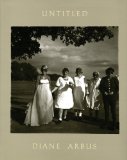
Untitled is the only volume of Diane Arbus' work devoted exclusively to a single project. The photographs were taken at residences for the mentally retarded between 1969 and 1971, in the last years of Arbus' life. Although she considered making a book on the subject, the vast majority of these pictures have remained unpublished until now. These photographs achieve a lyricism and an emotional purity that sets them apart from all her other accomplishments: "Finally what I've been searching for," she wrote at the time. The product of her consistently unflinching regard for reality as she found it, Untitled may well be Arbus' most transcendent, most romantic vision. It is a celebration of the singularity and connectedness of each and every one of us, and demands of us what it demanded of her: the courage to see things as they are and the grace to permit them to simply be. For Diane Arbus, this is what making pictures was all about. Untitled includes an afterword by Doon Arbus, the photographer's daughter, who writes that the intent of these works "wasn't. . . about who or what she saw, but about the experience of seeing it and the power of her photographs to make that experience visible."
Diane Arbus: Family Albums
by Anthony W. Lee, John Pultz
Paperback from Yale University Press
ISBN: 0300101465Diane Arbus (1923-1971) is renowned for her provocative and unsettling portraits of modern Americans. This book presents a significant body of previously unpublished pictures by Arbus and proposes a radically new way to understand her goals, strategies, and overall work. "Diane Arbus: Family Albums" examines unknown contact sheets from several of Arbus's portrait sessions, including more than 300 photographs she took of a New York family one weekend in 1969. Anthony Lee and John Pultz put to the test Arbus's claim that she was developing a "family album". They present other images Arbus shot for "Esquire" magazine (including pictures of the families of Ricky Nelson, Jayne Mansfield, and Ogden Reid) and discuss her interest in photographic groupings of both traditional and alternative families. Challenging common interpretations of Arbus, the authors reveal a photographer far more savvy with the camera, more aware of photography as an artistic and commercial practice, and more sensitive to the social and cultural tensions of the 1960s than has been acknowledged before.
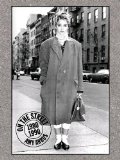
On the Street
Hardcover from Welcome Books
Published: 2006-09-01
ISBN: 1599620154
Availability: Usually ships in 24 hours
Between 1980 and 1990, over five hundred of photographer Amy Arbus's impromptu and edgy portraits of New Yorkers appeared in the Village Voice's monthly fashion feature, "On the Street." The column's missive was to document the city's most adventurous trednsetters as they lived their lives. But Arbus's photographs tell much more than a style story. From the friendliest to the grittiest, every one of these images is a potent tribute to self-expression. Taken as a whole, they reflect an era of contradictions, a time in America when urban individualism and raw creativity were courageously fighting for breathing room and holding their own in a culture ruled by wealthy conservatism and Republican politics.
For the first time since that hard-to-define decade, this time-capsule collection of images is being revisited. On the Street features seventy of the most revealing and expressive images taken by Arbus on the city's fashion-fertile sidewalks. From the unknown to the unmistakably famous, her subjects are all equally unforgettable. Arbus's ubiquitous lens captured the most influential style-makers, from The Clash on the set of Martin Scorsese's King of Comedy and Madonna on the same day her single "Everybody" hit the charts, to Anna Sui, Joey Arias, Phoebe Legére, and countless other local artists, actors, costume designers, shop owners, musicians, make-up artists, graffiti artists, and downtown scenesters. From eyewear to underwear and schoolgirl skirts to backless shirts; from women dressed like men to men that are barely dressed; from lipstick to just plain "schtik," there is no aspect of 80's style that goes unrepresented.
A. M. Homes, the renowned author of The End of Alice and contributing editor at Vanity Fair, offers a personal and illuminating essay that introduces and celebrates Arbus' photographs, while elegantly placing them in the context of the time in which they were taken.
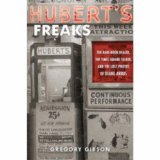
Hubert's Freaks: The Rare-Book Dealer, the Times Square Talker, and the Lost Photos of Diane Arbus
by Gregory Gibson
Hardcover from Houghton Mifflin Harcourt
Availability: Usually ships in 24 hoursBob Langmuir is an obsessive dealer with a remarkable eye for treasure who makes the discovery of a lifetime when he chances upon a trove of never-before-seen prints by the legendary Diane Arbus. From the moment he purchases a trunk containing the archive of Hubert's Dime Museum and Flea Circus a midcentury Times Square freak show frequented by Arbus and discovers some intriguing photographs, he knows he's on to something. Furthermore, he begins to suspect that what he's found may add a pivotal chapter to what is now known about Arbus and the old weird America," in Greil Marcus's phrase, that Hubert's inhabited.
Langmuir's ensuing adventure, filled with bizarre coincidences, turns into a roller-coaster ride that takes him from memorabilia shows to the curator's office at the Metropolitan Museum of Art. Will the photos be authenticated? How will the Arbus estate react? most important, can Bob, who has seen more than a few promising deals head south, finally make his one big score?
Diane Arbus: An Aperture Monograph
Diane Arbus Revelations
by Doon Arbus
Hardcover from Random House
by Diane Arbus, Stan Grossfeld
Paperback from Aperture
Diane Arbus: Family Albums
by Anthony W. Lee, John Pultz
Book Description: Diane Arbus (1923-1971) is renowned for her provocative and unsettling portraits of modern Americans. This book presents a significant body of previously unpublished pictures by Arbus and proposes a radically new way to understand her goals, strategies, and overall work. Diane Arbus: Family Albums examines unknown contact sheets from several of Arbus's portrait sessions, including more than three hundred photographs she took of a New York family one weekend in 1969. Anthony W. Lee and John Pultz put to the test Arbus's claim that she was developing a "family album." They present other images Arbus shot for Esquire magazine (including pictures of the families of Ricky Nelson, Jayne Mansfield, and Ogden Reid) and discuss her interest in photographic groupings of both traditional and alternative families. Challenging common interpretations of Arbus, the authors reveal a photographer far more savvy with the camera, more aware of photography as an artistic and commercial practice, and more sensitive to the social and cultural tensions of the 1960s than has been acknowledged before.
Paperback from Yale Univ Pr
Diane Arbus: A Biography
by Patricia Bosworth
Paperback from W.W. Norton & Company
Blind Date with the Angel : The Diane Arbus Poems
by Stephen Guppy
Paperback from Ekstasis Editions
Books on Diane Arbus