



There is no greater illustration of corporate America's moral decay than Amazon. Amazon fired manager protesting Covid-19 infections in warehous.e
Margaret Bourke-white: The Early Work, 1922-1930 (Pocket Paragon Series)
by Ronald E. Ostman, Harry Littell, Margaret Bourke-White
Paperback from David R Godine
ISBN: 1567922996
Margaret Bourke-White (1904-1971) was one of the leading photojournalists of her time, a mainstay of the Luce empire whose signature work for Fortune celebrated the machine age and whose later work for Life featured the human face and a "progressive" humanitarian sensibility. Many of her photo essays are classics; indeed those on the Louisville Flood and its victims, on the liberation of the Nazi death camps, and on the poverty of India and Pakistan are now part of the iconography of the twentieth century.In this brief collection of her earliest work, two art historians present the "unknown" Bourke-White, the young amateur aged eighteen to twenty-six. Her first photographs, created in 1921 under the tutelage of Columbia University's Clarence H. White, were impeccably designed soft-edged still lifes, "painterly" images characteristic of the period but not of the artist. Bourke-White took this technique to college Â- to the University of Michigan and to Cornell Â- and there made traditional portraits of campus buildings and, almost by accident, her first "industrial" photograph, a Duchamp-like study of loudspeakers. After graduation she moved to Cleveland, where, trembling with fear and aesthetic excitement, she photographed the interior of the Otis Steel Mill, the trestles of the High Level Bridge, and the new Terminal Tower. It was these thrilling Cleveland photographs, made in 1928Â-30, that won her an audience with Luce, who sent her on to Fortune . . . and to fame.
The eighty photographs reproduced here have seldom been seen outside the archives of Cornell's Herbert F. Johnson Museum of Art and the University of Syracuse Library. They will fascinate anyone interested in the life and work of Margaret Bourke-White and the early history of American photojournalism.
Margaret Bourke-White: Photographer
Hardcover from Bulfinch
ISBN: 0821224905
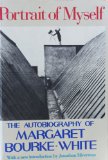
Portrait of Myself
by Margaret Bourke-White
Paperback from G K Hall & Co
ISBN: 0839828586
Margaret Bourke White
by Susan Goldman Rubin
Hardcover from Harry N. Abrams
An inspiring biography of one of the most successful photojournalists of the 20th century, this life of Margaret Bourke-White (1904-1971) is exactly the type of book teachers and parents of adolescent girls are looking for. It would be a mistake to treat this as a book for girls only, however, when so many great men--Bourke-White's father, her second husband, several darkroom technicians, and even General Jimmy Doolittle, commander of the 12th Air Force in World War II--figure prominently in it as mentors, teachers, colleagues, and friends. Author Susan Goldman Rubin gracefully deals with sensitive material such as the photographer's shame at discovering that her father was Jewish. And she does a remarkable job of choosing appropriate pictures. As the chief photographer for Life magazine, Bourke-White shot many hugely important but often harsh subjects. Rubin deftly edits these images so that famous photos like the haunting Living Dead of Buchenwald, April, 1945 are here, but not such profoundly disturbing ones as Bourke-White's shot of bony corpses stacked for burning. The author underscores the photographer's extraordinary self-confidence as a young woman of huge ambitions and--beginning with Bourke-White's initial flirtation with the soft-focus style of Edward Steichen--delineates the growing power and clarity of her mature documentary style. Bourke-White's life-long interest in science--she kept jars of multilegged fauna on her office bookshelves at Life--is fascinating, and the stories of her wartime adventures--in marooned life rafts, low-flying reconnaissance planes, and torpedoed ships--are frighteningly vivid.
The photographs themselves are ultimately given pride of place, in large duotone reproductions that do them ample justice. This book would be right for anyone over 10, and older readers might go on to Sean Callahan's Margaret Bourke-White: Photographer, which is more of a traditional monograph and includes those images that tell truths so painful that Bourke-White herself had great difficulty sorting their negatives. --Peggy Moorman
You Have Seen Their Faces
by Erskine Caldwell
Paperback from University of Georgia Press
ISBN: 082031692X
In the middle years of the Great Depression, Erskine Caldwell and photographer Margaret Bourke-White spent eighteen months traveling across the back roads of the Deep South--from South Carolina to Arkansas--to document the living conditions of the sharecropper. Their collaboration resulted in You Have Seen Their Faces, a graphic portrayal of America's desperately poor rural underclass. First published in 1937, it is a classic comparable to Jacob Riis's How the Other Half Lives, and James Agee and Walker Evans's Let Us Now Praise Famous Men, which it preceded by more than three years.Caldwell lets the poor speak for themselves. Supported by his commentary, they tell how the tenant system exploited whites and blacks alike and fostered animosity between them. Bourke-White, who sometimes waited hours for the right moment, captures her subjects in the shacks where they lived, the depleted fields where they plowed, and the churches where they worshipped.
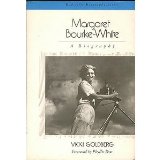
Margaret Bourke-White: A Biography (Radcliffe Biography Series)
by Vicki Goldberg
Paperback from Addison-Wesley
ISBN: 0201098199
Margaret Bourke-White: A Photographer's Life (Lerner Biographies)
by Emily Keller
Hardcover from Lerner Publications
ISBN: 0822549166
Profiles the life of the photojournalist who was an original staff photographer for "Life" magazine and a war correspondent during World War II.
Margaret Bourke-White: Photography of Design, 1927-1936
by Stephen Bennett Phillips
Hardcover from Rizzoli
Media Published: 2003-
ISBN: 0847825051Before Margaret Bourke-White became America's first well-known photojournalist, she was photographing the beginnings of Americas machine age, focusing on factories, machinery and the objects this technology produced. These striking images, which transformed prosaic objects into modernist masterpieces-were the foundation for work she later did for Fortune, Life, and other important national magazines. Organized by the Phillips Collection, an exhibition and this accompanying catalogue feature many photographs which have never before been published, and presents new research on the images. An extensive chronology of her career is also provided.
How did Margaret Bourke-White become the top photographer for Fortune and Life, a globetrotting adventuress who held court in the most glamorous studio on earth--a Chrysler Building penthouse patrolled by alligators, adjacent to the fierce gargoyle she made famous? By first muscling in as a master of the masculine art of corporate photography. For the first time, that early work has gotten its due in Stephen Bennett Phillips' Margaret Bourke-White: The Photography of Design 1927-36. In insightful prose and glossily reproduced black-and-white photos, he opens our eyes to her fast-developing genius. Her 1927 photos of Cleveland's Terminal Tower expertly aped the fuzzy, romantic pictorialism of early Edward Steichen, but her 1928 shot of the same building through the spiral grillwork shows her rigorous sense of composition. After she discovered magnesium lighting, her pictures of what could've been ordinary industrial scenes acquired stunning star power. Rows of tin soup cans, aluminum rods, hogs hanging in a stockyard, Moscow ballet dancers, Wurlitzer organ pipes: she transformed them all into patterns bespeaking brute power. Her camera was a magic device that transformed everything she saw into a shiny Deco masterpiece. This book is as smart and beautiful as its stellar subject. --Tim Appelo
The Photographs of Margaret Bourke-White Paperback from New York Graphic Society
ISBN: 0821206567
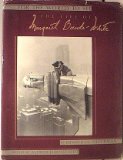
For the World to See: The Life of Margaret Bourke-White
by Jonathan Silverman
Hardcover from Viking/Studio
ISBN: 067032356XFull Page illustrations - glossy pages - studio book.
Search Amazon: Books on Margaret Bourke-White Browse Amazon: Margaret Bourke-White Search Wikipedia: Margaret Bourke-White
Search This Site
Margaret Bourke-White on DVD