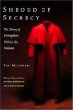
Shroud
of Secrecy
by Luigi
Marinelli, The
Millenari
Book Description
The Story of Corruption Within the Vatican
Shroud of Secrecy offers an insider's account of intrigue,
sex, and corruption within the Vatican. It is the first treatise of written
protest from within the Church since 1517, when Martin Luther posted his
historic 95 theses on a church door in Wittenberg, Germany. Written by
a small group of Vatican prelates who call themselves the Millenari, its
publication breaks a code of silence that has allowed impropriety and hypocrisy
within the Roman Catholic Church to flourish.
Paperback from Key Porter Books
|
| |
The
Popes Against the Jews: The Vatican's Role in the Rise of Modern Anti-Semitism
by David I. Kertzer
The Vatican's 1998 report "We Remember: A Reflection on the Shoah"
purportedly exonerated the Church of complicity in the Holocaust. In The
Popes Against the Jews, David I. Kertzer argues that the report is "not
the product of a Church that wants to confront its history." Kertzer's
book refutes the Church's thesis that the Holocaust grew out of "an anti-Judaism
that was essentially more sociological and political than religious." In
fact, Kertzer asserts, those dimensions of European anti-Semitism developed
"in no small part due to the efforts of the Roman Catholic Church itself."
The racial laws of fascist Italy and the Nuremberg Laws of 1930s Germany,
for example, were directly modeled on the Church's own rules governing
treatment of Jews: until the collapse of the Papal States in the late 19th
century, Jews living in these territories were forced to wear yellow badges
and live in ghettos. Kertzer's arguments make for compelling reading because
they're presented in story form, based on the actions of the popes themselves.
Access to long-sealed Church archives allowed Kertzer to reconstruct some
of the most shocking, secret conversations that occurred in the Vatican
in the decades leading up to World War II. --Michael Joseph Gross -
Amazon.com
Hardcover: 355 pages
Knopf; ISBN: 0375406239; (September 18, )
A
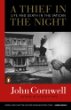
Thief in the Night: Life and Death in the Vatican
by John Cornwell
Just 33 days into the reign of Pope John Paul I in 1978, it was reported
that he had died of a heart attack. But within the Vatican, there were
conflicting answers to the most basic questions: Who found the body? What
was the time of death? What was the actual state of the pope's health prior
to death? A Thief in the Night is John Cornwell's investigation of the
mysterious circumstances surrounding John Paul's death. It is also a profound
exploration of the nature of sin and the definition of crime. Inconsistencies
in the story spawned rumors of conspiracy to murder the so-called "smiling
pope," whose ideological stances were sufficiently complex as to threaten
both conservative and liberal interests in the Church and abroad. Fingers
pointed towards the KGB, the Freemasons, and the pope's own top advisors.
Then, in 1987, the Vatican invited Cornwell (whose other books include
the bestselling Hitler's Pope) to conduct an independent investigation
of the pope's death. His investigation reads like a detective novel: 44
short chapters record Cornwell's encounters with most of the major characters
of this mystery, including the Pope's personal secretaries and the Vatican
doctor who signed his death certificate. Ultimately, A Thief in the Night
argues that John Paul showed clear symptoms of fatal illness in the days
leading up to his death, and that these symptoms were willfully ignored
by everyone around him. Thus, Cornwell argues, the sins that killed John
Paul were sins of omission. The fantastic conspiracy theories, he argues,
serve one purpose: "they deflect attention from the most obvious and shameful
fact of all: that John Paul I died scorned and neglected by the institution
that existed to sustain him." --Michael Joseph Gross - Amazon.com
Paperback: 366 pages
Penguin USA (Paper); ISBN: 0141001836; (May 1, )
The
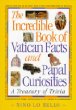
Incredible Book of Vatican Facts and Papal Curiosities: A Treasury of Trivia
by Nino Lo Bello
Paperback: 256 pages
Liguori Publications; ISBN: 0764801716;
The
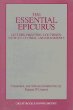
Essential Epicurus: Letters, Principal Doctrines, Vatican Sayings, and
Fragments (Great Books in Philosophy)
by Epicurus, Eugene Michael O'Connor (Translator)
Paperback: 101 pages
Prometheus Books; ISBN: 0879758104; (May 1993)
The
Catholic Tradition: The Church in the Twentieth Century
by Timothy G. McCarthy
(Paperback -- February )
Special order
History
of Vatican II: The Mature Council 2nd Period and Intersession (Volume 3)
by Giuseppe Alberigo (Editor), Joseph A. Komonchak (Editor)
(Hardcover -- October )
Holocaust
Scholars Write to the Vatican
by Harry J. Cargas (Editor), Eugene J. Fisher
(Hardcover -- December )
History
of Vatican II (Vol 4)
by Giuseppe Alberigo
(Hardcover -- November )
Controversial
Concordats: The Vatican's Relations With Napoleon, Mussolini, and Hitler
by Frank J. Coppa (Preface), et al
(Paperback -- May )
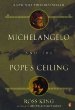
Michelangelo and the Pope's Ceiling
by Ross King
Listed under Michelangelo
Roman
Catholicism After Vatican II
by Robert A. Burns
(Paperback -- April )
Vatican
Council II
by Xavier Rynne (Introduction)
(Paperback -- September )
Vatican
II in Plain English: The Constitutions
by Bill Huebsch
(Paperback -- February )
Vatican
II in Plain English: The Decrees and Declarations, Book 3
by Bill Huebsch
(Paperback -- February )
Vatican
II in Plain English: The Council
by Bill Huebsch
(Paperback -- February )
Vatican
Council II: Constitutions, Decrees, Declarations
by Austin Flannery (Editor)
(Paperback -- October )