



There is no greater illustration of corporate America's moral decay than Amazon. Amazon fired manager protesting Covid-19 infections in warehous.e
Alexandra: The Last Tsarina
by Carolly Erickson
Listed under The RomanovsListed under Vladimir Putin
The Armenian People from Ancient to Modern Times: Foreign Dominion to Statehood: The Fifteenth Century to the Twentieth Century
by Richard G. Hovannisian (Editor)
(Hardcover -- August )Dreamworld and Catastrophe : The Passing of Mass Utopia in East and West
by Susan Buck-Morss
(Paperback -- March 7, )The Bathhouse at Midnight: An Historical Survey of Magic and Divination in Russia (Magic in History Series)
by W. F. Ryan
Paperback: 512 pages
Pennsylvania State Univ Pr (Trd); ISBN: 0271019670; (September )Biohazard: The Chilling True Story of the Largest Covert Biological Weapons Program in the World--Told from Inside by the Man Who Ran It
by Ken Alibek, Stephen Handelman (Contributor)
Listed under Germ WarfareBlack Earth: A Journey through Russia after the Fall
by Andrew Meier
Book Description: With the power of Lenin's Tomb and Balkan Ghosts, an illuminating portrait of contemporary Russia.
A decade after the Soviet collapse, Russia remains a country in limbo, a land of vast potential struggling with an unfinished past. Journeying to Russia's five corners—Moscow, Chechnya, Norilsk, Sakhalin, and St. Petersburg—Andrew Meier presents a history of contemporary Russia. In Moscow and St. Petersburg, Meier explores Russia's unbridled market and often lethal politics. From Chechnya, where he investigates the worst single-day massacre of civilians, to Norilsk, the world's northernmost city, Meier uncovers a common theme: the need to find meaning amid the Soviet ruins. In the tradition of Rebecca West's Black Lamb and Grey Falcon, Black Earth is a penetrating view of the new Russia from a bold new voice in political journalism. 7 maps.
Hardcover from W.W. Norton & Company
Black Lamb and Grey Falcon: A Journey Through Yugoslavia (Twentieth-Century Classics)
by Rebecca West
(Paperback -- April )Calming The Ferghana Valley: Development and Dialogue in the Heart of Central Asia
by Barnett R. Rubin, et al
Of all the regions of the former Soviet Union, Central Asia is potentially one of the most explosive and certainly one of the least understood. It is also growing rapidly in importance to U.S. national security, commercial, and foreign policy interests: it has vast oil, gas, gold, and other resources; it has become a source and transit route for narcotics and possible nuclear and other materials; and it is affected by the fierce conflicts in Tajikistan and Afghanistan. Vast in size (larger than Eastern and Western Europe combined), and with a rapidly growing population of over 50 million people, it is marked by the persistence of relatively corrupt and authoritarian governments.This report assesses the potential for conflict in Central Asia through the prism of one of its most volatile areas, the Ferghana Valley. Spanning parts of Tajikistan, Uzbekistan, and Kyrgyzstan, the Ferghana Valley is home to 20 percent of Central Asia's entire population. The region has recently experienced increasing religious and ethnic tensions--the further danger being that instability in the valley could spread more widely throughout Central Asia. The Ferghana Valley project of the Council on Foreign Relations' Center for Preventive Action (CPA) has produced this report as the fourth volume in its series of Preventive Action Reports. The Publisher.
(Paperback -- June 1, )Chechnya: Tombstone of Russian Power
by Anatol Lieven, Heidi Bradner (Photographer)
A correspondent for the Financial Times, Anatol Lieven spent much time in Chechnya, the postage-stamp-sized Caucasus republic whose break from Russia in 1994 precipitated a major war (one that Russia lost). Lieven looks into the long, troubled history of Russian-Chechen relations, noting that each side despised the other for largely cultural reasons (the Chechens have long been involved in organized crime in major Russian cities, whereas Russians have long tried to strip Chechnya of its resources). He notes that Chechen society has historically been militarized (one Armenian said to Lieven, "The men are always fighting and the women are cooking for them, nursing their wounds, and bringing up their children"), making the mountain people a formidable foe. In the meanwhile, writes Lieven, the Russian military suffered from low morale and from corruption of various kinds: Russian field soldiers sold their guns to Chechen guerrillas for vodka and currency, while Russian officers stole their soldiers' pay and Russian politicians skimmed off the top. This is an extraordinary look at a little-known conflict. --Gregory McNamee - Amazon.com
Paperback: 436 pages ; Dimensions (in inches): 1.14 x 9.17 x 6.12
Publisher: Yale Univ Pr;
ISBN: 0300078811Catherine the Great: Profiles in Power Series
by Simon Dixon
Listed under Catherine the Great
Communism: A History (Modern Library Chronicles)
by Richard Pipes
(Hardcover -- September 4, )The End of Empire? : The Transformation of the USSR in Comparative Perspective (International Politics of Eurasia)
The Degaev Affair: Terror and Treason in Tsarist Russia
by Richard Pipes
Book Description: Sergei Degaev (1857–1921), a political terrorist in tsarist Russia, disappeared after participating in the assassination of the chief of Russia’s security organization in 1883. Those who later knew and admired the quietly brilliant Professor Alexander Pell at the University of South Dakota never guessed this was actually Degaev, who had triple-crossed friends and associates while entangled in the revolutionary movement of his homeland. This book is the first in any language to tell in detail the extraordinary story of one of the world’s most intriguing revolutionaries, his role in building and betraying the earliest political terrorist network, and his subsequent conventional academic career in America. The well-known historian Richard Pipes uses previously unexplored Russian archives to draw a brilliant psychological, political, and sociological portrait of Degaev. Pipes pursues his protagonist on a twisting journey of changing loyalties and fateful collaborations within the network that provided the model for all modern terrorist organizations. A cunning conspirator, Degaev went on to reinvent himself in the United States as a beloved mathematics professor. Either of his lives would be considered remarkable; that Degaev lived both is nothing short of amazing.
Hardcover from Yale Univ Pr
by Karen Dawisha (Editor), Bruce Parrott (Editor)
Special OrderDemocratization and Revolution in the USSR, 1985-91
by Jerry F. HoughEcocide in the USSR: Health and Nature Under Siege
Forward Soviet! : History and Non-Fiction Film in the USSR (Kino : The Russian Cinema Series)
by Graham RobertsThe Forgotten : Catholics of the Soviet Empire from Lenin Through Stalin
by Christopher Lawrence Zugger
(Hardcover)A Frozen Hell : The Russo-Finnish Winter War of 1939-40
by William R. Trotter
Listed under Scandinavia WWIIThe Great Game : The Struggle for Empire in Central Asia
by Peter Hopkirk
(Paperback -- April )
The Gulag Archipelago Vol. I
Gulag : A History
by ANNE APPLEBAUM
Book Description
The Gulag—the vast array of Soviet concentration camps—was a system of repression and punishment whose rationalized evil and institutionalized inhumanity were rivaled only by the Holocaust.
The Gulag entered the world’s historical consciousness in 1972, with the publication of Alexander Solzhenitsyn’s epic oral history of the Soviet camps, The Gulag Archipelago. Since the collapse of the Soviet Union, dozens of memoirs and new studies covering aspects of that system have been published in Russia and the West. Using these new resources as well as her own original historical research, Anne Applebaum has now undertaken, for the first time, a fully documented history of the Soviet camp system, from its origins in the Russian Revolution to its collapse in the era of glasnost. It is an epic feat of investigation and moral reckoning that places the Gulag where it belongs: at the center of our understanding of the troubled history of the twentieth century.
Anne Applebaum first lays out the chronological history of the camps and the logic behind their creation, enlargement, and maintenance. The Gulag was first put in place in 1918 after the Russian Revolution. In 1929, Stalin personally decided to expand the camp system, both to use forced labor to accelerate Soviet industrialization and to exploit the natural resources of the country’s barely habitable far northern regions. By the end of the 1930s, labor camps could be found in all twelve of the Soviet Union’s time zones. The system continued to expand throughout the war years, reaching its height only in the early 1950s. From 1929 until the death of Stalin in 1953, some 18 million people passed through this massive system. Of these 18 million, it is estimated that 4.5 million never returned.
But the Gulag was not just an economic institution. It also became, over time, a country within a country, almost a separate civilization, with its own laws, customs, literature, folklore, slang, and morality. Topic by topic, Anne Applebaum also examines how life was lived within this shadow country: how prisoners worked, how they ate, where they lived, how they died, how they survived. She examines their guards and their jailers, the horrors of transportation in empty cattle cars, the strange nature of Soviet arrests and trials, the impact of World War II, the relations between different national and religious groups, and the escapes, as well as the extraordinary rebellions that took place in the 1950s. She concludes by examining the disturbing question why the Gulag has remained relatively obscure, in the historical memory of both the former Soviet Union and the West.
Gulag: A History will immediately be recognized as a landmark work of historical scholarship and an indelible contribution to the complex, ongoing, necessary quest for truth.
Paperback from Anchor
by Aleksandr Isaevich Solzhenitsyn.
Translated by Thomas P. Whitney
(Paperback -- May )
A History of Russia: Medieval, Modern, Contemporary C. 882-1996
The Gulag Archipelago: 1918-1956
by Aleksandr I. Solzhenitsyn
Paperback from Perennial
by Paul Dukes
(Paperback)A History of Russia, Central Asia and Mongolia : Inner Eurasia from Prehistory to the Mongol Empire
by David Christian
Listed under Asian HistoryThe Icon and the Axe : An Interpretive History of Russian Culture
by James H. Billington
Listed under Russian Art
In the Russian Style
In Siberia
by Colin Thubron
In Siberia explores a region of astonishments, where "white cranes dance on the permafrost, where a great city floats lost among the ice floes, where mammoths sleep under glaciers." Colin Thubron's latest chronicle also delivers its subject from rumor into reality. An expanse larger than the entire United States, Siberia is undoubtedly a country of contrasts, which elicits from the author both awe and melancholy. Here on one hand is a northern wilderness "shattered into a jigsaw of ponds and streams," and on the other a "black detritus of factories and ruins." No less memorable than the landscape are the people that Thubron encounters. He gathers their stories like rough jewels, showing us a self-proclaimed descendant of Rasputin, an isolated Jewish community, and a parade of "indestructible babushkas."Woven among the often bitter and eroding memories of a Siberian past is a sense of new freedom. After all, this is the first time in Russia's history when foreigners can travel freely throughout the region--and its inhabitants can comment openly about their government without fear of reprisal. Thubron coaxes an institute official at the Akademgorodok Praesidium to speak his mind:
His face was heavy with anger. "We have one overriding problem here. Money. We receive no money for new equipment, hardly enough for our salaries. There are people who haven't been paid for six months." Then his anger overflowed. He was barking like a drill sergeant. "This year we requested funds for six or seven different programmes! And not one has been accepted by the government! Not one!"Thubron's portrait is as elegant as it is evocative. But just as notably, his journey to the east manages to break the long and destructive Siberian silence. --Byron Ricks - Amazon.com
Paperback: 304 pages
Harper Perennial; ISBN: 006095373X; (December 26, )
by Jacqueline Kennedy Onassis (Editor), Audrey Kennett (Introduction), Bryan Holme (Designer)
Hardcover: 184 pages
Fine Communications; ISBN: 156731256X;Man Is Wolf To Man: Surviving the Gulag
by Janusz Bardach
In 1941, accidentally rolling a Soviet tank while fording a river was considered a death offense by the Red Army. Unfortunately for young Janusz Bardach, he committed just such an error; lucky for him that an old acquaintance from his hometown in Poland had enough rank and influence to commute the court-martial penalty from death to 10 years hard labor in Siberia. For the next four years, Bardach endured hellish conditions in various labor camps - first a logging camp, then a gold mine in the frozen north. Frigid temperatures, inadequate food and clothing combined with physical and spiritual malaise to bring prisoners first to the edge of despair and then to the brink of suicide. Bardach survived by turning his mind off, by refusing to remember happier times or to anticipate the future. He became, simply, a beast of burden, shuffling through the hours of his slavery until he could fall into the brief oblivion of sleep.Ironically, it was a near brush with death that proved to be Bardach's salvation. After surviving an explosion, he was sent to a prison hospital where he managed to talk his way into a job as a medical assistant. There he gained both a new lease on life and a future profession. Released from his sentence early, in 1945, Bardach went on to become a surgeon. His memoir, "Man Is Wolf to Man", is more than just an account of his sufferings in a Russian labor camp it is also a meditation on the will to survive in the face of hopelessness, the occasional kindnesses of strangers in unexpected places, and above all, the struggle to remain human under the most inhumane conditions. Amazon.com
Paperback: 397 pages ; Dimensions (in inches): 1.12 x 9.03 x 6.08
Publisher: University of California Press;
ISBN: 0520221524Masters of Death : The SS-Einsatzgruppen and the Invention of the Holocaust
by Richard Rhodes
Listed under Nazi SSThe Russia Hand : A Memoir of Presidential Diplomacy
by Strobe Talbott
Listed under Bill ClintonK-19: The Widowmaker: The Secret Story of the Soviet Nuclear Submarine
by Peter A. Huchthausen
Listed under SubmarinesArmageddon Averted: The Soviet Collapse, 1970-2000
by Stephen Kotkin
(Hardcover -- October )The Sword and the Shield: The Mitrokhin Archive and the Secret History of the KGB
by Christopher Andrew, et al
(Paperback -- September 5, )We Now Know: Rethinking Cold War History
by John Lewis Gaddis
(Paperback -- July )Panzers on the Eastern Front : General Erhard Raus and His Panzer Divisions in Russia, 1941-1945
by Peter G. Tsouras (Editor)
Listed under PanzersNicholas and Alexandra
by Robert K. Massie
Listed under The RomanovsThe Road to Berlin: Stalin's War With Germany
by John Erickson
Listed under Eastern Front WWIIA Russian Journal (Penguin Twentieth-Century Classics)
by John Steinbeck, Robert Capa (Photographer)
Postwar Russia, 1948 - an illuminating view of the aftermath of war and the recovery of the Russian people by two of America's greatest journalists. Db.
(Paperback)The Russian Avant Garde Book, 1910-1934
by Deborah Wye, Margit Rowell
(Hardcover -- March )Sakharov : A Biography
by Richard Lourie
Soviet dissident and Nobel Peace Prize winner
(Hardcover -- March )Stalin : The First In-Depth Biography Based on Explosive New Documents from Russia's Secret Archives
by Edvard Radzinsky
Listed under StalinRussian Strategic Nuclear Forces
by P. L. Podvig (Editor)
Listed under Nuclear WeaponsOnce a Grand Duchess: Xenia, Sister of Nicholas II
by John Van Der Kiste, Coryne Hall
Listed under The Romanovs
Peter the Great
by Robert K. Massie
Paperback from Ballantine Books
1981
ISBN: 0345298063
The Ukrainians: Unexpected Nation, Second edition
by Andrew Wilson
(Paperback -- June 1, )A History of Russia, Central Asia and Mongolia: Inner Eurasia from Prehistory to the Mongol Empire (History of the World , Vol 1)
by David Christian
Paperback: 464 pages
Blackwell Publishers; ISBN: 0631208143;
Out of Print - Try Used BooksSurvivors: An Oral History of the Armenian Genocide
by Lorna Touryan Miller, Donald Eugene Miller
(Paperback -- February )Estonia: Return to Independence (Westview Series on the Post-Soviet Republics)
by Rein Taagepera (Preface)
(Paperback -- December 1993)Antler on the Sea: The Yup'Ik and Chukchi of the Russian Far East
by Anna M. Kerttula
(Paperback -- November )
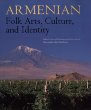
Armenian Folk Arts, Culture, and Identity
by Levon Abrahamian (Editor), et al
(Hardcover -- September 15, )
Together and Apart in Brzezany: Poles, Jews, and Ukrainians, 1919-1945
by Shimon Redlich
(Hardcover -- April )Nation-Building in the Post-Soviet Borderlands: The Politics of National Identities
by Graham Smith (Editor), et al
Book Description: The emergence in 1991 of the fourteen borderland post-Soviet states has been accompanied by the reforging of their national identities. Such attempts to rethink or reimagine the nation have had a major impact in reshaping the political, cultural and social lives of both national and ethnic minority groups alike. This book analyzes these national identities and explores their consequences for the borderland states, with substantive studies drawn from the Baltic states, Ukraine and Belarus, Transcaucasia and Central Asia.
Paperback: 308 pages ; Dimensions (in inches): 0.77 x 8.89 x 5.92
Book Publisher: Cambridge University Press; (November )
ISBN: 0521599687
Azerbaijan Diary: A Rogue Reporter's Adventures in an Oil-Rich, War-Torn, Post-Soviet Republic
by Thomas Goltz
(Paperback -- May 1, )Ukraine: A History
by Orest Subtelny, Orest Subteiny
(Paperback -- December )The Rasputin File
by Edvard Radzinsky
Listed under RasputinStalin's Loyal Executioner : People's Commissar Nikolai Ezhov, 1895-1940
by Marc Jansen, Nikita Petrov
(Paperback -- April 5, )Stalingrad: The Fateful Siege, 1942-1943
by Antony Beevor
Listed under Eastern Front WWIIIvan the Terrible
by Henri Troyat, et al
Listed under Ivan the TerribleThe Cult of Ivan the Terrible in Stalin's Russia (Studies in Russian and East European History and Society)
by Maureen Perrie
Listed under Ivan the TerribleA History of Russia
by Nicholas Valentine Riasanovsky
(Hardcover)1812: Napoleon's Invasion of Russia
by Paul Britten Austin
(Paperback)Witness : To Apparitions and Persecution in the USSR : An Autobiography
The USSR Olympiad Problem Book : Selected Problems and Theorems of Elementary Mathematics
Soviet Uniforms and Militaria 1917-1991 : Ministry of Defence of the USSR : Red Army, Navy, Naval Infantry, Air Force & Paratroopers
by Laszlo Bekeski
Listed under Military UniformsThe Soviet Experiment : Russia, the USSR, and the Successor States
by Ronald Grigor SunyPropaganda and Dreams: Photographing the 1930s in the USSR and the US
by Leah Bendavid-Val (Editor), Philip BrookmanStakhanovism and the Politics of Productivity in the USSR, 1935-1941 (Soviet and East European Studies)
by Lewis H. Siegelbaum (Author)Russia and the USSR 1905-1991 (Cambridge History Programme)
by Philip Ingram (Author)
Book Description:
This text covers the history of the USSR from the 1905 revolution through the Khrushchev years to 1997. Particular attention is paid to the collapse of the tsarist regime, the revolutions of 1917, civil war and the New Economic Policy, and the influence of Lenin, Trotsky and Stalin on Soviet history. The questions and activities are suitable for students of varying abilities and a range of written and visual sources encourage student involvement.
Paperback: 63 pages ; Dimensions (in inches): 0.17 x 10.82 x 8.57
Publisher: Cambridge University Press;
ISBN: 0521568676After the USSR : Ethnicity, Nationalism, and Politics in the Commonwealth of Independent States
Steeltown, USSR : Soviet Society in the Gorbachev Era
The Soviet Home Front, 1941-1945 : A Social and Economic History of the USSR in World War II
The Soviet Experiment : Russia, the Ussr, and the Successor States
Jews in Eastern Poland and the Ussr, 1939-46
Out of Print - Try Used BooksUSSR : From an Original Idea by Karl Marx
Vascular Plants of Russia and Adjacent States (The Former Ussr)
Warships of the USSR and Russia 1945-1995
by A. S. Pavlov et al.
Listed under NaviesSovietology, Rationality, Nationality : Coming to Grips With Nationalism in the USSR
The Tsar's Last Armada: The Epic Voyage to the Battle of Tsushima
by Constantin Pleshakov, et al
Listed under The Russo-Japanese WarWar, Holocaust and Stalinism : A Documented Study of the Jewish Anti-Facist Committee in the USSR (New History of Russia, Vol 1)
by Shimon Redlich, K. M. Anderson, I. AltmanWar and Peace (Modern Library)
by Leo Tolstoy, Constance Garnett (Translator)
(Hardcover)On Sledge and Horseback to Outcast Siberian Lepers
by Kate Marsden
Introduction by Eric Newby
Book Description: While serving as a nurse in Bulgaria, Kate Marsden saw firsthand the horrors of leprosy--and determined to journey to the leper colonies of Yakutsk, 2,000 miles across the Siberian wastes. Armed with the patronage of both Queen Victoria and the Russian Czarina, she strode forth. With passion and wit, this extraordinary Victorian lady recounts the amazing story of her search for the lepers and for an elusive remedial herb. Illustrated with contemporary drawings. 22 b/w illus.,
Paperback: 256 pages ; Dimensions (in inches): 0.85 x 8.48 x 5.50
Publisher: Phoenix Press, London WC2;
ISBN: 1842123971
Out of Print - Try Used Books
Russia
- General
- Soviet Studies
- Communist Russia
Books on Russia
Russia on DVD
Search This Site