



There is no greater illustration of corporate America's moral decay than Amazon. Amazon fired manager protesting Covid-19 infections in warehous.e
The Shoshone People (Native Peoples)
by Joanne Mattern
(School & Library Binding)Chief Pocatello (Idaho Yesterdays (Moscow, Idaho).)
by Brigham D. Madsen
(Paperback)The Shoshone (Lifeways)
by Raymond Bial
(Library Binding)The Shoshone Indians (Junior Library of American Indians)
by Nathaniel B. Moss (Library Binding)Shoshone Ghost Dance Religion: Poetry Songs and Great Basin Context (Music in American Life)
by Judith Vander
(Hardcover)The Shoshone (Indians of North America)
by Kim Dramer, Frank W. Porter (Editor) (Library Binding - September )The Shoshone (Indian Nations (Austin, Tex.).)
by Ned Blackhawk (Library Binding)The Washakie Letters of Willie Ottogary, Northwestern Shoshone Journalist and Leader, 1906-1929
by Willie Ottogary, et al
(Paperback)Sacajawea: Guide and Interpreter of Lewis and Clark
by Grace Raymond Hebard
Paperback: 336 pages ; Dimensions (in inches): 0.73 x 8.44 x 5.35
Dover Pubns; ISBN: 048642149X; Dover edition (March )Sacajawea : Her True Story
by Rich Haney
(Paperback)The Legend of Jimmy Spoon (Great Episodes)
by Kristiana Gregory
Reading level: Ages 9-12
Book Description Twelve-year-old Jimmy Spoon yearns for a life of adventure. So when two Shoshoni boys offer him a horse, Jimmy sneaks away from his family in Salt Lake City to follow the boys. When Jimmy arrives at the Shoshoni camp, he discovers that he is expected to stay-as a member of the tribe!Inspired by the memoirs of a white man who actually lived with Chief Washakie's tribe as a boy in the mid-1800s, The Legend of Jimmy Spoon is a compelling coming-of-age adventure.
(Paperback)What You See in Clear Water: Life on the Wind River Reservation
by Geoffrey O'Gara
Seventeen years ago, journalist Geoffrey O'Gara left Washington, D.C., for northwest-central Wyoming to take a job covering environmental and resource issues concerning the Rocky Mountain region. He settled on the outskirts of the Wind River Indian Reservation, and over the years became deeply attached to the land, its people, and the story of "two cultures that have been arguing for 150 years over the same beloved country, and trying to find a way to share it."What You See in Clear Water traces the history of the reservation from its beginnings, when the Shoshone Indians signed a treaty entitling them to a region encompassing some 44 million acres, to the present, when a century and a half of cuts and revisions have reduced the reservation to 5 percent of its original size. The Shoshones have been compelled to share what remains with their traditional enemies, the Arapahos, and today, both peoples grapple with the familiar hardships of reservation life: poverty, high suicide rates, persistent health issues, and the hostility and indifference of their non-Indian neighbors. For the past two decades, much of that hostility has centered on a highly charged clash between the Indians and whites over water rights to the river that runs through the reservation.
Although O'Gara's narrative is anchored by the ongoing debate over who will decide the fate of the Wind River--and the lives of the people who depend on it--the story deftly and compassionately illuminates the larger conflict that has persisted ever since the European settlers came to the Americas. "It is the unfinished struggle between Native Americans and the whites who surround and threaten to subsume them--once a military conflict, now a cultural war, complicated after all these years by the fact that neighbors, even antagonistic neighbors, know one another in intimate and sometimes affectionate ways." And it is O'Gara's deep concern and abiding affection for the Wind River's inhabitants that give his book its power and its grace. --Svenja Soldovieri
Hardcover: 304 pages ; Dimensions (in inches): 1.25 x 8.50 x 5.75
Publisher: Knopf; (October 17, )
ISBN: 0679404155Celou Sudden Shout; Idaho, 1827 (American Diaries, vol. 9)
by Kathleen Duey
(Mass Market Paperback)Northern Shoshone
by Robert H. Lowie
from AMS Press
Out of Print - Try Used BooksThe Shoshone People (Native Peoples)
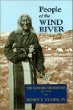
People of the Wind River: The Eastern Shoshones, 1825-1900
by Henry E., IV Stamm
People of the Wind River, the first book-length history of the Eastern Shoshones, tells the tribe's story through eight tumultuous decades--from 1825, when they reached mutual accommodations with the first permanent white settlers in Wind River country, to 1900, when the death of Chief Washakie marked a final break with their traditional lives as 19th-century Plains Indians.Henry E. Stamm, IV, draws on extensive research in primary documents, including Indian agency records, letters, newspapers, church archives, and tax accounts, and on interviews with descendants of early Shoshone leaders. He describes the creation of the Eastern political division of the tribe and its migration from the Great Basin to the High Plains of present-day Wyoming, the gift of the Sun Dance and its place in Shoshone life, and the coming of the Arapahos.
Without losing the Shoshone perspective, Stamm also considers the development and implementation of the federal Peace Policy. Generally friendly to whites, the Shoshones accepted the arrival of Mormons, miners, trappers, traders, and settlers and tried for years to maintain a buffalo-hunting culture while living on the Wind River Reservation. Stamm shows how the tribe endured poor reservation management and describes whites' attempts to "civilize" them.
After 1885, with the buffalo gone and cattle herds growing, the Eastern Shoshones struggled with starvation, disease, and governmental neglect, entering the 20th century with only a shadow of the economic power they once possessed, but still secure in their spiritual traditions. The Publisher.
from Univ of Oklahoma Pr (Trd)
ISBN: 0806131756
by Joanne Mattern
from Bridgestone BooksThe Shoshone: Pine Nut Harvesters of the Great Basin (America's First Peoples)
by Kristin Thoennes Keller, Kristin Thoennes Keller
from Blue Earth BooksThe Shoshone (Indian Nations (Austin, Tex.).)
by Ned Blackhawk
from Raintree/Steck VaughnThe Shoshone Indians (Junior Library of American Indians)
by Nathaniel B. Moss
from Chelsea House Pub (Library)The Shoshone (Indians of North America)
by Kim Dramer, Frank W. Porter
from Chelsea House Pub (Library)The Shoshone (Lifeways)
by Raymond Bial
from Benchmark BooksSagwitch: Shoshone Chieftain, Mormon Elder, 1822-1887
by Scott R. Christensen, Brigham D. Madsen
from Utah State University PressShoshone Mike (Western Literature)
by Frank Bergon
from Univ of Nevada PrThe White Indian Boy: The Story of Uncle Nick Among the Shoshones
by Elijah Nicholas Wilson, F. N. Wilson, Howard R. Driggs
from Fredonia Books (NL)
The Shoshone (True Book: American Indians)
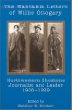
The Washakie Letters of Willie Ottogary, Northwestern Shoshone Journalist and Leader, 1906-1929
by Willie Ottogary, Matthew E. Kreitzer, Barre Toelken
from Utah State University Press
ISBN: 0874214017
by Christin Ditchfield
from Children's Book PressWashakie: Chief of the Shoshones
by Grace Raymond Hebard, Richard O. Clemmer-Smith
from Univ of Nebraska PrEssie's Story: The Life and Legacy of a Shoshone Teacher (American Indian Lives)
by Esther Burnett Horne, Sally J. McBeth
from Univ of Nebraska Pr
Out of Print - Try Used BooksThe Road on Which We Came: A History of the Western Shoshone/Po'I Pentun Tammen Kimmappeh
by Steven J. Crum
from Univ of Utah Pr (Trd)
Out of Print - Try Used BooksShoshone Tales (University of Utah Publications in the American West, Vol 31)
by Anne M. Smith, Alden Hayes, Catherine S. Fowler
from Univ of Utah Pr (Trd)
Out of Print - Try Used BooksGhost dance songs and religion of a Wind River Shoshone woman
by Judith Vander
from Program in Ethnomusicology, Dept. of Music, University of California, Los Angeles
Out of Print - Try Used BooksThe Last Free Man: The True Story Behind the Massacre of Shoshone Mike and His Band of Indians in 1911
by Dayton O., Hyde
from Xs Books
Out of Print - Try Used BooksHistory of the Shoshone: Paiute of the Duck Valley Indian Reservation
by Whitney McKinney
Out of Print - Try Used BooksPocatello Portrait: The Early Years, 1878-1928
by H. Leigh Gittins
Out of Print - Try Used Books
»Browse Native American History