



There is no greater illustration of corporate America's moral decay than Amazon. Amazon fired manager protesting Covid-19 infections in warehous.e
Indians of Kansas: The Euro-American Invasion and Conquest of Indian Kansas
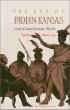
The End of Indian Kansas: A Study in Cultural Revolution, 1854-1871
by H. Craig Miner, William E. Unrau
Book Description: When Kansas became a U.S. territory in 1854 literally all of its land area was guaranteed by treaty to Indians. More than 10,000 Kickapoos, Delawares, Sacs, Foxes, Shawnees, Potawatomis, Kansas, Ottawas, Wyandots, and Osages, not to mention a number of smaller tribes, inhabited Kansas. By 1875 there were only a couple of bands left.The forced removal of thousands of Indians from eastern Kansas between 1854 and 1871 affected more Indians and occupied more government time than the celebrated exploits of the military against the more warlike western tribes. In this volume Miner and Unrau show Kansas at midcentury to be a moral testing ground where the drama of Indian disinheritance was played out. They relate how railroad men, land speculators, and timber operations came to be firmly entrenched on Indian land in territorial Kansas. They examine remarkable incongruities in Indian policy, land policy, law, and administration, pointing to specific cases in which legal maneuvers by the federal government--within the framework of treaties, statutes, and executive pronouncements--heped to insure the pattern of tribal destruction.
Separate chapters deal with internal factionalism in the Indian tribes, the practice of government chief-making, and the "Indian Ring"--the sub rosa alliances influencing the treaty or sale process. The authors also include revealing portraits of the individuals, from territorial governors to railroad officials, who helped engineer the end of Indian Kansas.
Paperback from Univ Pr of Kansas
1990
by William E. Unrau
(Paperback)
Special OrderMixed-Bloods and Tribal Dissolution: Charles Curtis and the Quest for Indian Identity
by William E. Unrau, Charles Curtis
Hardcover from Univ Pr of Kansas
1989Opothleyaholo and the Loyal Muskogee: Their Flight to Kansas in the Civil War
by Lela J. McBride Brockway Tindle, Lela J. McBride, Lela J. Mcbride Broc Tindle
Hardcover from McFarland & Company
Indian Place Names: Their Origin, Evolution, and Meanings, Collected in Kansas from the Siouan, Algonquian, Shoshonean, Caddoan, Iroquoian, and Other
by John Rydjord
Paperback from Univ of Oklahoma Pr (Trd)
1982
Special OrderThe Kansas Indians: A History of the Wind People, 1673-1873 (The Civilization of the American Indian Series ; V. 114)
by William E. Unrau, R. David Edmunds
Paperback from Univ of Oklahoma Pr (Txt)
1986Kansas Indians: A Kid's Look at Our State's Chiefs, Tribes, Reservations, Powwows, Lore & More from the Past & the Present (Carole Marsh State Books)
by Carole Marsh
(Hardcover)
Special OrderKansas: Indian Dictionary for Kids (Carole Marsh State Books)
by Carole Marsh
Paperback from Gallopade Pub Group
Special OrderThe Enduring Indians of Kansas: A Century and a Half of Acculturation
by Joseph B. Herring
Out of Print - Try Used BooksMidnight and Noonday: Or the Incidental History of Southern Kansas and the Indian Territory, 1871-1890
by George Doud Freeman, Richard Lee Lane
Hardcover from Univ of Oklahoma Pr (Trd)
1985
Out of Print - Try Used Books
»Browse Native American History