



There is no greater illustration of corporate America's moral decay than Amazon. Amazon fired manager protesting Covid-19 infections in warehous.e
Against the Dead Hand: The Uncertain Struggle for Global Capitalism
by Brink Lindsey
Hardcover: 368 pages
John Wiley & Sons; ISBN: 0471442771; 1 edition (December 21, )
Another World is Possible: Popular Alternatives to Globalization at the World Social Forum
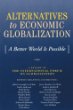
Alternatives to Economic Globalization
by John Cavanagh et al.
Book Description: Written by a premier group of thinkers from around the world, Alternatives to Economic Globalization is the defining document of the antiglobalization movement. The culmination of a three-year project by the International Forum on Globalization, whose members include Ralph Nader, David Korten, John Cavanagh, Lori Wallach, and Jerry Mander, it presents both a sober critique of globalization as well as practical, thoughtful alternatives. The authors assert ten core requirements for democratic societies, including equality, basic human rights, local decision making, and ecological sustainability, and demonstrate how globalization undermines each. Offering specific strategies for reining in corporate domination, they address alternative systems for energy, agriculture, transportation, and manufacturing; ideas for weakening or dismantling the WTO, World Bank, and IMF; and rebuilding economies that are responsive to human needs.
Paperback from Berrett-Koehler Pub
by William F. Fisher, Thomas Ponniah
Paperback from Palgrave Macmillan
The Best Democracy Money Can Buy: An Investigative Reporter Exposes the Truth about Globalization, Corporate Cons, and High Finance Fraudsters
by Greg Palast
Hardcover: 224 pages ; Dimensions (in inches): 0.69 x 9.30 x 6.32
Publisher: Pluto Press; ISBN: 0745318460; (February 15, )The Commanding Heights: the Battle for the World Economy
by Daniel Yergin, Joseph Stanislaw
The "commanding heights," according to Pulitzer Prize-winner Daniel Yergin and international business advisor Joseph Stanislaw, are those dominant enterprises and industries that form the high economic ground in nations around the globe. In their analysis of the new world economy, The Commanding Heights: The Battle Between Government and the Marketplace That Is Remaking the Modern World, they examine "the individuals, the ideas, the conflicts, and the turning points" that are responsible. And by considering events such as the ongoing Asian monetary crisis, they suggest what the ultimate interconnection of financial markets might mean in the future. Amazon.com
Paperback: 488 pages
Touchstone Books; ISBN: 068483569X; Rev&Updtd edition (April )Changing Innovation in the Pharmaceutical Industry: Globalization and New Ways of Drug Development
by Andre Jungmittag (Editor), et al
Listed under PharmacologyDeveloping Global Executives
by Morgan W. McCall Jr., George P. Hollenbeck
(Hardcover)Diversity Amid Globalization (2nd Edition)
by Lester Rowntree, et al
(Hardcover)Eyes of the Heart: Seeking a Path for the Poor in the Age of Globalization
by Jean-Bertrand Aristide, Laura Flynn (Editor)
Hardcover: 88 pages
Common Courage Pr; ISBN: 1567511872; 1st edition (March 1, )Free Trade Under Fire
by Douglas A. Irwin
(Hardcover)Globalization and the Politics of Development in the Middle East (The Contemporary Middle East, 1)
by Clement M. Henry, et al
(Paperback)Going Global: Transforming Relief and Development Ngos
by Marc Lindenberg, Coralie Bryant
(Paperback)In Defense of Globalization
by Jagdish N. Bhagwati
Book Description: The riot-torn meeting of the World Trade Organization in Seattle in 1999 was only the most dramatic sign of the intensely passionate debate now raging over globalization, which critics blame for everything from child labor to environmental degradation, cultural homogenization, and a host of other ills afflicting poorer nations. Now Jagdish Bhagwati, the internationally renowned economist known equally for the clarity of his arguments and the sharpness of his pen, takes on the critics, revealing that globalization, when properly governed, is in fact the most powerful force for social good in the world today. Drawing on his unparalleled knowledge of international economics, Bhagwati explains why the 'gotcha' examples of the critics are often not as they seem, and that in fact globalization often alleviates many of the problems for which it has been blamed. For instance, when globalization leads to greater general prosperity in an underdeveloped nation, it quickly reduces child labor and increases literacy (when parents have sufficient income, they send their children to school, not work). The author describes how globalization helps the cause of women around the world and he shows how economic growth, when coupled with the appropriate environmental safeguards, does not necessarily increase pollution. And to counter the charge that globalization leads to cultural hegemony, to a bland 'McWorld,' Bhagwati points to the example of Salman Rushdie, a writer who blends Bombay slang and impeccable English in novels touched by magic realism borrowed from South American writers. Globalization leads not to cultural white bread but to a spicy hybrid of cultures. With the wit and wisdom for which he is renowned, Bhagwati convincingly shows that globalization is part of the solution, not part of the problem. Anyone who wants to understand what's at stake in the globalization wars must read In Defense of Globalization.
Hardcover from Oxford Press
In Defense of Global Capitalism
by Johan Norberg
Paperback from Cato Inst
The Ideas that Conquered the World: Peace, Democracy, and Free Markets in the Twenty-first Century
by Michael Mandelbaum
(Hardcover)The Hydrogen Economy: The Creation of the World-Wide Energy Web and the Redistribution of Power on Earth
by Jeremy Rifkin
(Hardcover)
George Soros on Globalization
The Lexus and the Olive Tree: Understanding Globalization
by Thomas L. Friedman
One day in 1992, Thomas Friedman toured a Lexus factory in Japan and marveled at the robots that put the luxury cars together. That evening, as he ate sushi on a Japanese bullet train, he read a story about yet another Middle East squabble between Palestinians and Israelis. And it hit him: Half the world was lusting after those Lexuses, or at least the brilliant technology that made them possible, and the other half was fighting over who owned which olive tree. Friedman, the well-traveled New York Times foreign-affairs columnist, peppers The Lexus and the Olive Tree with stories that illustrate his central theme: that globalization--the Lexus--is the central organizing principle of the post-cold war world, even though many individuals and nations resist by holding onto what has traditionally mattered to them--the olive tree. Problem is, few of us understand what exactly globalization means. As Friedman sees it, the concept, at first glance, is all about American hegemony, about Disneyfication of all corners of the earth. But the reality, thank goodness, is far more complex than that, involving international relations, global markets, and the rise of the power of individuals (Bill Gates, Osama Bin Laden) relative to the power of nations. No one knows how all this will shake out, but The Lexus and the Olive Tree is as good an overview of this sometimes brave, sometimes fearful new world as you'll find. --Lou Schuler - Amazon.com
Paperback: 490 pages
Anchor Books; ISBN: 0385499345; (May 2, )
by George Soros
Billionaire George Soros believes that if the world is to prosper in the coming decades, globalization must become more than a buzzword. In this thoughtful manifesto, he describes how recent transformations in the world economy and burgeoning technologies such as the Internet have often obscured developing problems and persistent inequities. Soros' socially conscious commentary and prescriptions appeal to a readership much larger than just those who oppose globalization. bn.com
Hardcover: 160 pages
Public Affairs; ISBN: 1586481258; 1st edition (March 5, )Empire
by Michael Hardt, Antonio Negri
Empire is a sweeping book with a big-picture vision. Michael Hardt and Antonio Negri argue that while classical imperialism has largely disappeared, a new empire is emerging in a diffuse blend of technology, economics, and globalization. The book brings together unlikely bedfellows: Hardt, associate professor in Duke University's literature program, and Negri, among other things a writer and inmate at Rebibbia Prison in Rome. Empire aspires to the same scale of grand political philosophy as Locke or Marx or Fukuyama, but whether Hardt and Negri accomplish this daunting task is debatable. It is, however, an exciting book that is especially timely following the emergence of terrorism as a geopolitical force. Hardt and Negri maintain that empire--traditionally understood as military or capitalist might--has embarked upon a new stage of historical development and is now better understood as a complex web of sociopolitical forces. They argue, with a neo-Marxist bent, that "the multitude" will transcend and defeat the new empire on its own terms. The authors address everything from the works of Deleuze to Jefferson's constitutional democracy to the Chiapas revolution in a far-ranging analysis of our contemporary situation. Unfortunately, their penchant for references and academese sometimes renders the prose unwieldy. But if Hardt and Negri's vision of the world materializes, they will undoubtedly be remembered as prophetic. --Eric de Place - Amazon.com
Paperback: 504 pages
Harvard Univ Pr; ISBN: 0674006712;The Globalization Syndrome
by James H. Mittelman
(Paperback)Governance in a Globalizing World
by Joseph S. Nye (Editor), John D. Donahue (Editor)
(Paperback)
The Paradox of American Power: Why the World's Only Superpower Can't Go It Alone
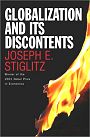
Globalization and Its Discontents
by Joseph E. Stiglitz, Winner of the Nobel Prize
Due to massive media coverage, many people are familiar with the controversy and organized resistance that globalization has generated around the world, yet explaining what globalization actually means in practice is a complicated task. For those wanting to learn more, this book is an excellent place to start. An experienced economist, Joseph Stiglitz had a brilliant career in academia before serving for four years on President Clinton's Council of Economic Advisors and then three years as chief economist and senior vice president of the World Bank. His book clearly explains the functions and powers of the main institutions that govern globalization--the International Monetary Fund, the World Bank, and the World Trade Organization--along with the ramifications, both good and bad, of their policies. He strongly believes that globalization can be a positive force around the world, particularly for the poor, but only if the IMF, World Bank, and WTO dramatically alter the way they operate, beginning with increased transparency and a greater willingness to examine their own actions closely. Of his time at the World Bank, he writes, "Decisions were made on the basis of what seemed a curious blend of ideology and bad economics, dogma that sometimes seemed to be thinly veiling special interests.... Open, frank discussion was discouraged--there was no room for it." The book is not entirely critical, however: "Those who vilify globalization too often overlook its benefits," Stiglitz writes, explaining how globalization, along with foreign aid, has improved the living standards of millions around the world. With this clear and balanced book, Stiglitz has contributed significantly to the debate on this important topic. --Shawn Carkonen - Amazon.com
Hardcover: 282 pages
W.W. Norton & Company; ISBN: 0393051242; 1st edition
by Joseph S., Jr. Nye
(Hardcover)Michael Jordan and the New Global Capitalism
by Walter Lafeber
Listed under Michael JordanRethinking Globalization: Teaching for Justice in an Unjust World
by Bill Bigelow (Editor), Bob Peterson (Editor)
(Paperback)The Silent Takeover: Global Capitalism and the Death of Democracy
by Noreena Hertz
Hardcover: 256 pages
Free Press; ISBN: 0743234782;Strategic Management: Competitiveness and Globalization, Concepts and Cases
by Michael A. Hitt, et al
(Hardcover)Strategic Management With Infotrac: Competitiveness and Globalization
by Michael A. Hitt, et al
(Hardcover)Modernity at Large: Cultural Dimensions of Globalization (Public Worlds, V. 1)
by Arjun Appadurai
(Paperback)The Limits of Convergence: Globalization and Organizational Change in Argentina, South Korea, and Spain.
by Mauro F. Guillen
(Hardcover)Rethinking American History in a Global Age
by Thomas Bender (Editor)
(Paperback)World Hunger: Twelve Myths
by Frances Moore Lappe, et al
(Paperback)
Many Globalizations : Cultural Diversity in the Contemporary World
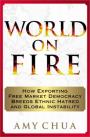
World on Fire: How Exporting Free Market Democracy Breeds Ethnic Hatred and Global Instability
by Amy Chua
Book Description: Every few years, a book is published about America's role in the world and the changing contest of global affairs that gets everyone thinking in a new way. Amy Chua's WORLD ON FIRE will have exactly that kind of impact on the debate of how the world has changed in light of the events of last September.Apostles of globalization, such as Thomas Friedman, believe that exporting free markets and democracy to other countries will increase peace and prosperity throughout the developing world; Amy Chua is the anti-Thomas Friedman. Her book wil be a dash of cold water in the face of globalists, techno-utopians, and liberal triumphalists as she shows that just the opposite has happened: When global markets open, ethnic conflict worsens and politics turns ugly and violent.
Drawing on examples from around the world--from Africa and Asia to Russia and Latin America--Chua examines how free markets do not spread wealth evenly throughout the whole of these societies. Instead they produce a new class of extremely wealthy plutocrats--individuals as rich as nations. Almost always members of a minority group--Chinese in the Philippines, Croatians in the former Yugoslavia, whites in Latin America, Indians in East Africa, Jews in post-communist Russia--these "market-dominant minorities" have become targets of violent hatred. Adding democracy to this volatile mix unleashes supressed ethnic hatreds and brings to power ethnonationalist governments that pursue aggressive policies of confiscation and revenge. Chua further shows how individual countries are often viewed as dominant minorities, explaining the phenomena of ethnic resentment in the Arab-Israeli conflict and the rising tide of anti-American sentiment around the world. This more than anything accounts for the visceral hatred of Americans that has been expressed in recent acts of terrorism.
Bold and original, WORLD ON FIRE is a perceptive examination of the far-reaching effects of exporting capitalism with democracy and its potentially catastrophic results.
(Hardcover)
by Peter L. Berger (Editor), Samuel P. Huntington (Editor)
Hardcover: 416 pages
Oxford Univ Pr (Trade); ISBN: 0195151461;
Out of Print - Try Used Books
Search This Site