



There is no greater illustration of corporate America's moral decay than Amazon. Amazon fired manager protesting Covid-19 infections in warehous.e
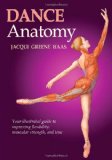
Dance Anatomy (Sports Anatomy)
by Jacqui Haas
Paperback from Human Kinetics
ISBN: 0736081933
Powerful, expressive, and compelling! Now you can see what it takes to be a stronger, more elegant dancer. Featuring over 200 full-color illustrations, Dance Anatomy visually depicts the unique relationship between muscle development and aesthetic movement as never before.
Dance Anatomy features 82 of the most effective dance, movement, and performance exercises, each designed to promote perfect alignment, improved placement, proper breathing, and prevention of common injuries. In stunning detail, the accompanying illustration captures the dancer in motion and highlights the active muscles associated with each movement.
You'll learn how to modify exercises to target specific areas to enhance flexibility and reduce muscle tension. You'll also learn to put it all together to personalize a program based on your style of dance, level of expertise, and individual needs and goals.
Whether you seek to optimize performance, add a new movement to your repertoire, or minimize muscle fatigue, stress, and injury, Dance Anatomy is your perfect partner.
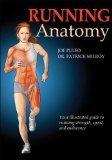
Running Anatomy
by Joseph Puleo, Patrick Milroy
Paperback from Human Kinetics
ISBN: 0736082301
See what it takes to maximize running strength, speed, and endurance! Running Anatomy will show you how to improve your performance by increasing muscular strength, optimizing the efficiency of your running motion, and minimizing your risk for injury.
Running Anatomy features 50 of the most effective strength exercises for runners, each with clear, step-by-step descriptions and full-color anatomical illustrations highlighting the muscles in action. But you'll find much more than exercises--you'll also see their results.
Running Anatomy places you in the action, fundamentally linking each exercise to running performance. You'll see how to strengthen muscles, reduce injury, and improve gait efficiency for faster times and more fluid runs.
Running Anatomy will prepare you for any challenge that comes your way. You'll find exercises for varying terrains and speeds, from hill running to off-road running and from sprints to marathons. Plus you'll learn how to evaluate and rehabilitate the most common injuries that runners face, including lower-back pain, knee aches and strains, and torn muscles and tendons.
Whether you're a fitness runner looking to conquer hills with more speed or strength or a competitive runner looking for that extra bit of performance and a finishing kick, Running Anatomy will ensure that you're ready to deliver your personal best.
Runner's World The Runner's Body: How the Latest Exercise Science Can Help You Run Stronger, Longer, and Faster
by Ross Tucker, Jonathan Dugas, Matt Fitzgerald
Paperback from Rodale Books
Media Published: 2009-
ISBN: 1605298611
Every day scientists learn more about how the body adapts to the stress of running--and how various body systems contribute to running performance. Leading the charge is a fresh generation of brilliant young exercise physiologists including Ross Tucker and Jonathan Dugas, whose work has demolished many long-standing beliefs about running. Now Tucker and Dugas, whose blog, Science of Sport, has already created a devoted readership, join with esteemed fitness author Matt Fitzgerald to provide a captivating tour of the human body from the runner's perspective. Focusing on how runners at all levels can improve their health and performance, The Runner's Body offers in a friendly, accessible tone, the newest, most surprising, and most helpful scientific discoveries about every aspect of the sport--from how best to nourish the runner's body to safe and legal ways to increase oxygen delivery to the muscles. Full of surprising facts, practical sidebars, and graphical elements, The Runner's Body is a must-have resource for anyone who wants to become a better--and healthier--runner.
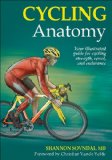
Cycling Anatomy (Sports Anatomy)
by Shannon Sovndal
Paperback from Human Kinetics
ISBN: 0736075879
See what it takes to maximize cycling power, speed, and endurance! Cycling Anatomy will show you how to improve your performance by increasing muscular strength and optimizing the efficiency of every movement.
Cycling Anatomy features 74 of the most effective cycling exercises, each with clear, step-by-step descriptions and full-color anatomical illustrations highlighting the primary muscles in action.
Cycling Anatomy goes beyond exercises by placing you on the bike and into the throes of competition. Illustrations of the active muscles involved in cornering, climbing, descending, and sprinting show you how the exercises are fundamentally linked to cycling performance. From steep inclines to slick terrains, Cycling Anatomy will ensure you're prepared for any challenge that comes your way.
You'll also learn how to modify exercises to target specific areas, reduce muscle tension, and minimize common cycling injuries. You'll also learn ways to pull it all together to develop a training based on your individual needs and goals.
Whether you're training for an upcoming century ride or just want to top that killer hill with strength to spare, Cycling Anatomy will make sure you get the most out of every ride.
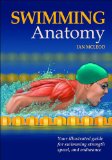
Swimming Anatomy
by Ian McLeod
Paperback from Human Kinetics
ISBN: 0736075712
See how to achieve stronger starts, more explosive turns, and faster times! Swimming Anatomy will show you how to improve your performance by increasing muscle strength and optimizing the efficiency of every stroke.
Swimming Anatomy includes 74 of the most effective swimming exercises, each with step-by-step descriptions and full-color anatomical illustrations highlighting the primary muscles in action.
Swimming Anatomy goes beyond exercises by placing you on the starting block, in the water, and into the throes of competition. Illustrations of the active muscles for starts, turns, and the four competitive strokes (freestyle, breaststroke, butterfly, and backstroke) show you how each exercise is fundamentally linked to swimming performance.
You'll also learn how exercises can be modified to target specific areas, improve your form in the water, and minimize common swimming injuries. Best of all, you'll learn how to put it all together to develop a training program based on your individual needs and goals.
Whether you are training for a 50-meter freestyle race or the open-water stage of a triathlon, Swimming Anatomy will ensure you enter the water prepared to achieve every performance goal.
Advances in Functional Training: Training Techniques for Coaches, Personal Trainers and Athletes
by Michael Boyle
Paperback from On Target Publications
ISBN: 1931046018In the seven years since the publication of his first book, Functional Training for Sports, new understanding of functional anatomy created a shift in strength coaching. With this new material, Coach Boyle presents the continued evolution of functional training as seen by a leader in the strength and conditioning field.
Research Methods in Physical Activity - 5th Edition
by Jerry Thomas, Jack Nelson, Stephen Silverman
Hardcover from Human Kinetics
ISBN: 0736056203
Many students fear and loathe research methods classes, which conjure up images of musty, dusty books, boredom, and confusion. Students have a welcome surprise waiting for them with Research Methods in Physical Activity, Fifth Edition, as the text effortlessly guides them through the research process.
This latest edition of this internationally recognized textbook does not rest on its laurels as the leading research methods text. The authors have updated the resource in order to provide the following benefits:
-Shed new light on the research process, particularly regarding use of library facilities
-Enhance students' understanding of basic statistical calculations and the relevance of their uses
-Present a major revision to the chapter on qualitative research and contributions from eminent scholars to the chapters on historical, epidemiology, and philosophic research
-Increase students' understanding of how to write research reports
-Carry the readers through the book by introducing three graduate students studying research methods, one of whom brings a special comical spin to the material
In addition, the text presents a new chapter on using power to plan and interpret research and provides information on traditional perspectives and alternative approaches to the research process. As a result, readers-understand the essentials of the research process;
-appreciate statistical analyses common to research studies;
-learn the basics of planning research and linking appropriate statistical packages with specific research designs;
-discover how to bring together all the components of the research process and lay them out, in appropriate formats, for dissemination to user groups; and
-gain access to a variety of tools to present or reinforce concepts presented in the book.
Research Methods in Physical Activity, Fifth Edition, retains its strengths from the previous edition. The text is arranged in four parts that systematically guide the reader through the research process. It introduces readers to statistical and measurement issues in research and presents various types of, and approaches to, research. The new edition helps readers understand the complete research process, and it thoroughly arms them with practical research tools. For instructors teaching a research methods course, an instructor guide, test package, and presentation package specific to the textbook are available.Research Methods in Physical Activity, Fifth Edition, demonstrates that research processes are not to be feared. To the contrary, they are useful tools to be used by students and professionals. This point is emphasized as authors regularly use humorous anecdotes, sketches, and corollaries to enliven the reading and drive home key points. This text removes the fear and confusion often associated with the research process and shines a light on all the aspects of research that readers need to know--whether it's reading, understanding, planning, carrying out, writing, or presenting research.
The Physics of Baseball (3rd Edition)
by Robert K. Adair
Paperback from Harper Paperbacks
Media Published: 2002-
ISBN: 0060084367
Blending scientific fact and sports trivia, Robert Adair examines what a baseball or player in motion does-and why. How fast can a batted ball go? What effect do stitch patterns have on wind resistance? How far does a curve ball break? Who reaches first base faster after a bunt, a right- or left-handed batter? The answers are often surprising -- and always illuminating.
This newly revised third edition considers recent developments in the science of sport such as the neurophysiology of batting, bat vibration, and the character of the "sweet spot." Faster pitchers, longer hitters, and enclosed stadiums also get a good, hard scientific look to determine their effects on the game.
Filled with anecdotes about famous players and incidents, The Physics of Baseball provides fans with fascinating insights into America's favorite pastime.
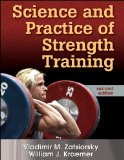
Science and Practice of Strength Training, Second Edition
by Vladimir Zatsiorsky, William Kraemer
Hardcover from Human Kinetics
ISBN: 0736056289
This new second edition of Science and Practice of Strength Training comes with many additions and changes. A new coauthor, Dr. William Kraemer, joins Dr. Vladimir Zatsiorsky in expanding on the principles and concepts needed for training athletes. Among Dr. Kraemer's contributions are three new chapters targeting specific populations--women, young athletes, and seniors--plus the integration of new concepts into the other chapters.
Together the authors have trained more than 1,000 elite athletes, including Olympic, world, continental, and national champions and record holders. The concepts they divulge are influenced by both Eastern European and North American perspectives. The authors integrate those concepts in solid principles, practical insights, coaching experiences, and directions based on scientific findings. This edition is much more practical than its predecessor; to this end, the book provides the practitioner with the understanding to craft strength training programs based on individuals' needs.
Science and Practice of Strength Training, Second Edition, shows that there is no one program that works for any one person at all times or for all conditions. This book addresses the complexity of strength training programs while providing straightforward approaches to take under specific circumstances. Those approaches are applied to new physiological concepts and training practices, which provide readers with the most current information in the science and practice of strength training. The approaches are also applied to the three new chapters, which will help readers design safe and effective strength training programs for women, young athletes, and seniors. In addition, the authors provide examples of strength training programs to demonstrate the principles and concepts they explain in the book.
The book is divided into three parts. Part I focuses on the basis of strength training, detailing concepts, task-specific strength, and athlete-specific strength. Part II covers methods of strength conditioning, delving into training intensity, timing, strength exercises, injury prevention, and goals. Part III explores training for specific populations. The book also includes suggested readings that can further aid readers in developing strength training programs.
This expanded and updated coverage of strength training concepts will ground readers in the understanding they need in order to develop appropriate strength training programs for each person that they work with.
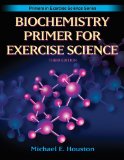
Biochemistry Primer for Exercise Science (Primers in Exercise Science)
by Michael Houston
Paperback from Human Kinetics
ISBN: 0736056122
The latest edition of Biochemistry Primer for Exercise Science provides upper-level undergraduate and graduate students with an understanding of the essential concepts of biochemistry--molecular biology, basic chemistry, metabolism, and transcription regulation--in an easy-to-understand format. This text builds on the success of the previous edition by offering new topics, new organization of chapters, greater interpretation and integration of key concepts, and new and improved illustrations that clarify the content.
Biochemistry Primer for Exercise Science, Third Edition is the first volume in Human Kinetics' Primers in Exercise Science Series. With its updated information based on new research and ideas from exercise science and molecular biology and its greater interpretation of biochemistry in the context of the active human, this volume is the only text of its kind in this field. Students trained in traditional exercise physiology can understand basic concepts of energy, but without the knowledge gained from this book they might lack the ability to apply these principles to everyday life.
New information and approaches in this book include the following:
-Reorganized chapters give greater attention to the mechanism behind the concepts. Basic metabolic pathways and mechanisms are outlined and the role of exercise in modulating those pathways and mechanisms is addressed.
-A deeper and more thorough integration of the topics adds context and aids in comprehension.
-New review questions with answers are provided.
-A section on oxidative stress and its implications to lifestyle and health are included.
-A new section covers signal transduction that leads to changes in the expression of genes and in the amounts of specific proteins.
-A thoroughly revamped chapter covers bioenergetics with an overview of energy systems and their role in exercise. This is followed by the more rigorous thermodynamics concepts.
In addition, each chapter addresses the newest, most sophisticated information, discusses future research directions, and contains key points to reinforce understanding. The book also provides a list of abbreviations, conveniently located on the inside front cover, to help the reader become familiar with commonly used biochemistry terms; chapter summaries; a glossary; and a comprehensive reference list to help students absorb and apply the content.This new edition fully integrates the concepts of biochemistry and physiology of exercise and provides critical information on how genes are controlled. In doing so, it melds the fields of human nutrition, physiology, and biochemistry into a more unifying science, and it presents students with the biochemistry content they need in order to understand the molecular aspects of human physical activity. The text helps prepare students for what lies ahead, and it is a great tool for professionals in related fields who want to learn about the biochemistry of exercise.
Each volume in Human Kinetics' Primers in Exercise Science Series provides students and professionals alike with a non-intimidating basic understanding of the science behind each topic in the series, and where appropriate, how that science is applied. These books are written by leading researchers and teachers in their respective areas of expertise to present in an easy-to-understand manner essential concepts in dynamic, complex areas of scientific knowledge. The books in the series are ideal for researchers and professionals that need to obtain background in an unfamiliar scientific area or as an accessible basic reference for those that will be returning to the material often.
Search Amazon: Books on Sports Science Browse Amazon: Sports Science Search Wikipedia: Sports Science
Search This Site
Sports Science on DVD