



There is no greater illustration of corporate America's moral decay than Amazon. Amazon fired manager protesting Covid-19 infections in warehous.e
A Book of Five Rings
by Miyamoto Musashi
Listed under Martial Arts
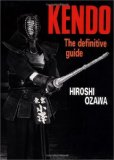
Kendo: The Definitive Guide
by Hiroshi Ozawa
Hardcover from Kodansha USA
ISBN: 4770021194
Kendo-the Way of the Sword-is one of the oldest of Japan's martial arts and the one most closely associated with the samurai. Immortalized in the action movies of Akira Kurosawa and in the bestselling novel Musashi, Kendo--originally a form of swordsmanship-has in recent years developed into a popular and highly competitive sport enjoyed by thousands of men and women around the world.
Kendo: The Definitive Guide is the first book in English to provide a practical and truly comprehensive approach to the subject. Everything that the novice needs to know, from basic information about purchasing, wearing, and maintaining essential equipment to competing in international tournaments, is explained in simple, straightforward language. Step-by-step explanations of fundamental techniques to be mastered to attain black belt level are illustrated in easy-to-follow line drawings.
With appendices giving the rules at international competitions and important information about Kendo clubs outside Japan, Kendo is the definitive guide for all non-Japanese Kendoists. A special section about the history and development of this martial art and guidelines for running practice sessions also make it a unique resource for all teachers of Kendo.
The definitive guide includes
- basic Kendo principles and techniques
- official International Kendo Federation regulations
- list of Kendo clubs and national associations around the world
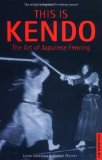
This is Kendo: The Art of Japanese Fencing
by Junzo Sasamori, Gordon Warner
Paperback from Tuttle Publishing
ISBN: 0804816077
A fully illustrated introduction to the traditional art of Japanese fencing--its essential nature and its basic techniques. The first book in English to describe and analyze this famous sport.
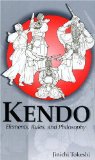
Kendo: Elements, Rules, and Philosophy (Latitude 20 Book)
by Jinichi Tokeshi
Paperback from University of Hawaii Press
ISBN: 0824825985
All students of kendo--the formal art and practice of Japanese swordsmanship--will welcome this manual by an advanced practitioner with a deep understanding of the martial art. The work begins with a history of kendo in Japan, followed by a study of basic equipment and its proper care and use and a detailed description of forms and rules--essential aspects of any martial art. Beginners will find this section particularly helpful because of the close attention paid to fundamental techniques of kendo, including the rare two-sword form (nito ryu), largely unknown outside of Japan. Each technique is accompanied by clear, easy-to-follow instructions. The Nihon Kendo Kata and Shiai and Shinpan rules and regulations are useful references for those learning the Kata and participating in matches. The author, who is also a practicing physician, is attentive throughout to injury prevention and safety--concerns often overlooked in martial arts manuals.The elements of kendo philosophy, which can mystify even experienced practitioners, are explained in simple terms to aid understanding. The manual concludes with biographies of Japan's most celebrated swordsmen, an extensive glossary of kendo terms, and a history of kendo in Hawai'i, where it has been practiced for more than a century and where some of the world's top practitioners can be found.
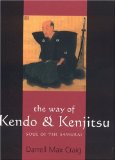
The Way of Kendo and Kenjitsu: Soul of the Samurai
by Darrell Max Craig
Paperback from Ymaa Publication Center
ISBN: 1594390029
This book bridges the gap between modern Kendo as a sport and the old Kendo of the Samurai.
Looking at a Far Mountain: A Study of Kendo Kata (Tuttle Martial Arts)
by Paul Budden
Paperback from Tuttle Publishing
ISBN: 0804832455
Derived from the ancient Japanese warrior art of the sword and imbued with the principle of Zen Buddhism, kendo has now gained worldwide popularity for its appealing combination of sport and meditation. In Looking at Far Mountain kendo expert Paul Budden explains the essentials of the art by offering:* An extensive history of the kendo tradition
* Technical specifics such as form, positioning, and breathing
* Detailed explanations of the kata
* A listing of kendo schools
* A lineage chart of the great kendo masters
This comprehensive volume-endorsed by the premier Japanese kendo body-is sure to imporve and perfect the practice of kendo for students of all levels.
The Shambhala Guide to Kendo: Its Philosophy, History, and Spiritual Dimension
by Minoru Kiyota
Paperback from Shambhala
Media Published: 2002-
ISBN: 1570629277
Kendo is the art of swordsmanship that was cultivated by the samurai in medieval Japan and it is an increasingly popular martial art studied in the West today. While most books on kendo focus primarily on kata, or the traditional movements or forms, The Shambhala Guide to Kendo provides a succinct overview of the art as a whole: its historical significance, spiritual teachings, and how it can be used by practitioners today as a means of strengthening the body and mind.
The Shambhala Guide to Kendo (previously published in hardcover as Kendo: Its Philosophy, History, and Means to Personal Growth by Kegan Paul International, ), covers everything from the details of practice--such as strikes, shouts, and stances--to the history and philosophy of Japanese swordsmanship, including an overview of bushido, the code of the samurai. The author also demonstrates how the development of Buddhism influenced two important schools of Japanese swordsmanship.
The Shambhala Guide to Kendo includes discussions of:
· Kendo as an expression of complete body-mind integration
· The historical development of kendo from the twelfth century to today
· The cultivation of the "mind of no-mind" in kendo, a state of egolessness and fearlessness
· The Buddhist "infrastructure" of kendo
· The practice of kendo meditation
· The significance of the dojo, or hall of practice
The Shambhala Guide to Kendo also provides a useful glossary that includes the Japanese and English rendering of key terms and an informative list of ryu (or school) lineages. This accessible overview of the art will appeal to students of traditional Japanese culture as well as kendo practitioners.
Junichi Haga's Secrets of Kendo, Volume 1 (Kendo Jidai, Junichi Haga's Secrets of Kendo)
by Terukuni Uki
Kindle Edition from Kendo Jidai
Media Published: 2011-
Junichi Haga, genius of the Showa Period. Joined Hakudo Nakayama's Yushinkan. Along with Kiyoshi Nakakura and Gorozo Nakajima, eventually became known as Yushinkan's "Three Crows", a Japanese expression meaning 3 top practitioners of near equal skill.
Though after the war, he worked hard to keep the art of Kendo alive, once Kendo regained its place in the mainstream and gained structured organization, he returns once again to being a private swordsman, and focused on honing his own skills and instructing the new generation.
Before long, the group of practitioners gathered around Haga came to be known as Haga Dojo. The Kendo and methods for practice that Haga believed in were carefully protected, and that Kendo, some forty years after Haga's death, is still alive today.
Uki Terukuni, who received instruction directly from Haga, explains Haga's Kendo.
- Take a large back swing and strike. Also put emphasis on positioning to the left and right
- How to grip the Shinai. Swing a heavy object freely back to forward, from left to right
- The concept behind the Kamae (ready stance) : The purpose of the Kamae is to create an inevitable change
- The Ayumi-ashi (footwork) and Hiraki-ashi (defensive stance) of Junichi Haga
- Ayumi-ashi : Inducing Kyoku-giwaku through smooth footwork
- Hiraki-ashi : Always maintain a firm stance from where you can attack
- Counter Opponent Movement : In Kendo, attack the opponent's spirit and technique with your spirit and technique
- The Points of an Attack that Start with the Tsuki
- Unbalance your opponent with the Tsuki attack
- Using the Shinai to Cut : Kendo was born from sword fights
- Keep striking until you score : Repeat fast and furious but short practices
- Junichi Haga Quotes
This is an english translation of articles published on KENDO JIDAI 2006 July, August, September.Junichi Haga, genius of the Showa Period. Joined Hakudo Nakayama's Yushinkan. Along with Kiyoshi Nakakura and Gorozo Nakajima, eventually became known as Yushinkan's "Three Crows", a Japanese expression meaning 3 top practitioners of near equal skill.
Though after the war, he worked hard to keep the art of Kendo alive, once Kendo regained its place in the mainstream and gained structured organization, he returns once again to being a private swordsman, and focused on honing his own skills and instructing the new generation.
Before long, the group of practitioners gathered around Haga came to be known as Haga Dojo. The Kendo and methods for practice that Haga believed in were carefully protected, and that Kendo, some forty years after Haga's death, is still alive today.
Uki Terukuni, who received instruction directly from Haga, explains Haga's Kendo.
- Take a large back swing and strike. Also put emphasis on positioning to the left and right
- How to grip the Shinai. Swing a heavy object freely back to forward, from left to right
- The concept behind the Kamae (ready stance) : The purpose of the Kamae is to create an inevitable change
- The Ayumi-ashi (footwork) and Hiraki-ashi (defensive stance) of Junichi Haga
- Ayumi-ashi : Inducing Kyoku-giwaku through smooth footwork
- Hiraki-ashi : Always maintain a firm stance from where you can attack
- Counter Opponent Movement : In Kendo, attack the opponent's spirit and technique with your spirit and technique
- The Points of an Attack that Start with the Tsuki
- Unbalance your opponent with the Tsuki attack
- Using the Shinai to Cut : Kendo was born from sword fights
- Keep striking until you score : Repeat fast and furious but short practices
- Junichi Haga Quotes
This is an english translation of articles published on KENDO JIDAI 2006 July, August, September.
Complete Kendo (Complete Martial Arts)
by John J. Donohue, Kathleen Sweeney, Matthew Donohue
Paperback from Tuttle Publishing
ISBN: 0804831483
A thorough introduction to the Japanese martial way of the sword, "Complete Kendo" covers every aspect of the discipline, from equipment and terminology to technique and strategy. Photos throughout.
The Heart of Kendo: A Comprehensive Introduction to the Philosophy and Practice of the Art of the Sword
by Darrell Max Craig
Paperback from Shambhala
Media Published: 2002-
"The martial arts, if taught correctly, are limitless journeys with no final destination," writes martial arts master Darrell Craig. "They are a way of life." He begins that journey here with the basics: sitting, breathing, and the all-important bow, or rei. He describes kendo equipment and its care, then progresses to some of the basic features of a kendo practice session: warm-up exercises, assuming the proper stance, grip, strikes, and positioning. Only then does he move on to the seven long-sword forms, or kata, that are the foundation of kendo practice.
But Craig's teachings go far beyond mechanics. Through stories and actual recorded conversations with his sensei, Harutane Chiba, thirty-seventh generation of a famous clan of samurai swordsmen, Craig brings you into the presence of a true legend from Japan's imperial dojo. He presents the history of kendo kata, including stories of the kendo duel of old and an appendix describing the goshi, or country samurai, about which little is known today even in Japan. Throughout, Craig emphasizes and demonstrates the respect, restraint, and discipline that lie at the heart of kendo, where the most important opponent to vanquish is oneself.The Art and Science of Fencing
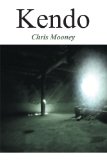
Kendo
by Chris Mooney
Paperback from AuthorHouse
ISBN: 1420833472
Meet Chris and Elliott. Both are hard working American students in high school. Both live normal lives like everyone else. Ya, right. After being accepted into one of the most prized private schools in Japan the two find themselves involved in an adventure that will rock the rest of their lives. Not only are the two not your average students, they are both exceptional martial artists with powers passed down for centuries, powers that both shock and baffle their exchange family's daughter, Yui. Add a little humor, a pinch of romance and a butt load of martial arts action and you've got one of the greatest martial arts epics of all time.
by Nick Evangelista
Listed under FencingFlashing Steel: Mastering Eishin-Ryu Swordsmanship
by Masayuki Shimabukuro, et al
Paperback: 268 pages ; Dimensions (in inches): 0.77 x 9.19 x 7.41
Frog Ltd; ISBN: 1883319188;The Secret History of the Sword
by J Christopher Amberger
Listed under Antique WeaponsLooking at a Far Mountain: A Study of Kendo Kata (Tuttle Martial Arts)
by Paul Budden
Paperback: 136 pages ; Dimensions (in inches): 0.41 x 9.94 x 7.04
Publisher: Everyman Paperback Classics; (August 15, )
ISBN: 0804832455Bokken Art of the Japanese Sword
by Dave Lowry, et al
Paperback: 191 pages
Black Belt Communications, Inc.; ISBN: 0897501047; (December 1985)Complete Kendo
by John J. Donohue
Paperback: 288 pages ; Dimensions (in inches): 0.50 x 8.98 x 5.97
Publisher: Charles E Tuttle Co;
ISBN: 0804831483This Is Kendo: The Art of Japanese Fencing
by Junzo Sasamori, Gordon Warner
Paperback: 159 pages ; Dimensions (in inches): 0.69 x 8.95 x 5.91
Publisher: Charles E Tuttle Co; (June 1989)
ISBN: 0804816077Kenjutsu : The Art of Japanese Swordsmanship
by Charles Daniel
Paperback - 128 pages (July 1991)
Unique Pubns; ISBN: 0865681481Taiji Sword
by Wei-Ming Chen, et al
Listed under Tai ChiThe Shambhala Guide to Kendo: An Essential Introduction to the Principles and Practice of the Japanese Art of Swordsmanship
by Minoru Kiyota
Paperback: 168 pages ; Dimensions (in inches): 0.49 x 8.96 x 5.95
Publisher: Shambhala Publications; (April 16, )
ISBN: 1570629277THE MODERN SWORDSMAN - Realistic Training for Serious Self-Defense
by Fred Hutchinson (Author)
(Paperback -- September )Hagakure : The Book of the Samurai
by Yamamoto Tsunetomo, William Scott Wilson (Translator)
(Paperback - March 1992)Shinkendo Japanese Swordsmanship
by Toshishi Obata, Toshishiro Obata
Paperback - 177 pages (January 1, )
International Shinkendo Federation; ISBN: 096686770XSword of the Samurai : The Classical Art of Japanese Swordsmanship
by George R. Parulski
Paperback (December 1985)
Paladin Pr; ISBN: 0873643321
Special OrderThe Unfettered Mind : Writings of the Zen Master to the Sword Master
by Takuan Soho, William Scott Wilson (Translator)
(Paperback - March 1988)