



There is no greater illustration of corporate America's moral decay than Amazon. Amazon fired manager protesting Covid-19 infections in warehous.e
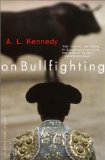
On Bullfighting
by A. L. Kennedy
Paperback from Anchor
Media Published: 2001-
ISBN: 0385720815
An Anchor Books Original
One day, on the brink of despair and contemplating her own mortality, novelist A. L. Kennedy is offered an assignment she can't refuse-an opportunity to travel to Spain and cover a sport that represents the ultimate confrontation with death: bullfighting.
The result is this remarkable book, which takes Kennedy and her readers from the living room of her Glasgow flat to the plazas del toros of Spain and inside the mesmerizing, mystifying, brutal, and beautiful world of the bullfight. Here the sport is death: matadors (literally "killers") are men and, increasingly, women who, not unlike the Roman gladiators before them, provide a spectacle to the crowd, a dance in which their own death is as present as that of the bull. Wonderfully relaying the elements of the sport, from the breeding of the bulls and the training of the matadors to the intricate choreography of the bullfight and its strange connection to the Inquisition, Kennedy meditates on a culture that we may not countenance or fully understand but which is made riveting by the precision of her prose and the passion and humor of her narrative.
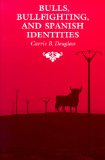
Bulls, Bullfighting, and Spanish Identities (Anthropology of Form and Meaning)
by Carrie B. Douglass
Paperback from University of Arizona Press
ISBN: 0816516529
The matador flourishes his cape, the bull charges, the crowd cheers: this is the image of Spain best known to the world. But while the bull has long been a symbol of Spanish culture, it carries more meaning than has previously been recognized. In this book, anthropologist Carrie B. Douglass views bulls and bullfighting as a means of discussing fundamental oppositions in Spanish society and explains the political significance of those issues for one of Europe's most regionalized countries. In talking about bulls and bullfighting, observes Douglass, one ends up talking not only about differences in region, class, and politics in Spain but also about that country's ongoing struggle between modernity and tradition. She relates how Spaniards and outsiders see bullfighting as representative of a traditional, irrational Spain contrasted with a more civilized Europe, and she shows how Spaniards' ambivalence about bullfighting is actually a way of expressing ambivalence about the loss of traditional culture in a modern world. To fully explore the symbolism of bulls and bullfighting, Douglass offers an overview of Spain's fiesta cycle, in which the bull is central. She broadly and meticulously details three different fiestas through ethnographic fieldwork conducted over a number of years, delineating the differences in festivals held in different regions. She also shows how a cycle of these fiestas may hold the key to resolving some of Spain's fundamental political contradictions by uniting the different regions of Spain and reconciling opposing political camps--the right, which holds that there is one Spain, and the left, which contends that there are many. Bulls, Bullfighting, and Spanish Identities is an intriguing study of symbolism used to examine the broader anthropological issues of identity and nationhood. Through its focus on the political discourse of bulls and bullfighting, it makes an original contribution to understanding not only Spanish politics but also Spain's place in the modern world.
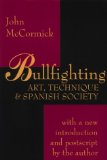
Bullfighting: Art, Technique, and Spanish Society
by John McCormick
Paperback from Transaction Publishers
ISBN: 0765806576
Ernest Hemingway, is best-known to layman and aficionado alike for his fiction and related prose accounts of bullfighting (toreo) as a cross between romantic risk and a drunken party. He sees it as an elaborate substitute for war, ending in wounds or death. Although Hemingway's descriptions of the "beauty" in toreo are lyrical, they are short on imaginative creation of how such beauty, through technique and discipline, comes about. John McCormick sorts through the complexities of toreo, to suggest the aesthetic, social, and moral dimensions of an art that is geographically limited, but universal when seen in round.While attracted to Hemingway's approach, McCormick knew that he was being seduced by elements that had little to do with toreo. To try to right Hemingway's distortions, he named the first edition of this book The Complete Aficionado, but then realized that the volume was directed at a wider readership. Bullfighting is written from the point of view of the torero, as opposed to the usual spectator's impressions and enthusiasm. With the help of a retired matador de toros, Mario Sevilla Mascareas, who taught McCormick the rudiments of toreo as well as the emotions and discipline essential to survival, the author rescues toreo from romantic clichs. He probes the anatomy of the matador's training and technique, provides a past-and-present survey of the traditions of the corrida, and furnishes dramatic portraits of such famous figures as Manolete, Joselito, Belmonte, and Ordez. Here is an informed analysis and critique of the origins and myths of toreo and a survey of the literature it has inspired. Defending the faith in a lively as well as clear and discerning manner, this volume provides a committed and vivid approach to the rich history, ritual, and symbolism of the bullfight. This edition includes a new introduction by the author.
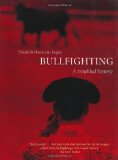
Bullfighting: A Troubled History
by Elisabeth Hardouin-Fugier
Paperback from Reaktion Books
ISBN: 1861895186
"Bullfighting is the only art in which the artist is in danger of death and in which the degree of brilliance in the performance is left to the fighter's honor," wrote Ernest Hemingway in Death in the Afternoon. Art? Ritual? Sport? Cruelty? Though opinions are divided, one thing is certain--bullfighting sparks passionate responses. Supporters argue that bullfighting is a culturally important tradition stretching back thousands of years; while animal rights groups argue that it is cruel and barbaric, causing unnecessary suffering to both bulls and horses. In Bullfighting: A Troubled History Elisabeth Hardouin-Fugier brings clarity to this debate through an exploration of the long history of killing bulls as public spectacle.This book is the first cross-cultural study of bullfighting, covering Europe, North America, and Latin America. Hardouin-Fugier shows how each continent has its own unique style and tools of the trade. For example, in North America, the favored technique is grabbing the bull by the horns, and in Europe the bull is run through with a sword. In the late 1700s bullfights became mass leisure activities, with paying spectators packing into arenas--the classic bullfight of popular imagination. It was at this time that the bullfight became a big business and the bullfighter became a celebrity. In this vivid and comprehensive history, Hardouin-Fugier also explores the extensive influence of the bullfight on art, literature, and culture from the paintings of Goya to the writings of Georges Bataille.
Enriched with many fascinating and sometimes disturbing illustrations, Bullfighting presents a discerning and intelligent approach to a divisive practice. Hardouin-Fugier's informative history will enthrall anyone who has been curious about bullfighting--supporters and detractors alike.
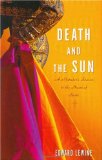
Death and the Sun: A Matador's Season in the Heart of Spain
by Edward Lewine
Hardcover from Houghton Mifflin Harcourt
ISBN: 061826325X
A brilliant observer in the tradition of Adam Gopnik and Paul Theroux, Edward Lewine reveals a Spain few outsiders have seen. There's nothing more Spanish than bullfighting, and nothing less like its stereotype. For matadors and aficionados, it is not a blood sport but an art, an ancient subculture steeped in ritual, machismo, and the feverish attentions of fans and the press.
Lewine explains Spain and the art of the bulls by spending a bullfighting season traveling Spanish highways with the celebrated matador Francisco Rivera Ordónez, following Fran, as he's known, through every region and social stratum. Fran's great-grandfather was a famous bullfighter and the inspiration for Hemingway's matador in The Sun Also Rises. Fran's father was also a star matador, until a bull took his life shortly before Fran's eleventh birthday.
Fran is blessed and haunted by his family history. Formerly a top performer himself, Fran's reputation has slipped, and as the season opens he feels intense pressure to live up to his legacy amid tabloid scrutiny in the wake of his separation from his wife, a duchess. But Fran perseveres through an eventful season of early triumph, serious injury, and an unlikely return to glory.
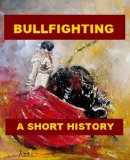
Bullfighting - A Short History
by Ramon Ruiz Amado
Kindle Edition from Shamrock Eden Publishing
Media Published: 2011-
A short history of bullfighting, including a description of the three kinds of bullfights and a discussion of the morality of bullfighting.
A short history of bullfighting, including a description of the three kinds of bullfights and a discussion of the morality of bullfighting.
Los Toros
by Michael Crouser, Mario Vargas Llosa
Hardcover from Twin Palms Publishers
ISBN: 1931885621
Over the course of sixteen years, Michael Crouser visited the bullrings of Spain, Mexico, Ecuador and France, capturing the dark spectacle of the bullfights and the passions of the crowds who follow them. Select images from a mutitude of bullfights have been sequenced to create a singular, compelling fight ina narrative form. The book features an introduction in English and Spanish by renowned Peruvian author Mario Vargas Llosa, recounting the childhood memories of his first corrida de toros, while also reflecting upon his personal philosophy on the contemporary bullfight. "Courage, nonetheless, is not truly the heart and soul of bullfighting. Its very center may well be fear. Fear - the most human of emotions - the matador must keep in check, channel, gradually overcome and forget as his knowledge and his art progressively dominate his antagonist and subject him to his will, to his game and to his spell, until he succeeds in creating the illusion that all danger has evaporated, that what began as a challenge of blood and death has become a dance, ceremony, sculpture, theater, ritual."
BULLFIGHT
by Garry Marvin
Paperback from University of Illinois Press
ISBN: 0252064372
Explores how and why men risk their lives to perform with and kill wild bulls as part of a public celebration.
Bulls, Bullfighting, and Spanish Identities
by Carrie B. Douglass
Paperback from University of Arizona Press
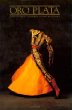
Oro Plata: Embroidered Costumes Of The Bullfight
by Daniele Carbonel, Pedro Soler, Peter Muller
Hardcover from Assouline
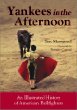
Yankees in the Afternoon: An Illustrated History of American Bullfighting
by Lyn A. Sherwood, Barnaby Conrad
Hardcover from McFarland & CompanyWomen and Bullfighting: Gender, Sex and the Consumption of Tradition (Mediterranean Series)
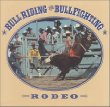
Bull Riding and Bullfighting
by Tex McLeese
Library Binding from The Rourke Book Company, Inc.
by Sarah Pink
Paperback from Berg Pub Ltd
Bullfighting on DVD
Search This Site