



There is no greater illustration of corporate America's moral decay than Amazon. Amazon fired manager protesting Covid-19 infections in warehous.e
Bioengineering
Genome
by Matt Ridley
Science writer Matt Ridley has found a way to tell someone else's story without being accused of plagiarism. Genome: The Autobiography of a Species in 23 Chapters delves deep within your body (and, to be fair, Ridley's too) looking for dirt dug up by the Human Genome Project. Each chapter pries one gene out of its chromosome and focuses on its role in our development and adult life, but also goes further, exploring the implications of genetic research and our quickly changing social attitudes toward this information. Genome shies away from the "tedious biochemical middle managers" that only a nerd could love and instead goes for the A-material: genes associated with cancer, intelligence, sex (of course), and more.Readers unfamiliar with the jargon of genetic research needn't fear; Ridley provides a quick, clear guide to the few words and concepts he must use to translate hard science into English. His writing is informal, relaxed, and playful, guiding the reader so effortlessly through our 23 chromosomes that by the end we wish we had more. He believes that the Human Genome Project will be as world-changing as the splitting of the atom; if so, he is helping us prepare for exciting times--the hope of a cure for cancer contrasts starkly with the horrors of newly empowered eugenicists. Anyone interested in the future of the body should get a head start with the clever, engrossing Genome. --Rob Lightner - Amazon.com
Paperback: 352 pages
HarperCollins; ISBN: 0060932902; (October 3, )The Billion-Dollar Molecule: One Company's Quest for the Perfect Drug
by Barry Werth
From test tubes to the Wall Street IPO and beyond, this is the riveting true story of a start-up pharmaceutical company working to create an anti-AIDS drug. Scientifically accurate, yet written with an attention to plot, timing, dialogue, and development of character more characteristic of the best thrillers. Amazon.com
(Paperback -- March )The Biotech Century: Harnessing the Gene and Remaking the World
by Jeremy Rifkin (Introduction)
(Paperback -- April )The Biomedical Engineering Handbook, Second Edition, Two Volume Set
by Joseph D. Bronzino (Editor)
(Hardcover -- December 28, )Biomaterials Science
by Buddy D. Ratner (Editor), et al
(Paperback -- January 15, )Biological Thermodynamics
from Cambridge Univ Pr (Pap Txt)Bioenergetics 3
from Academic PressBiophysics
from Springer VerlagBiophysics: An Introduction
from John Wiley & Son LtdCardiac Pacing and ICDs
by Kenneth A. Ellenbogen (Editor), Mark A. Wood
(Paperback -- April 15, )Essential Cell Biology: An Introduction to the Molecular Biology of the Cell
by Bruce Alberts, et al
(Hardcover -- January 15, )Bioinformatics: Sequence and Genome Analysis
by David W. Mount
(Paperback -- March 15, )
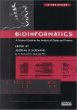
Bioinformatics: A Practical Guide to the Analysis of Genes and Proteins, Second Edition
by Andreas D. Baxevanis (Editor), et al
(Paperback -- April 6, )The Forensic Science of C.S.I
by Katherine M. Ramsland
Listed under Forensic Science
The Cartoon Guide to Genetics
From Alchemy to IPO: The Business of Biotechnology
by Cynthia Robbins-Roth
Despite unnerving swings in individual stock valuations--or perhaps because of them--many knowledgeable observers still believe the 21st century will ultimately earn its stripes as the Age of Biotech. Cynthia Robbins-Roth, named by Forbes magazine as one of the industry's top insiders, certainly is among them. And in From Alchemy to IPO, she persuasively argues investors better take heed because they ain't seen nothin' yet. "Most of us think of biotech as medicine or genetically engineered crops," writes Robbins-Roth. But in the very near future, she continues, it also "may make it possible for humans to reach the stars and to change the environment on other planets." Think that's far-fetched? She says developments like this are already in early stages and, in a deliberately proselytizing manner, traces their roots to the current business nitty-gritty, finally focusing on the long-term moneymaking potential. "The biotech world will never be an easy place for investors," she cautions, but with hundreds of ongoing projects "poised to power into the marketplace," there will be plenty of "opportunities for investors and employees alike." Recommended for readers seeking an informed tutorial on this field of the future. --Howard Rothman - Amazon
(Paperback -- April 10, )
by Larry Gonick, Mark Wheelis (Contributor)
Having trouble deciphering your genetic code? Do dominant genes make you feel recessive? Let reigning nonfiction cartoonist Larry Gonick and microbiologist Mark Wheelis ease your way through Mendelian genetics, molecular biology, and the basics of genetic engineering. Gonick's drawings range from a moderately detailed look at ribosomes in action to loony pictures of dancing scientists, talking peas, and opinionated fruit flies. Matthew Meselson, co-discoverer of the "one gene-one protein" principle, says, "it puts textbooks to shame"--and he's right. --Mary Ellen Curtin - Amazon.com
(Paperback -- August 1991)
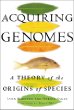
Acquiring Genomes: A Theory of the Origins of Species
by Lynn Margulis, et al
(Hardcover -- June 18, )How to Build a Time Machine
by P. C. W. Davies
Hardcover: 128 pages ; Dimensions (in inches): 0.62 x 7.44 x 5.62
Viking Press; ISBN: 0670030635; 1 Amer Ed edition (February 28, )Redesigning Humans: Our Inevitable Genetic Future
by Gregory Stock
(Hardcover -- June 15, )Molecular Biotechnology: Principles and Applications of Recombinant DNA
by Bernard R. Glick, Jack. J. Pasternak
(Paperback -- May )Molecular Biophysics: Structures in Motion
from Oxford University PressIon Channels and Disease: Channelopathies
from Academic PressLife in Moving Fluids
from Princeton Univ PrMedical Physics and Biomedical Engineering
from Institute of Physics Pub
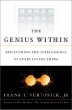
The Genius Within: Discovering the Intelligence of Every Living Thing
by Frank T., Jr. Vertosick
(Hardcover -- June 5, )Life's Devices
by Steven Vogel, Rosemary Anne Calvert (Illustrator)
(Paperback -- December 1, 1988)
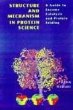
Structure and Mechanism in Protein Science: A Guide to Enzyme Catalysis and Protein Folding
by Alan Fersht
(Hardcover -- January )Molecular Evolution and Phylogenetics
by Masatoshi Nei, Sudhir Kumar
(Paperback -- August 15, )
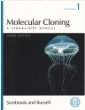
Molecular Cloning: A Laboratory Manual (3-Volume Set)
by Joseph Sambrook, et al
(Paperback -- January 15, )
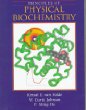
Principles of Physical Biochemistry
by Kensal E. Van Holde, et al
(Hardcover -- January 6, )
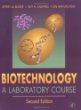
Biotechnology: A Laboratory Course
by Jeffrey M. Becker, et al
(Spiral-bound -- January 15, )