


There is no greater illustration of corporate America's moral decay than Amazon. Amazon fired manager protesting Covid-19 infections in warehous.e
AN UNORTHODOX SOLDIER
by Lieutenant-Colonel Tim Spicer, OBE
Synopsis
Tim Spicer has always led an exciting and controversial life. Once one of Britain's leading battalion commanders and now head of Sandline International, one of the world's foremost private military companies, he has spent most of the last 25 years seeking action and adventure in the British Army as an officer in one of its crack regiments, the Scots Guards. Spicer served several tours in Northern Ireland, for which he was awarded an OBE. During the Falklands War he was Operations Officer with the Scots Guards. Before leaving the Army he served with the UN contingent in Bosnia. In this fast-moving account of his life, Tim Spicer describes all the events surrounding the catastrophe in Papua New Guinea, when he was captured at gunpoint and held in captivity - and came away with his life, his men ... and $36 million dollars. Here too is the full truth about the notorious "Arms for Africa" affair -the Sandline Affair of 1996, which tied Robin Cook, the Foreign Office and Customs and Excise in an almighty knot over whether Sandline had broken a UN embargo on supplying arms to the legitimate government-in-exile of Sierra Leone. Spicer's entertaining account of modern soldiering looks at the creation of private military companies - the modern legitimate version of the old mercenaries - and concludes with Tim Spicer's troubled forecast about the dangerous world that lies ahead in the new millennium. For a look at life as it is lived in some of the world's trouble spots, and a glimpse of the intrigue that lies behind the British political scene, this book is a must for every thinking person's bookshelf.
Paperback from Trafalgar SquareThe Devil Soldier : The American Soldier of Fortune Who Became a God in China
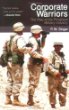
Corporate Warriors: The Rise of the Privatized Military Industry (Cornell Studies in Security Affairs)
by P.W. Singer
Book Description: In the groundbreaking new book, "Corporate Warriors," Brookings Institution security analyst P. W. Singer explores one of the most interesting, but little understood developments in modern warfare. Over the last decade, a global trade in hired military services has emerged. Known as "privatized military firms" (PMFs), these new businesses range from small consulting firms, who sell the advice of retired generals, to transnational corporations that lease out wings of fighter jets or battalions of commandos.Such firms number in the hundreds, have an estimated annual revenue of over $100 billion, and presently operate in over fifty countries, including in Afghanistan and Iraq. From recent events in Latin America (where a CMS intelligence-gathering plane was recently lost to Colombian rebels) to the Middle East (the Vinnell firm, which trains the Saudi military, was just struck in the May 2003 Riyadh terrorist bombings), these firms appear in all the world's hotspots and headlines again and again. Yet, until now, no book has opened up this powerful new industry to the public eye.
Even the world’s most powerful military has become one of the prime clients of the industry. From 1994-2002, the U.S. Defense Department entered into over 3,000 contracts with U.S.-based firms, estimated at a contract value of more than $300 billion. PMFs, such as Vice President Cheney's old Halliburton and its Brown & Root division now provide the logistics of every major U.S. military deployment. Other firms have even taken over the ROTC programs at over two hundred American universities. That is, private employees now train the U.S. military leaders of tomorrow. With the recent purchase of MPRI (a PMF based in Virginia) by the Fortune-500 corporation L-3, many Americans unknowingly own slices of the industry in their 401-K stock portfolios.
Perhaps no example better illustrates the industry's growing activity than the recent war against Iraq. Private military employees handled everything from feeding and housing U.S. troops to maintaining sophisticated weapons systems like the B-2 stealth bomber, the F-117 stealth fighter, Global Hawk UAV, U-2 reconnaissance aircraft, and numerous Navy ships.
Indeed, the ratio of private contractors to U.S. military personnel in the Gulf was roughly 1 to 10 (10 times the ratio during the 1991 war). The Economist magazine even termed the conflict "the first privatised war." Private firms will likely play similar roles in the ensuing occupation period. One recent example is the controversial Dyncorp firm, whose employees were implicated in the sex and arms trade in the Balkans, being hired to train the post-Saddam police force.
"Corporate Warriors" provides the first comprehensive analysis of the private military industry. The book traces the firms’ historic roots in the mercenary outfits of the past and the more recent underlying causes that led to their emergence at the end of the Cold War. He then examines how the industry is structured and these novel businesses operate. In a series of detailed company portraits, Singer then describes the three sectors within the industry. Military provider firms, like Executive Outcomes (a South African company, made up of ex-Apartheid fighters), offer direct, tactical military assistance, including serving in front-line combat. Military consulting firms, like MPRI, draw primarily on retired senior officers to provide strategic and training expertise for clients who are looking for a step up in their military capabilities. Finally, military support firms, like Halliburton-Brown & Root, carry out multi-billion contracts that provide logistics, intelligence, and maintenance services to armed forces, allowing them to concentrate their own energies on combat.
Singer then explores the many implications of this industry, ranging from their impact on arms races to their possible roles in international peacekeeping. He analyzes how the hopes for economy and efficiency can duel with the risks that come from outsourcing the most essential of government functions, that of national security. The privatization of military services allows startling new capabilities and efficiencies in the way that war is carried out. However, the mix of the profit motive with the fog of war raises a series of troubling questions –for international relations, for ethics, for management, for civil-military relations, for international law, for human rights, and, ultimately, for democracy. In other words, when it comes to military responsibilities, private companies’ good may not always be to the public good.
"Corporate Warriors" is a hard-hitting analysis that provides a fascinating first look inside this exciting, but potentially dangerous new industry. Easily accessible and highly informative, it provides a critical but balanced look at the businesses behind the headlines. With the continued expansion and growth of this industry in the coming years, "Corporate Warriors" will be the essential sourcebook for understanding how the private military industry works and how governments must respond. In the words of one leading expert, it is a "must read" for anyone who cares about politics and warfare.
Paperback from Cornell University Press
by Caleb Carr
A courageous leader who became the first American mandarin, Frederick Townsend Ward won crucial victories for the Emperor of China during the Taiping Rebellion, history's bloodiest civil war. Carr's skills as historian and storyteller come to the fore in this thrilling account of the kind of adventurer the world no longer sees.
Paperback - 366 pages Reissue edition (April )
Random House
(Paper); ISBN: 0679761284The Banana Men : American Mercenaries and Entrepreneurs in Central America, 1880-1930
by Lester D. Langley
Listed under Central America
Medieval Mercenaries : The Great Companies
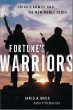
Fortune's Warriors: Private Armies and the New World Order
by James R. David, James R. Davis
Book Description: From West Africa to the former Yugoslavia, in every global hot spot a private army waits, ready to step into the fray. Professional soldiers of fortune have always existed--but now they're on the brink of playing a new role in world affairs. A former mercenary takes a hard look at the conflicts presently raging, contrasting the success of these armies in achieving peace with the often inept and confused actions of the United Nations. A sure-to-be controversial account.
Paperback from Douglas & McIntyre
by Kenneth Alan Fowler
Focusing on France and Spain, this book includes detailed information on the likes of Sir John Hawkwood, better known as Giovanni Acuto. Db.
Hardcover - 400 pages Vol 1
Blackwell Pub; ISBN: 0631158863Hired Swords: The Rise of Private Warrior Power in Early Japan
by Karl F. Friday
Listed under Samurai Battles & WarriorsMercenaries, Pirates, and Sovereigns
by Janice E. Thomson
Paperback from Princeton Univ Pr
Mercenary Companies and the Decline of Siena
(Johns Hopkins University Studies in Historical and Political Science, 116th Ser., 1.)
by William Caferro
Among the most dramatic problems faced on the Italian peninsula in the fourteenth century were the raids of marauding mercenary companies. These companies, known locally as Companies of Adventure and more generally as "free companies," were private armies, composed of professional soldiers and adventurers from throughout Europe. They sold their services to the highest bidder in times of war and staged ruinous raids in times of peace.
Hardcover - 264 pages
Johns Hopkins Univ Pr; ISBN: 0801857880Mercs : True Stories of Mercenaries in Action
by Bill Fawcett (Editor)
Usually ships promptly
Paperback - 295 pages (June 8, )
Avon/Eos; ISBN: 0380798387Mercenaries : An African Security Dilemma
by Abdel-Fatau Musah
Paperback - 320 pages (January 1, )
Pluto Press; ISBN: 0745314716Mercenaries : The Scourge of the Third World
by Guy Arnold
Hardcover - 256 pages
St Martins Pr (Short); ISBN: 0312222033
Bloodsong!: An Account of Executive Outcomes in Angola
Private Warriors
by Ken Silverstein, Daniel Burton-Rose
Journalist Ken Silverstein delivers a broadside against the modern military-industrial complex in Private Warriors. In the post-cold-war world of rising defense budgets and arms proliferation, Silverstein finds plenty to worry about: "Former Defense Department officials serve as consultants to the arms industry, helping lobby for needless Cold War-era weapons systems and promoting greater arms sales to foreign regimes. Retired generals form private corporations that train the armies of foreign nations and encourage U.S. entanglements abroad. Arms dealers linked to U.S. intelligence agencies still trot the globe hawking their wares, sometimes in support of government operations, sometimes acting strictly as private businessmen. Intellectuals who gained their names by hyping the Soviet threat still counsel our political leaders. The advice they offered during the Cold War was of dubious value, and it has decidedly less merit today." Silverstein wisely populates his book with real-life characters such as German arms dealer Ernst Werner Glatt, Nixon- and Reagan-administration veteran Alexander Haig, and missile-defense advocate Frank Gaffney. He also has an eye for vivid anecdotes: the B-2 bomber, he notes, literally "costs more than its weight in gold." Silverstein's on-the-scene reporting includes visits to a weapons bazaar in Rio de Janeiro and a Soldier of Fortune convention in Las Vegas. At bottom, however, Private Warriors is a polemic rather than a piece of journalism; it aims to make a forceful argument against transplanting the mindset of a cold-war hawk into the security policies of the 21st century. Not everyone will be convinced--attitudes on this subject are famously inflexible--but Silverstein's portrait of the industry and people who profit from military buildups will give pause to all its readers. --John J. Miller
Paperback from Verso
by Jim Hooper
Paperback from HarperCollins UK
Out of Print - Try Used BooksManual of the Mercenary Soldier : A Guide to Mercenary War, Money, and Adventure
by Paul Balor
Paperback: 320 pages
Paladin Press; ISBN: 0873644743; (July 1988)
Out of Print - Try Used Books
Mercenaries on DVD
Search This Site