




|
|||||||||||||||||||||||||||||||||||||||||||||||||||||||||||||




There is no greater illustration of corporate America's moral decay than Amazon. Amazon fired manager protesting Covid-19 infections in warehous.e
Transportation
Aviation Railroads Ships Asimov's Chronology of the World
by Isaac Asimov
Book Description: From the world's greatest science writer, a history of the world from the Big Bang to 1945, told in irresistible short takes and highlighted by a timeline.
Hardcover from HarperResource
1991
Beyond Binary Histories : Re-Imagining Eurasia to C.1830
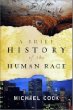
A Brief History of the Human Race
by Michael Cook
Book Description: A global account of how and why human history unfolded as it did from the rise of agriculture to the fall of the Twin Towers.Why has human history been crowded into the last few thousand years? Why has it happened at all? Could it have happened in a radically different way? What should we make of the disproportionate role of the West in shaping the world we currently live in?
This witty, intelligent hopscotch through human history addresses these questions and more. Michael Cook sifts the human career on earth for the most telling nuggets and then uses them to elucidate the whole. From the calendars of Mesoamerica and the temple courtesans of medieval India to the intricacies of marriage among an aboriginal Australian tribe, Cook explains the sometimes eccentric variety in human cultural expression. He guides us from the prehistoric origins of human history across the globe through the increasing unification of the world, first by Muslims and then by European Christians in the modern period, illuminating the contingencies that have governed broad historical change. 15 maps, 30 illustrations.
Hardcover from W.W. Norton & Company
by Victor B. Lieberman (Editor)
Paperback - 320 pages
Univ of Michigan Pr; ISBN: 0472086332The Crisis of Reason : European Thought, 1848-1914
(Yale Intellectual History of the West)
by J. W. Burrow
Hardcover - 271 pages
Yale Univ Pr; ISBN: 0300083904
Desire of the Everlasting Hills: The World Before and After Jesus (Hinges of History (Paper), Vol 3)
Corrupting Sea: A Study of Mediterranean History
by Peregrin Horden, Nicholas Purcell
Book Description: The Corrupting Sea is a history of the relationship between people and their environments in the Mediterranean region over some 3,000 years. It advocates a novel analysis of this relationship in terms of microecologies and the often extensive networks to which they belong. This is the first major work since Braudel's The Mediterranean to address the problems of studying the area as a whole and on a long time-scale.The authors emphasize the value of comparison between prehistory, Antiquity and the Middle Ages. They draw on an exceptionally wide range of evidence - literary works, documents, archaeology, scientific reports and social anthropology.
The themes addressed include past conceptions of the Mediterranean, its historiography, the history of primary production, the rhythms of exchange and communication, the pace of environmental and technological change, the geography of religion, and the contribution of Mediterranean social anthropology to an assessment of the region's unity.
The book offers a provocative and innovative approach to the history of the Mediterranean, explaining what has made Mediterranean history distinctive.
Paperback from Blackwell Publishers
by Thomas Cahill, Luann Walther (Editor)
(Paperback -- February 13, )The Fall of Berlin 1945
by Antony Beevor
Listed under NormandyDK Atlas of World History
by Jeremy Black (Editor)
(Hardcover)The Clash of Civilizations and the Remaking of World Order
by Samuel P. Huntington
(Paperback -- February )Don't Know Much About History: Everything You Need to Know About American History but Never Learned
by Kenneth C. Davis
Listed under United States History
Krakatoa : The Day the World Exploded: August 27, 1883
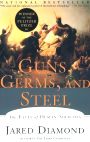
Guns, Germs, and Steel: The Fates of Human Societies
by Jared Diamond
.
Life isn't fair--here's why: Since 1500, Europeans have, for better and worse, called the tune that the world has danced to. In Guns, Germs, and Steel, Jared Diamond explains the reasons why things worked out that way. It is an elemental question, and Diamond is not nearly the first to ask it. However, he performs a singular service by relying on scientific fact rather than specious theories of European genetic superiority. Diamond, a professor of physiology at UCLA, suggests that the geography of Eurasia was best suited to farming, the domestication of animals, and the free flow of information. The more populous cultures that developed as a result had more complex forms of government and communication--and increased resistance to disease. Finally, fragmented Europe harnessed the power of competitive innovation in ways that China did not. (For example, the Europeans used the Chinese invention of gunpowder to create guns and subjugate the New World.) Diamond's book is complex and a bit overwhelming. But the thesis he methodically puts forth--examining the "positive feedback loop" of farming, then domestication, then population density, then innovation, and on and on--makes sense. Written without favor, Guns, Germs, and Steel is good global history. - Amazon.com
Winner of the Pulitzer Prize
Paperback: 480 pages
W.W. Norton & Company; ISBN: 0393317552; (April )
by Simon Winchester
Listed under VolcanosSalt: A World History
by Mark Kurlansky
(Hardcover -- January )The Timetables of History: A Horizontal Linkage of People and Events
by Bernard Grun, Daniel J. Boorstin
(Paperback -- December 1991)
Catastrophe: A Quest for the Origins of the Modern World
by David Keys
If Keys is correct - and a great number of authoritative sources believe he is - much of CE history will be re-written in light of his findings. Something happened in 535AD - and the sun went out for a year!
Hardcover - 343 pages (February 1, )
Ballantine Books (Trd); ISBN: 0345408764Ages in Chaos
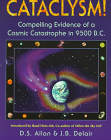
Cataclysm : Compelling Evidence of a Cosmic Catastrophe in
9500 B.C.
by D. S. Allan, J. B. Delair
This book explores the probability that an an extraordinary event occured involving some type of body entering our solar system and effecting each planet and ultimately the earth causing major axis shift. None of the reviews seem to mention Velikovsky, who first expounded this theory.
Paperback
Bear & Co; ISBN: 1879181428
by Immanuel Velikovsky
Hardcover Reprint edition
Amereon Ltd; ISBN: 0848814975
Delivery delayedLenin's Tomb : The Last Days of the Soviet Empire
by David Remnick
Winner of the Pulitzer Prize
(Paperback)
A History of Britain : At the Edge of the World, 3500 B.C.-1603 A.D
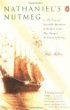
Nathaniel's Nutmeg
Consider the humble jar of nutmeg pushed to the back of your kitchen cupboard, among all the other spices that you hardly ever use. Would you believe that nutmeg formed the basis for one of the most bitter international conflicts of the 17th century, and was also intimately connected to the rise to global pre-eminence of New York City? Strange but true; nutmeg was one of the most prized commodities in Renaissance Europe, and its fascinating story is told in Giles Milton's delightful book Nathaniel's Nutmeg.
The book deals with the competition between England and Holland for possession of the spice- producing islands of South-East Asia throughout the 17th century. Packed with stories of heroism, ambition, ruthlessness, treachery, murder, torture and madness, Nathaniel's Nutmeg offers a compelling story of European rivalry in the Tropics, thousands of miles from home, and the mutual incomprehensibility which often comically characterised relations between the Europeans and the local inhabitants of the prized islands.At the centre of the story lies Nathaniel Courthope, a trusty lieutenant of the East India Company, who took and held the tiny nutmeg-producing island of Run in the face of overwhelming Dutch opposition for more than five years, before being treacherously murdered in 1620. Courthope's heroism led to the English taking the Dutch colony of Manhattan in revenge for the death of Courthope and the loss of Run. The subsequent peace deal between the two nations gave Holland Run and the British Manhattan; New York was born. As Milton wittily remarks, although Courthope's death "robbed England of her nutmeg, it gave her the biggest of apples".
Inevitably inviting comparisons with Dava Sobel's Longitude, Nathaniel's Nutmeg is a charming story, which throws light on a spicy, neglected slice of early Europe's fascination with the East. --Jerry Brotton - Amazon.co.uk Review
by Giles Milton
Paperback from Penguin USA (Paper)
by Simon Schama
Listed under English HistoryThe Waning of the Renaissance, 1550-1640 (Intellectual History of the West Series)
by William James Bouwsma
Listed under RenaissanceThree Critics of the Enlightenment
by Henry Hardy (Editor), Isaiah, Sir Berlin
Paperback - 382 pages (November 15, )
Princeton Univ Pr; ISBN: 0691057273The Oxford Companion to Classical Civilization
by Simon Hornblower (Editor), et al
(Hardcover)Elizabeth : The Struggle for the Throne
by David Starkey
Listed under Medieval HistoryCadillac and the Dawn of Detroit
by Annick H. Carthew
Listed under Michigan HistoryMickey Mouse History and Other Essays on American Memory (Critical Perspectives on the Past)
by Mike Wallace
Mickey Mouse History probes into the struggles over public memory and the trivialization of history that pervades American culture. Amazon.com
(Paperback)We Interrupt This Broadcast: The Events That Stopped Our Lives...from the Hindenburg to the Death of John F. Kennedy Jr. (2nd Edition)
by Joe Garner, et al
(Hardcover)The Pirate Hunter: The True Story of Captain Kidd
by Richard Zacks
Listed under PiratesHow the Scots Invented the Modern World: The True Story of How Western Europe's Poorest Nation Created Our World and Everything in It
by Arthur Herman
Listed under Scottish HistoryThe Man Who Would Be King: The First American in Afghanistan
by Ben Macintyre
Listed under History of Afghanistan
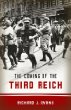
The Coming of the Third Reich
by Richard J. Evans
Hardcover from The Penguin Press
The Roaring Nineties: A New History of the World's Most Prosperous Decade
by Joseph E. Stiglitz
Hardcover from W.W. Norton & Company
Annals of the World: James Ussher's Classic Survey of World History: Slipcase
by James Ussher
Hardcover from Master Books
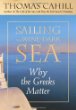
Sailing the Wine-Dark Sea: Why the Greeks Matter
by Thomas Cahill
Hardcover from Nan A. Talese
28 October, 2003
Queen Mary 2: The Greatest Ocean Liner of Our Time
by John Maxtone-Graham, Harvey Lloyd
Hardcover from Bulfinch
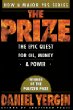
PRIZE : THE EPIC QUEST FOR OIL, MONEY & POWER
by Daniel Yergin
Paperback from Free Press
1993Carnage and Culture: Landmark Battles in the Rise of Western Power
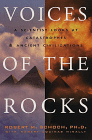
Voices of the Rocks : A Scientist Looks at Catastrophes and Ancient Civilizations
by Robert M. Schoch Ph.D, Robert Aquinas McNally
Hardcover - 256 pages
Crown Publishing Group, Inc. (NY); ISBN: 0609603698
by Victor Davis Hanson
(Hardcover -- August )
Out of Print - Try Used Books
World History on DVD





| Search This Site |
