



There is no greater illustration of corporate America's moral decay than Amazon. Amazon fired manager protesting Covid-19 infections in warehous.e
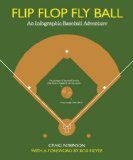
Flip Flop Fly Ball: An Infographic Baseball Adventure
by Craig Robinson
Hardcover from Bloomsbury USA
Media Published: 2011-
ISBN: 1608192695
How many miles does a baseball team travel in one season?How tall would A-Rod's annual salary be in pennies?
What does Nolan Ryan have to do with the Supremes and Mariah Carey?
You might never have asked yourself any of these questions, but Craig Robinson's Flip Flop Fly Ball will make you glad to know the answers.
Baseball, almost from the first moment Robinson saw it, was more than a sport. It was history, a nearly infinite ocean of information that begged to be organized. He realized that understanding the game, which he fell in love with as an adult, would never be possible just through watching games and reading articles. He turned his obsession into a dizzyingly entertaining collection of graphics that turned into an Internet sensation.
Out of Robinson's Web site, www.flipflopflyball.com, grew this book, full of all-new, never-before-seen graphics. Flip Flop Fly Ball dives into the game's history, its rivalries and absurdities, its cities and ballparks, and brings them to life through 120 full-color graphics. Statistics-the sport's lingua franca-have never been more fun.
(By the way, the answers: about 26,000 miles, at least if the team in question is the 2008 Kansas City Royals; 3,178 miles; they were the artists atop the Billboard Hot 100 when Ryan first and last appeared in MLB games.)
Craig Robinson is, among other things, an Englishman and a New York Yankees fan with a soft spot for the Colorado Rockies and a man-crush on Ichiro. Last season he played outfield for the Prenzlauer Berg Piranhas in the Berlin Mixed Softball League (.452/.548/.575). His previous books include Atlas, Schmatlas: A Superior Atlas of the World and Fun Fun Fun.
Baseball Between the Numbers: Why Everything You Know About the Game Is Wrong
by The Baseball Prospectus Team of Experts
Paperback from Basic Books
ISBN: 0465005470
This is the ultimate guide to the new statistical thinking that's revolutionizing the game of baseball. In the numbers-obsessed sport of baseball, statistics don't merely record what players, managers and owners have done. Properly understood, they can tell us how the teams could employ better strategies, put more effective players on the field, and win more games. The 1970s saw a revolution in baseball statistics, and it's a controversial subject that professionals and fans alike argue over without end. Despite this fundamental change in the way the sport is watched and understood, no-one has ever written the book that reveals, across every area of strategy and management, how the best practitioners of statistical analysis in baseball think about the game. "Baseball Between the Numbers" is that book. In separate chapters covering every aspect of the game - such as hitting, pitching and fielding - the experts at Baseball Prospectus examine the subtle, hidden aspects of the game, bring them out into the open, and show us how various teams could win more games.
Watching Baseball Smarter: A Professional Fan's Guide for Beginners, Semi-experts, and Deeply Serious Geeks
by Zack Hample
Paperback from Vintage
Media Published: 2007-
ISBN: 0307280322
Whether you're a major league couch potato, life-long season ticket-holder, or teaching game to a beginner, Watching Baseball Smarter leaves no territory uncovered. In this smart and funny fan's guide Hample explains the ins and outs of pitching, hitting, running, and fielding, while offering insider trivia and anecdotes that will surprise even the most informed viewers of our national pastime.
What is the difference between a slider and a curveball?
At which stadium did "The Wave" first make an appearance?
How do some hitters use iPods to improve their skills?
Which positions are never played by lefties?
Why do some players urinate on their hands?
Combining the narrative voice and attitude of Michael Lewis with the compulsive brilliance of Schott's Miscellany, Watching Baseball Smarter will increase your understanding and enjoyment of the sport-no matter what your level of expertise.
Zack Hample is an obsessed fan and a regular writer for minorleaguebaseball.com. He's collected nearly 3,000 baseballs from major league games and has appeared on dozens of TV and radio shows. His first book, How to Snag Major League Baseballs, was published in 1999.
The Book: Playing the Percentages in Baseball
by Tom M. Tango, Mitchel Lichtman, Andrew Dolphin
Paperback from Potomac Books Inc.
ISBN: 1597971294
Written by three esteemed baseball statisticians, The Book continues where the legendary Bill James's Baseball Abstracts and Palmer and Thorn's The Hidden Game of Baseball left off more than twenty years ago. Continuing in the grand tradition of sabermetrics, the authors provide a revolutionary way to think about baseball with principles that can be applied at every level, from high school to the major leagues.
Tom Tango, Mitchel Lichtman, and Andrew Dolphin cover topics such as batting and pitching matchups, platooning, the benefits and risks of intentional walks and sacrifices, the legitimacy of alleged "clutch" hitters, and many of baseball's other theories on hitting, fielding, pitching, and even baserunning. They analyze when a strategy is a good idea and when it's a bad idea, and how to more closely watch the "inside" game of baseball.
Whenever you hear an announcer talk about the "unwritten rule" or say that so-and-so is going "by the book" in bringing in a situational substitute, The Book reviews the facts and determines what the real case is. If you want to know what the folks in baseball should be doing, find out in The Book.
The New Bill James Historical Baseball Abstract
by Bill James
Paperback from Free Press
Media Published: 2003-
ISBN: 0743227220
When Bill James published his original Historical Baseball Abstract in 1985, he produced an immediate classic, hailed by the Chicago Tribune as the "holy book of baseball." Now, baseball's beloved "Sultan of Stats" (The Boston Globe) is back with a fully revised and updated edition for the new millennium.Like the original, The New Bill James Historical Baseball Abstract is really several books in one. The Game provides a century's worth of American baseball history, told one decade at a time, with energetic facts and figures about How, Where, and by Whom the game was played. In The Players, you'll find listings of the top 100 players at each position in the major leagues, along with James's signature stats-based ratings method called "Win Shares," a way of quantifying individual performance and calculating the offensive and defensive contributions of catchers, pitchers, infielders, and outfielders. And there's more: the Reference section covers Win Shares for each season and each player, and even offers a Win Share team comparison. A must-have for baseball fans and historians alike, The New Bill James Historical Baseball Abstract is as essential, entertaining, and enlightening as the sport itself.
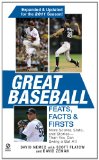
Great Baseball Feats, Facts & Firsts (2011 Edition)
by David Nemec, Scott Flatow, Dave Zeman
Paperback from Signet
ISBN: 0451232968
Discover the unconventional, the offbeat feats, the historic moments, and the one-of-a-kind characters that have made baseball a hit for more than 150 years. This comprehensive and updated volume features all the need-to-know stats, scores, and strikeouts every diehard baseball fan wants.
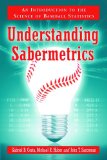
Understanding Sabermetrics: An Introduction to the Science of Baseball Statistics
by Gabriel B. Costa, Michael R. Huber and John T. Saccoman
Paperback from McFarland
ISBN: 0786433884
Born in the 1970s as a radical challenge to traditional baseball statistics, sabermetrics has developed into a new way of understanding many aspects of the game. Its practitioners have created new statistical tools and revised our old ways of thinking about established measures such as the batting average, tactics such as the sacrifice bunt, and even who among the greats was truly great.
This introduction to the basics of sabermetric analysis explains concepts including normalization, peak versus career performance, linear weights and runs created, as well as popular calculations like OPS (On-Base plus Slugging), WHIP (Walks and Hits per Inning Pitched), PF (Park Factor) and others increasingly used by baseball fans.
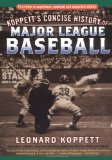
Koppett's Concise History of Major League Baseball
by Leonard Koppett
Paperback from Carroll & Graf
ISBN: 0786712864
Baseball's greatest asset is the richness of its lore, and Leonard Koppett has made the entire treasure of the game's history accessible in one enjoyable volume. In his lively narratives on the shape and significance of each season from baseball's nineteenth-century beginnings to the updated and expanded sections on the last decade, Koppett explains the changes in baseball-the-game and baseball-the-business that forged the major leagues we know today. Each chapter recounts trends, players, and events during different eras; offers succinct seasonal recaps, and summarizes how the consequences of that particular baseball era set the stage for the next. On the origins and evolution of on-the-field play--from the 1880s origin of pitching high and tight then low and away, to modern-day use of body armor at bat--plus statistics and record-breaking achievements, Koppett's got it covered. On business and organizational controversies, such as the introduction of night baseball, radio and TV broadcasting, free agency, strike actions, divisional play-offs, and the policies of owners and commissioners, Koppett's got it covered. One-stop reading for the most essential stories, statistics, and opinions on the major leagues, Koppett's Concise History of Major League Baseball is the most original baseball reference available.The why behind Hall of Fame sportswriter Leonard Koppett's Concise History is almost as impressive as the authoritative and fascinating volume itself. Given that baseball's best pitch is the richness of its lore, Koppett was appalled that upon their arrival in the majors, contemporary stars like Yankee first baseman Don Mattingly knew nothing of Lou Gehrig, and Ken Griffey Jr. had little more awareness of Jackie Robinson than his name. If the players themselves don't appreciate the legacy or importance of what they're part of, what chance do the rest of us have? Koppett's mission is to change that.What makes the Concise History such a valuable addition to an already packed baseball bookshelf is that it's an original. First and foremost, its strong, narrative push spans the divide between statistical encyclopedias and the chronicles that generally focus on individual years or teams or issues. It's quite thorough--reaching back to the 1840s and covering the game up through the 1998 sale of the Dodgers--clearly linking the game of baseball to the business of baseball. It covers trends as well as players and events, and, in one of its most useful features, offers succinct seasonal recaps at the end of each chapter. Koppett's a fine writer with a well-established voice, which he uses to analyze as well as report; he's no fence straddler on the more complex questions like free agency, franchise moves, collusion, realignment, and the replacement of family ownership by conglomerates. Like a good home run race, it's a book unique to this particular game, and there's nothing quite like it anywhere. --Jeff Silverman
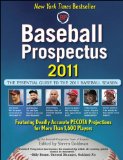
Baseball Prospectus 2011
by Baseball Prospectus
Paperback from Wiley
ISBN: 0470622067
The essential guide to the 2011 baseball season is on deck now, and whether you're a fan or fantasy player--or both--you won't be properly informed without it. Baseball Prospectus 2011 brings together an elite group of analysts to provide the definitive look at the upcoming season in critical essays and commentary on the thirty teams, their managers, and more than sixty players and prospects from each team.Now in its sixteenth edition, this New York Times bestselling insider's guide remains hands down the most authoritative and entertaining book of its kind.
- Contains critical essays on each of the thirty teams and player comments for some sixty players for each of those teams
- Projects each player's stats for the coming season using the groundbreaking PECOTA projection system, which has been called "perhaps the game's most accurate projection model" (Sports Illustrated)
- From Baseball Prospectus, America's leading provider of statistical analysis for baseball
Top Ten Ways Your Friends Will Know You Haven't Read Baseball Prospectus 2011
10. You think $86 million dollars sounds like the perfect price to pay for three years of Derek Jeter and Rafael Soriano.
9. You drafted Josh Hamilton or Ubaldo Jimenez in the first round of your fantasy draft this year.
8. The fielding metrics you've been looking at tell you Kevin Kouzmanoff and Matt Holliday were elite fielders last year.
7. You think this might be Chicago's year.
6. You've never heard of Chris Carter, Jesus Montero, or Steven Hill.
5. You've heard of Carter, Montero, and Steven Hill, but without BP's "MLB %" playing time projection and scouting report, you overdrafted them in your fantasy league.
4. You think your team will be better than the Red Sox this year.
3. You're not bleary-eyed from staying up all night reading hundreds of pages of smart stats and witty commentary.
2. The words "Vernon Wells traded" don't make you giggle a little.
1. You're Ed Wade.
The Bill James Handbook 2011
by Bill James
Paperback from ACTA Publications
ISBN: 0879464399
Every year, thousands of avid baseball fans eagerly await The Bill James Handbook--the best and most complete annual baseball guide available. Full of exclusive stats, this book is the most comprehensive resource of every hit, pitch and catch in Major League Baseball's 2010 season.
Key features include:
- Exclusive! Fielding Bible Awards
- Instant Replay History
- Pinch Hitting Analysis
- Park Indices
- Relief Pitching
- Manufactured Runs Analysis
- Manager's Record
- Baserunning Analysis
- Career data for every 2010 major leaguer (and a few bonus players) with more statistical categories than any other book
- Pitcher Projections
- Hitter Projections
- Team Efficiency Summary
- Player Win Shares
Search Amazon: Books on Baseball Statistics Browse Amazon: Baseball Statistics Search Wikipedia: Baseball Statistics
Search This Site
Baseball Statistics on DVD