



There is no greater illustration of corporate America's moral decay than Amazon. Amazon fired manager protesting Covid-19 infections in warehous.e
American Klezmer: Its Roots and Offshoots
The American Songbag
by Carl Sandburg, Garrison Keillor
Paperback from Harvest Books
1990
by Mark Slobin (Editor), Klezmer Research Conference 1996 Wesleyan univers
(Paperback)American Popular Song: The Great Innovators, 1900-1950
by Alec Wilder, et al
(Hardcover - October 1990)Folk Dance Music of Norway: 26 Traditional Tunes Arranged for 1-3 Violins Fiddles, or Other"C" instruments
Out of PrintFiddling for Norway : Revival and Identity (Chicago Studies in Ethnomusicology)
by Chris Goertzen
(Hardcover)This Land Was Made for You and Me: The Life and Songs of Woody Guthrie
by Elizabeth Partridge
Listed under Woody GuthrieNotes from the Road
by Ellis Paul
(Hardcover)Peter, Paul & Mary: Deluxe Anthology
(Paperback)Cash: The Autobiography
by Johnny Cash
Listed under Johnny CashDe Colores and Other Latinamerican Folk Songs for Children
by Joseluis Orozco, Elisa Kleven (Illustrator)
(Library Binding)Bob Gibson : I Come for to Sing: The Stops Along the Way of a Folk Music Legend
by Bob Gibson, Carole Bender, Allan Shaw (Preface), Peter Yarrow (Epilogue)Chronicles
by Bob Dylan
Listed under Bob DylanThe Folksong Fake Book: A Collection of over 1000 Folksongs from Around the World
by Hal Leonard (Editor)
(Plastic Comb)100 Classic Folk & Bluegrass Songs... Words To Your Favorite Old Time Mountain Music [LARGE PRINT]
by J. R. Miller (Spiral-bound)
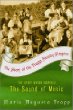
The Story of the Trapp Family Singers
by Maria Augusta Trapp
Paperback from Perennial
24 December, 2001
Yodel-Ay-Ee-Oooo: The Secret History of Yodeling Around the World
by Bart Plantenga
Paperback from Routledge
Bound for Glory
by Woody Guthrie, Pete Seeger
Paperback from New American Library
Simon and Garfunkel's Greatest Hits: Guitar (With Tablature)
by Music Sales Corporation
Paperback from Music Sales Corp
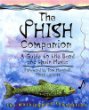
The Phish Companion: A Guide to the Band and their Music
by Mockingbird Foundation
Book Description: This is the most comprehensive, accurate and thought-provoking reference ever published on Phish - the quirky rock group that rose from the college scene to become the single most popular touring band in the U.S. today. Thousands of fans helped develop this book, contributing detailed set lists, show reviews, song histories and more via the Internet. Incorporating unreleased information plus fact-checking from official band sources, this intimate guide also offers interviews with key Phish figures, complete discographies, essays, photos and lots of fun Phish facts!
Paperback from Backbeat Books
Out of Print - Try Used BooksMusic Theory and Arranging Techniques for Folk Harps
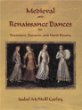
Medieval and Renaissance Dances for Recorders, Dancers, and Hand Drums
by Isabel McNeill Carley
Paperback from Memphis Musicraft Publications
by Sylvia Woods
Listed under HarpPete Seeger's Storytelling Book
by Pete Seeger
Book Description: Pete Seeger brings more than fifty years of performing folksongs to the art of storytelling in this unique collection of tales, ideas, and music. He and Paul Jacobs have put together fresh versions of familiar tales; stories based on songs, family histories, and America's past; as well as entirely new tales created just for this book. Each section describes the origins of the stories and there are suggestions for retelling and personalizing the tales to turn them into family favorites for bedtime or family time. And in keeping with the theme that a story never really ends-in fact gets better and better each time it is told-the book concludes with some beginnings, story openers to get you going on the path to creating your own storytelling tradition. Pete Seeger, a Grammy Award winner as well as the recipient of the N.E.A. National Medal of Arts and Kennedy Center Honors, has spent sixty years singing in peace rallies and civil rights marches, at schools and camps, and for unions. His internationally recognized songs include, "Where Have All the Flowers Gone," "If I Had a Hammer," and "Turn, Turn, Turn." He lives in Beacon, New York, with his wife of over fifty years, Toshi Seeger.
Hardcover: 288 pages ; Dimensions (in inches): 1.09 x 9.30 x 6.29
Publisher: Harcourt; 1st edition (September 7, )
ISBN: 015100370XPete Seeger's Storytelling Book
by Pete Seeger (Author), Paul Dubois Jacobs (Author)Positively 4th Street: The Lives and Times of Joan Baez, Bob Dylan, Mimi Baez Farina, and Richard Farina
by David Hajdu
David Hajdu (pronounced HAY-doo), the prizewinning author of the magisterial jazz biography Lush Life, now steam-cleans the legend of the lost folk generation in Positively 4th Street: The Lives and Times of Joan Baez, Bob Dylan, Mimi Baez Fariña, and Richard Fariña. What a ripping read! It's like an invitation to the wildest party Greenwich Village ever saw. You feel swept up in the coffeehouse culture that transformed ordinary suburban kids into ragged, radiant avatars of a traditional yet bewilderingly new music. Hajdu's sociomusical analysis is as scholarly as (though less arty than) Greil Marcus's work; he deftly sketches the sources and evolving styles of his ambitious, rather calculating subjects, proving in the process that genius is not individual--it's rooted in a time and place. Hajdu says Dylan heisted many early tunes (e.g., "Maggie's Farm" from Pete Seeger's "Down on Penny's Farm"): "Dylan [told] a radio interviewer that he felt as if his music had always existed and he just wrote it down ... [in fact], much of his early work had existed as other writers' melodies, chord structures, or thematic ideas." But Dylan and company made it all their own, and Hajdu vividly evokes the scenes they made.Positively 4th Street is very much a group portrait. When something amazing happens, Hajdu puts you right there. The unknown Baez barefoot in the rain, bedazzling the Newport Jazz Festival and becoming immortal overnight. The irresistibly irresponsible Fariña talking his folk-star wife out of shooting him dead with his own pistol. The "little spastic gnome" Dylan transmogrified into greatness onstage, bashing Joan with the searing lyrics of "She Belongs to Me." A stoned Fariña advising Dylan to cynically hitch his wagon to Joan's rising star and "start a whole new genre. Poetry set to music, but not chamber music or beatnik jazz, man... poetry you can dance to."
The book is as delectably gossipy as Vanity Fair (one of Hajdu's employers). Richard married the exceedingly young beauty Mimi and helmed their career, but he might have dumped her for big sister Joan, whose madcap humor and verbal wit harmonized with his--except that he ineptly killed himself on a motorcycle first. Bob mumblingly courted both sisters, but when he cruelly taunted the insecure Joan, Mimi yanked his hair back until he cried. The account of Bob and Joan's musical-erotic passion is first-rate music history and uproarious soap opera. Hajdu's research is prodigious--even Fariña's close chum Thomas Pynchon granted interviews--and his anecdotes are often off-the-cuff funny: "[Rock manager Albert Grossman] was easy to deal with.... It wasn't till maybe two days after you would see Albert that you'd realize your underwear had been stolen." Full disclosure: Hajdu was one of my long-ago bosses at Entertainment Weekly, but that's certainly not why I heartily endorse this book. It's scholarship with a human face, akin to "poetry you can dance to." --Tim Appelo - Amazon.com
Hardcover: 328 pages ; Dimensions (in inches): 1.13 x 9.36 x 6.30
Publisher: Farrar Straus & Giroux;
ISBN: 0374281998Van Morrison would fall into the folk music category
When We Were Good : The Folk Revival
by Robert Cantwell
Paperback: 432 pages ; Dimensions (in inches): 1.16 x 9.19 x 6.09
Publisher: Harvard Univ Pr; Reprint edition (April )
ISBN: 0674951336Tim McGraw and the Dancehall Doctors
by Tim McGraw
Listed under CountryHow Can I Keep from Singing : Pete Seeger
by David King Dunaway
Out of Print - Try Used Books
Search This Site
Folk Music on DVD
Folk Music CDs » More Folk Music CDs