



Bonjour Babar!: The 6 Unabridged Classics by the Creator of Babar
by Jean De Brunhoff, Kevin Henkes (Introduction)
Seven decades after Babar was born, the world is still very much in love with the noble elephant. Before his untimely death at age 37, Jean de Brunhoff wrote and illustrated six stories about Babar and his friends and family. In this exquisite gift edition, every one of these stories is included, with not a word or picture left out. From The Story of Babar--in which the elephant is born, loses his mother, runs off to Paris, and returns to be crowned king--through The Travels of Babar, Babar the King, Babar and Zephir, Babar and His Children, and Babar and Father Christmas, the beloved pachyderm's incredible life adventures are chronicled for our reading pleasure. In his introduction, picture book author-illustrator Kevin Henkes writes, "Where else could one find a balloon accident, a deadly poison mushroom, a runaway carriage, an extraordinary flying machine, a snake attack, fire, war, death, birth? These books are full of adventure and fantasy, but they also deal with the stuff of real life. And I'm convinced children long to see both the dark and the light sides of human experience reflected in their books just as much as adults do, perhaps more." Adults who truly wish to share the joys of the classics with the children in their lives could do no better than to present them with this grand collection. (Ages 4 and older) --Emilie Coulter - Amazon.com
Hardcover: 288 pages ; Dimensions (in inches): 0.88 x 11.34 x 8.22
Publisher: Random House (Merchandising);
ISBN: 0375810609
Babar's Museum of Art
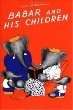
Babar and His Children
by Jean De Brunhoff
Hardcover from Random House Books for Young Readers
1954
by Laurent De Brunhoff
School & Library Binding from Abrams Books for Young Readers
Babar's Yoga for Elephants
by Laurent de Brunhoff
Hardcover from Abrams Books for Young Readers
Babar Goes to School
by Laurent de Brunhoff
Hardcover from Abrams Books for Young Readers
Babar Et Le Pere Noel
Meet Babar and His Family
by Laurent De Brunhoff
Hardcover from Harry N. Abrams
by Laurent De Brunhoff, Jean de Brunhoff
Hardcover from Hachette
Babar En Famille
by Laurent De Brunhoff, Jean de Brunhoff
Hardcover from Hachette
Babar and the Christmas House
by Laurent & Jean De Brunhoff
Hardcover from Abrams Books for Young Readers
Babar's Birthday Surprise
by Laurent De Brunhoff
Hardcover from Abrams Books for Young Readers
Babar a New York (Babar Series)
by Laurent De Brunhoff, Laurent Brunhoff
Hardcover from Distribooks Intl
Babar: a Story for Each Night of the Week (The New Adventures of Babar)
Hardcover from Carlton Books Limited
Out of Print - Try Used BooksBabar the Elephant at Delanceyplace
"Yet those who would [so interpret] 'Babar' miss the true subject of the books. The de Brunhoffs' saga is not an unconscious expression of the French colonial imagination; it is a self-conscious comedy about the French colonial imagination. ... "
Search This Site

|
Babar |

Copyright © 1997-2026 dropbears.com